
Politics
APC Breaks Silence on Plan to Turn Nigeria into One-Party State
The All Progressives Congress says Nigeria’s democracy remains intact, insisting that recent defections into the ruling party do not signal a move toward a one-party system.

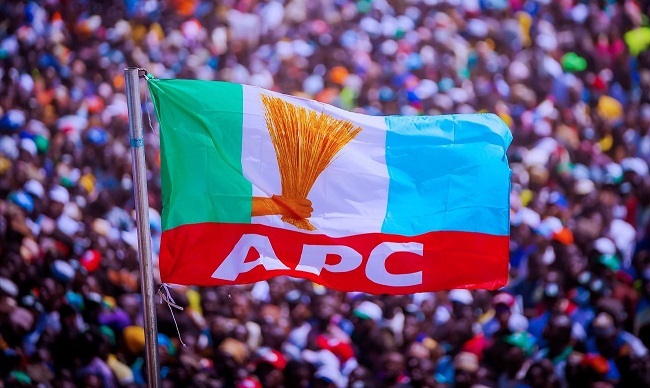
- The All Progressives Congress says Nigeria’s democracy remains intact, insisting that recent defections into the ruling party do not signal a move toward a one-party system.

The All Progressives Congress has dismissed claims that Nigeria is drifting toward a one-party system, despite the recent wave of defections from opposition parties into the ruling party.
Speaking on Channels Television’s year-end programme, 2025 in Retrospect: Charting a Pathway to 2026, the APC National Publicity Secretary, Felix Morka, said the party has no intention of weakening or eliminating opposition parties, describing such concerns as unfounded.
“There is no such desire, let alone intent, to turn Nigeria into a one-party state,” Morka said on Tuesday, emphasising that political plurality remains central to democratic governance.
He explained that the APC’s current dominance is a result of its victory in the last general elections, which placed the party in control of the federal government. According to him, the growing number of politicians joining the ruling party reflects individual decisions rather than any coordinated effort to undermine democracy.
“The APC is the ruling party, which was elected in the last general elections. What we have witnessed is individuals making decisions that are permissible in a democracy to move from their platforms to join our party,” he stated.
DON’T MISS: Tinubu Ignores Nigerians Complaints Over Frequent Foreign Trips, Heads to Europe from Lagos (Video)
In recent months, the Peoples Democratic Party and other opposition parties have recorded significant membership losses, with governors, lawmakers and other influential figures defecting to the APC. The development has sparked public debate and heightened concerns about the possible weakening of political competition in the country.
Morka, however, maintained that defections are a normal feature of democratic politics and should not be interpreted as a threat to Nigeria’s multiparty system.
“That is nothing unusual or untoward,” he said. “People joke around with the spectre of a one-party state; we shouldn’t.”

He further argued that Nigeria’s constitutional and legal framework makes the emergence of a one-party state virtually impossible, regardless of political developments.
“Even if anyone in the APC wished for a one-party state, it is virtually impossible under the prevailing constitutional and legal framework,” he added, noting that heightened political competition often breeds suspicion.
Morka concluded by urging Nigerians to see the ongoing political realignments as part of the democratic process rather than a departure from it.





IPOB Alleges Global Conspiracy, Demands Immediate Release of Nnamdi Kanu
The Indigenous People of Biafra (IPOB) has issued a strong statement accusing the Nigerian government and international actors of complicity...

Ejimakor Tops Legal Team in Nnamdi Kanu Case with Multiple Court, International Victories — Report
A new legal briefing has identified Barrister Aloy Ejimakor as the leading counsel in Nnamdi Kanu’s defence, citing multiple court...

BREAKING: FG Declares Easter Public Holidays
The Federal Government has announced public holidays to mark Good Friday and Easter Monday celebrations nationwide.


IPOB Praises US Lawmakers, Calls for Referendum as Nigeria Faces ‘Impending Crisis’
The Indigenous People of Biafra says recent remarks by US figures have exposed growing concerns about Nigeria’s security situation.

Aproko Doctor Warns Against ‘Live Snail’ Skincare Trend, Cites Infection Risks (Video)
Health influencer Aproko Doctor has cautioned Nigerians against using live snails on their faces, warning of serious health risks including...

ICPC Fixes Date to Arraign El-Rufai Over Alleged Corruption, Money Laundering
The ICPC has announced plans to arraign former Kaduna Governor Nasir El-Rufai in court over multiple corruption-related charges following weeks...

Apply Now: FG Opens Fully Funded Overseas Scholarship for Nigerians (2026/2027)
The Federal Government, through the NDDC, has launched applications for its fully funded foreign postgraduate scholarship, targeting young Nigerians from...


OnlyFans Owner Leo Radvinsky Dies at 43, Cause of Death Emerges
Billionaire tech entrepreneur Leo Radvinsky, owner of OnlyFans, has died at 43, leaving behind a multibillion-dollar digital empire built on...
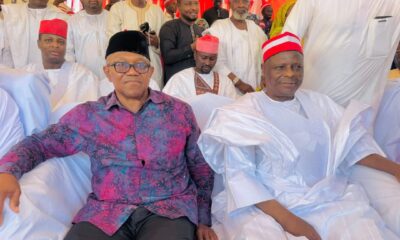

Kwankwaso, Obi, Dickson meeting Surprises APC as Details Emerge
The Kano APC has expressed surprise after Rabiu Kwankwaso hosted Peter Obi, Seyi Makinde, and Seriake Dickson in Kano.


Nike Unveils New Super Eagles Home, Away Jerseys for 2026 Season (Photos)
Nike has launched Nigeria’s new Super Eagles home and away jerseys, combining striking designs with performance technology despite the team’s...