
Politics
INEC Proposes Nearly ₦874bn Budget for 2027 General Elections
INEC has proposed a ₦873.778 billion budget for the 2027 general elections, separate from its ₦171 billion 2026 operational budget,

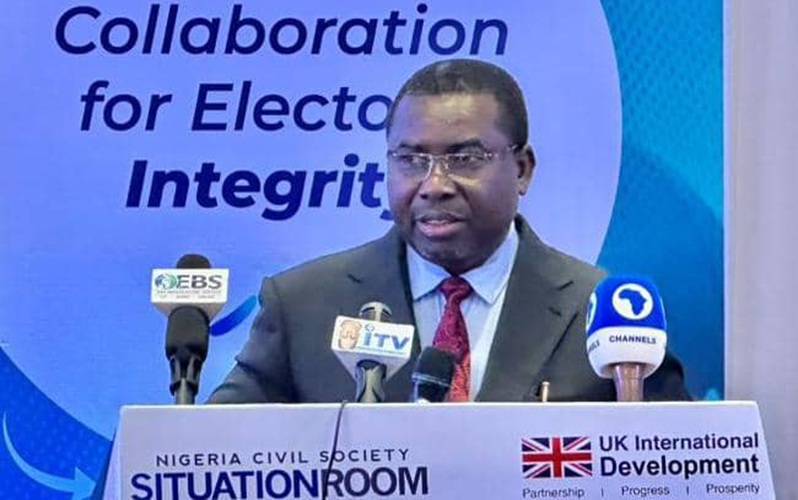
- INEC has proposed a ₦873.778 billion budget for the 2027 general elections, separate from its ₦171 billion 2026 operational budget, as lawmakers debate funding mechanisms and urge reforms to ensure effective and credible polls.

The Independent National Electoral Commission (INEC) has proposed a total of ₦873.778 billion for the conduct of the 2027 general elections.
INEC Chairman, Joash Amupitan, disclosed this while presenting the commission’s 2026 budget proposal alongside the estimated cost of the 2027 elections before the Joint Committee on Electoral Matters of the National Assembly.
Amupitan clarified that the ₦873.778 billion election budget is separate from INEC’s ₦171 billion proposal for the 2026 fiscal year, which is intended to cover routine operations such as by-elections and off-cycle polls.
He added that the projected election cost does not include a fresh request by the National Youth Service Corps (NYSC) for an upward review of allowances for corps members deployed as ad-hoc election staff.
Breaking down the proposed election budget, the INEC chairman said it comprises ₦379.748 billion for operational expenses, ₦92.317 billion for administrative costs, ₦209.206 billion for technology, ₦154.905 billion for capital expenditure, and ₦42.608 billion for miscellaneous items.
He noted that the proposal was prepared in line with Section 3(3) of the Electoral Act 2022, which requires the commission to submit its election budget at least one year ahead of a general election.
On the 2026 fiscal framework, Amupitan revealed that the Ministry of Finance had issued INEC a budget ceiling of ₦140 billion, but the commission is proposing ₦171 billion to meet its obligations. The breakdown includes ₦109 billion for personnel costs, ₦18.7 billion for overheads, ₦42.63 billion for election-related activities, and ₦1.4 billion for capital projects.
The INEC chairman criticised the envelope budgeting system, saying it does not reflect the commission’s operational realities, which often require urgent and flexible funding.
He also identified the absence of a dedicated communications network as a major challenge, stressing that building independent infrastructure would improve transparency and accountability, especially during technical failures.
DON’T MISS: INEC Releases Timetable for 2027 General Elections, Sets Dates For Presidential And Governorship Elections
During the session, lawmakers raised concerns over INEC’s funding structure. Senator Adams Oshiomhole argued that given the commission’s constitutional role, its budget should not be subjected to rigid external controls. He called for the removal of the envelope system and urged lawmakers to consider INEC’s actual funding needs.
Similarly, Edo lawmaker Billy Osawaru advocated placing INEC’s budget on first-line charge in line with constitutional provisions to ensure full and timely releases.
The Joint Committee later approved a motion recommending a one-time release of the commission’s annual budget and said it would also examine the NYSC’s separate request of about ₦32 billion to increase election duty allowances for corps members to ₦125,000.
Chairman of the Senate Committee on INEC, Simon Lalong, assured the commission of legislative support to ensure adequate preparations for the 2027 polls.
However, Chairman of the House Committee on Electoral Matters, Bayo Balogun, cautioned INEC against making commitments it may struggle to fulfil, citing public expectations around result uploads during the last general election.






IPOB Praises US Lawmakers, Calls for Referendum as Nigeria Faces ‘Impending Crisis’
The Indigenous People of Biafra says recent remarks by US figures have exposed growing concerns about Nigeria’s security situation.


Aproko Doctor Warns Against ‘Live Snail’ Skincare Trend, Cites Infection Risks (Video)
Health influencer Aproko Doctor has cautioned Nigerians against using live snails on their faces, warning of serious health risks including...

ICPC Fixes Date to Arraign El-Rufai Over Alleged Corruption, Money Laundering
The ICPC has announced plans to arraign former Kaduna Governor Nasir El-Rufai in court over multiple corruption-related charges following weeks...


Apply Now: FG Opens Fully Funded Overseas Scholarship for Nigerians (2026/2027)
The Federal Government, through the NDDC, has launched applications for its fully funded foreign postgraduate scholarship, targeting young Nigerians from...


OnlyFans Owner Leo Radvinsky Dies at 43, Cause of Death Emerges
Billionaire tech entrepreneur Leo Radvinsky, owner of OnlyFans, has died at 43, leaving behind a multibillion-dollar digital empire built on...

Kwankwaso, Obi, Dickson meeting Surprises APC as Details Emerge
The Kano APC has expressed surprise after Rabiu Kwankwaso hosted Peter Obi, Seyi Makinde, and Seriake Dickson in Kano.

Nike Unveils New Super Eagles Home, Away Jerseys for 2026 Season (Photos)
Nike has launched Nigeria’s new Super Eagles home and away jerseys, combining striking designs with performance technology despite the team’s...

BREAKING: Court Jails Ex-Acting Accountant-General for 72 Years Over N868m Fraud
A former Acting Accountant-General of the Federation, Chukwunyere Anamekwe Nwabuoku, has been sentenced to 72 years.


Tinubu Planning Third Term, VeryDarkMan Alleges APC Agenda for 2027 Election (Video)
VeryDarkMan alleges mass defections to APC may give President Tinubu a decisive edge ahead of 2027 elections.


Champions League Quarter-Finals Confirmed, See Fixtures
The UEFA Champions League quarter-final lineup is set, with blockbuster clashes including PSG vs Liverpool and Real Madrid vs Bayern...