
Politics
Nigeria Rejects Israel’s Recognition of Somaliland, Warns of Threat to Somalia’s Sovereignty
The Nigerian government has condemned Israel’s recognition of Somaliland as an independent state, warning that the move undermines Somalia’s sovereignty…

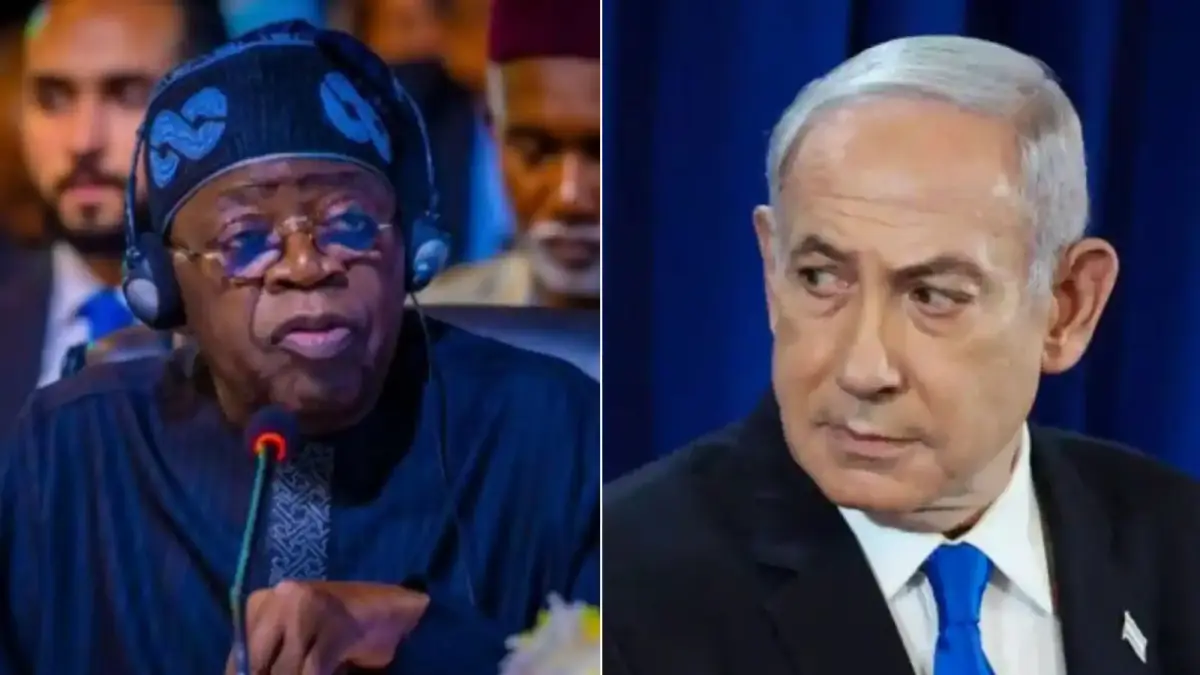
- The Nigerian government has condemned Israel’s recognition of Somaliland as an independent state, warning that the move undermines Somalia’s sovereignty and could fuel instability in the Horn of Africa.

The Federal Government of Nigeria has rejected Israel’s recognition of Somaliland as an independent country, describing the move as a violation of Somalia’s sovereignty and a potential trigger for deeper instability in the Horn of Africa.
In a statement issued on Saturday by the spokesperson of the Ministry of Foreign Affairs, Kimiebi Imomotimi Ebienfa, Nigeria reaffirmed its unwavering commitment to the principles of sovereignty, territorial integrity, and political independence as enshrined in the Charter of the United Nations and the Constitutive Act of the African Union (AU).
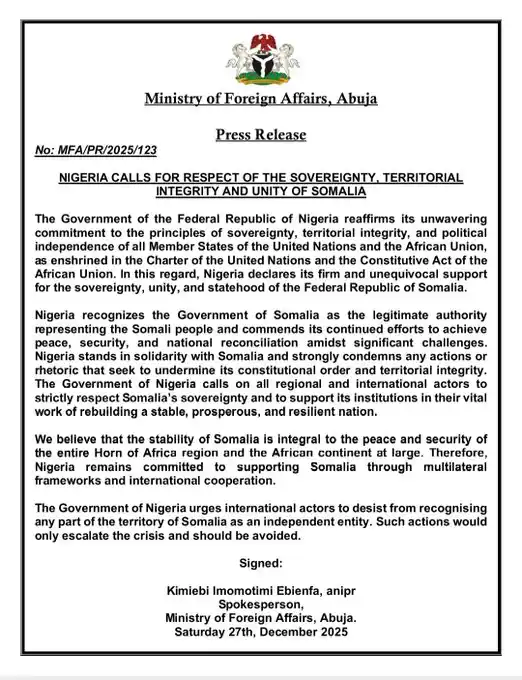
The government stated that Nigeria gives its “firm and unequivocal support for the sovereignty, unity, and statehood of the Federal Republic of Somalia,” stressing that the government in Mogadishu remains the sole legitimate authority representing the Somali people.
Nigeria also condemned any actions, decisions, or rhetoric capable of undermining Somalia’s constitutional order, warning that recognising any part of the country as a separate entity would only escalate tensions and worsen an already fragile security and political situation.
“The stability of Somalia is integral to the peace and security of the entire Horn of Africa region and the African continent at large,” the statement said, adding that Nigeria would continue to support Somalia through multilateral engagement and international cooperation.
The Federal Government further urged Israel and other international and regional actors to strictly respect Somalia’s sovereignty and territorial integrity, cautioning against any move that could derail efforts to rebuild a stable, united, and resilient Somali state.
Israel had on Friday, December 26, announced its recognition of Somaliland, a self-declared breakaway region of Somalia, as an “independent and sovereign state.” Israeli Prime Minister Benjamin Netanyahu confirmed the decision in a post on X, stating that Israel had signed a joint declaration with Somaliland’s leadership in the spirit of the Abraham Accords.
Netanyahu said Israel would seek immediate cooperation with Somaliland in areas such as agriculture, health, technology, and the economy, while congratulating Somaliland President Abdirahman Mohamed Abdullahi and inviting him to visit Israel. With the move, Israel became the first country to formally recognise Somaliland’s claim to statehood.

Somaliland welcomed the recognition, describing it as a historic moment. President Abdullahi said the region would join the Abraham Accords, calling the development a step toward regional and global peace. Somaliland’s Ministry of Foreign Affairs also declared that “Somaliland’s moment has arrived.”
However, Nigeria’s position aligns with that of several international and regional bodies. The African Union has strongly opposed Israel’s decision, reiterating its support for Somalia’s unity, sovereignty, and territorial integrity. AU Commission Chairperson Mahmoud Ali Youssouf warned that recognising Somaliland sets a dangerous precedent with far-reaching implications for peace and stability across Africa.
DON’T MISS: Peter Obi Slams Reps for Failing to Criminalise Vote-Buying
Somalia’s government also condemned Israel’s action as unlawful and a deliberate attack on its sovereignty. Egypt, Turkey, Djibouti, and the Arab League have similarly expressed concern, with Arab League Secretary-General Ahmed Aboul Gheit describing the recognition as provocative and a serious threat to regional security.
Somaliland broke away from Somalia in 1991 and has since sought international recognition, citing relative stability and self-governance. Despite this, the region had not been recognised by any country until Israel’s announcement, a development that has now intensified diplomatic tensions across Africa and the Middle East.





IPOB Alleges Global Conspiracy, Demands Immediate Release of Nnamdi Kanu
The Indigenous People of Biafra (IPOB) has issued a strong statement accusing the Nigerian government and international actors of complicity...

Ejimakor Tops Legal Team in Nnamdi Kanu Case with Multiple Court, International Victories — Report
A new legal briefing has identified Barrister Aloy Ejimakor as the leading counsel in Nnamdi Kanu’s defence, citing multiple court...

BREAKING: FG Declares Easter Public Holidays
The Federal Government has announced public holidays to mark Good Friday and Easter Monday celebrations nationwide.

IPOB Praises US Lawmakers, Calls for Referendum as Nigeria Faces ‘Impending Crisis’
The Indigenous People of Biafra says recent remarks by US figures have exposed growing concerns about Nigeria’s security situation.

Aproko Doctor Warns Against ‘Live Snail’ Skincare Trend, Cites Infection Risks (Video)
Health influencer Aproko Doctor has cautioned Nigerians against using live snails on their faces, warning of serious health risks including...

ICPC Fixes Date to Arraign El-Rufai Over Alleged Corruption, Money Laundering
The ICPC has announced plans to arraign former Kaduna Governor Nasir El-Rufai in court over multiple corruption-related charges following weeks...

Apply Now: FG Opens Fully Funded Overseas Scholarship for Nigerians (2026/2027)
The Federal Government, through the NDDC, has launched applications for its fully funded foreign postgraduate scholarship, targeting young Nigerians from...


OnlyFans Owner Leo Radvinsky Dies at 43, Cause of Death Emerges
Billionaire tech entrepreneur Leo Radvinsky, owner of OnlyFans, has died at 43, leaving behind a multibillion-dollar digital empire built on...

Kwankwaso, Obi, Dickson meeting Surprises APC as Details Emerge
The Kano APC has expressed surprise after Rabiu Kwankwaso hosted Peter Obi, Seyi Makinde, and Seriake Dickson in Kano.

Nike Unveils New Super Eagles Home, Away Jerseys for 2026 Season (Photos)
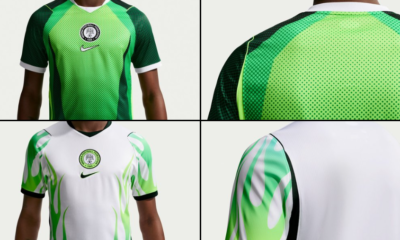
Nike has launched Nigeria’s new Super Eagles home and away jerseys, combining striking designs with performance technology despite the team’s...