
Business
Monopoly Fears Rise as Dangote Controls ₦14.4tn Petrol Market in Nigeria
Energy experts, economists and labour leaders have raised concerns after the Federal Government halted petrol import licences.

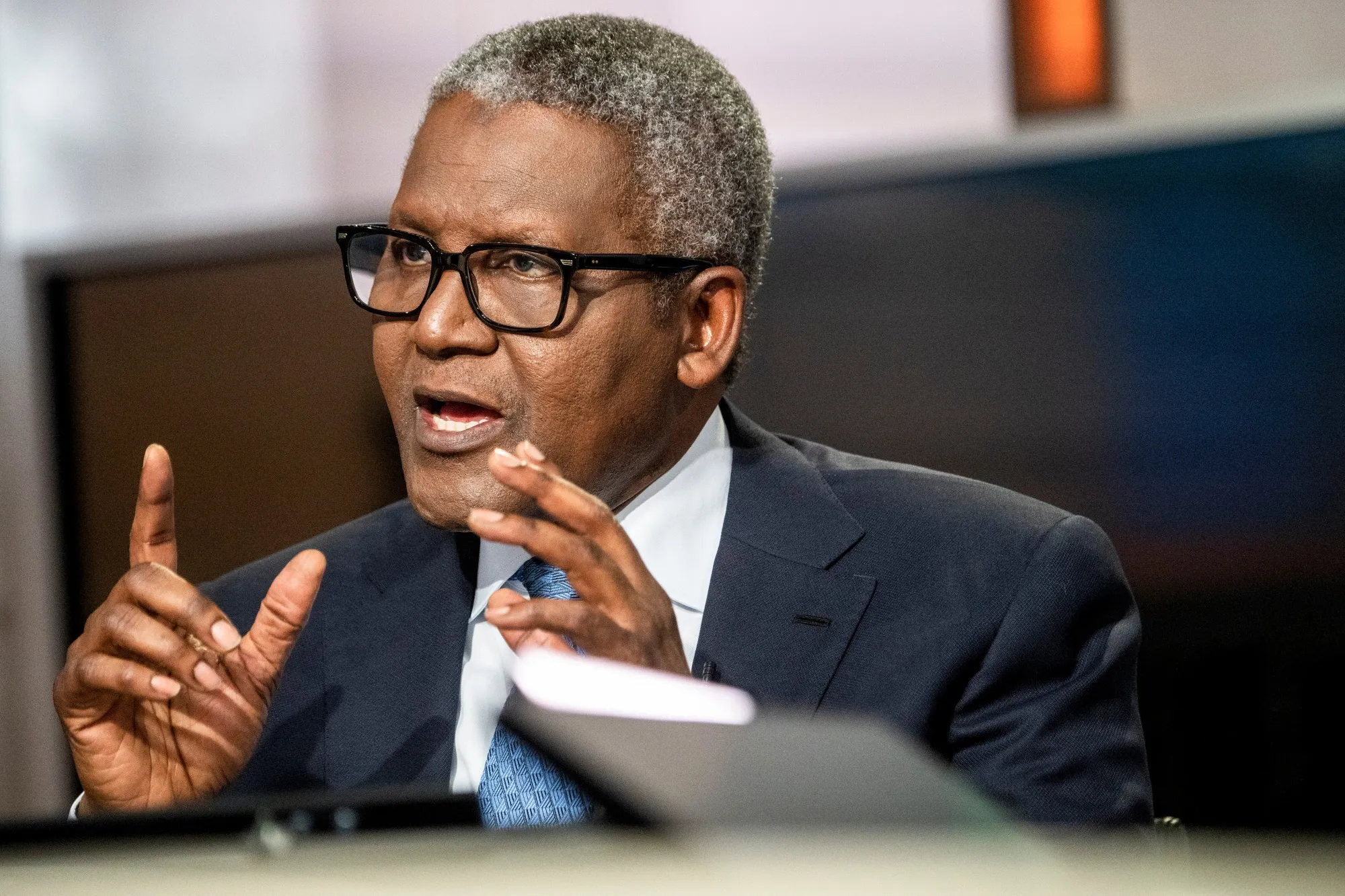
- Energy experts, economists and labour leaders have raised concerns after the Federal Government halted petrol import licences.

Stakeholders, including energy experts, economists and labour representatives, have raised concerns following the Federal Government’s decision to halt petrol import licences, a move that leaves the Dangote Refinery dominating Nigeria’s estimated ₦14.4 trillion petrol market.
VerseNews reports that the Nigerian Midstream and Downstream Petroleum Regulatory Authority confirmed it has not issued any licence for petrol imports this year, stating that local production now meets the country’s fuel demand.
Data released by the regulator showed that the Dangote refinery accounted for about 92 percent of Nigeria’s daily petrol supply in February 2026.
According to the NMDPRA fact sheet for February, local refineries supplied about 36.5 million litres of petrol daily, while imports accounted for roughly three million litres per day.
The figures put Nigeria’s total petrol supply for the month at about 39.5 million litres daily, marking a major shift from the country’s long-standing reliance on imported fuel.
The Dangote refinery is currently the only facility producing petrol in Nigeria, while other modular refineries mainly produce diesel.
With petrol estimated at around ₦1,000 per litre and daily consumption at 39.5 million litres, analysts estimate the Nigerian petrol market could be worth more than ₦14.4 trillion annually.
The announcement by the NMDPRA that petrol imports have been suspended triggered mixed reactions among stakeholders.
Nigeria’s Minister of Finance, Wale Edun, said the government would not interfere with market-based pricing of petroleum products except as a last resort.
“Rather than reverting and taking a backward step, we will explore other measures to reduce the cost of living for Nigerians without resorting to non-market pricing,” Edun said during a television programme.
However, some energy experts warned that the development could lead to market concentration and speculation.
Professor Wumi Iledare said the suspension of import licences sends a strong policy signal but may also encourage strategic positioning among market players seeking dominance.
According to him, participants in the evolving downstream sector may attempt precautionary stockpiling or opportunistic pricing as they compete for market control.
Another energy expert, Professor Dayo Ayoade, noted that the heavy reliance on the Dangote refinery highlights deeper structural weaknesses in Nigeria’s refining capacity.
He said the situation largely stems from the inability of the country’s state-owned refineries operated by the Nigerian National Petroleum Company Limited to function effectively.
Meanwhile, Chief Executive Officer of petroleumprice.ng, Jeremiah Olatide, warned that relying heavily on a single refinery could expose the country to supply shocks if production is disrupted.
He argued that a more balanced structure combining local refining and limited imports would better protect Nigeria’s energy security.
According to him, allowing both domestic producers and importers to compete naturally could help stabilise prices and prevent supply risks.
Labour leaders have also raised concerns over the market concentration.
Assistant Secretary-General of the Nigeria Labour Congress, Christopher Onyeka, warned that the dominance of a single supplier in such a critical sector could expose Nigerians to price exploitation.
“The truth is that monopoly is not good for any nation, business or economy,” Onyeka said, calling for temporary price regulation to protect consumers.
Similarly, economist Aliyu Alias warned that Nigeria could drift into a monopoly-driven fuel market where a single supplier largely determines prices.
He stressed that the absence of operational public refineries and limited private refining capacity weakens competition in the sector.
While some economists have called for price controls, others have warned against returning to government regulation.
DON’T MISS: BREAKING: CBN Allows BDCs Back into FX Market, Sets $150,000 Weekly Purchase Limit
Chief Executive Officer of Economic Associates, Ayo Teriba, cautioned that introducing long-term price regulation could reverse reforms implemented after the removal of petrol subsidies.
Similarly, Director of the Centre for the Promotion of Private Enterprise, Muda Yusuf, argued that price controls could distort the market and discourage investment.
Both experts instead recommended reducing regulatory charges and encouraging the development of more refineries to promote competition.
Meanwhile, the Chief Executive of the NMDPRA, Saidu Mohammed, defended the suspension of petrol import licences, insisting that Nigeria must sustain the gains made in domestic refining.
He noted that the country had moved from an era of heavy fuel importation to a new phase where domestic refining can meet national demand.
However, analysts say expanding refining capacity and maintaining competition will be crucial to ensuring stable fuel prices and long-term energy security in Nigeria.






IPOB: Nnamdi Kanu Must Be Released Unconditionally, Appeal Must Be Listed — Chris Nwaọgụ
IPOB has renewed its demand for the immediate and unconditional release of Nnamdi Kanu, while calling for his pending appeal...


‘Show Me the Law’ Is Not a Joke — It Is Section 36, Section 122, and the Supreme Court, Spoken from the Dock
Ifedi argues that Kanu’s conviction relied on a repealed terrorism law, raising fundamental constitutional questions about its validity.


BREAKING: Atiku Appoints El-Rufai, Hayatu-Deen in ADC Presidential Campaign Council
Atiku Abubakar has announced the appointment of Nasir el-Rufai and Mohammed Hayatu-Deen to key positions in his African Democratic Congress,...

NECO Releases 2026 SSCE Results, Records Drop in Examination Malpractice
NECO has released the 2026 SSCE results, with 1,496 candidates recorded for examination malpractice, representing a 64.74% decrease from 2025.


PHOTOS: Anthony Joshua Endures ‘Torture’ Training Ahead of Fury Fight
Anthony Joshua has stepped up his preparations for a potential Tyson Fury showdown with an unusual stretching machine that has...


Umahi Orders Tinubu’s Pictures on First Niger Bridge
Works Minister David Umahi has ordered that President Bola Tinubu’s pictures be displayed on the First Niger Bridge after its...


INEC to Deploy Intelligence Against Vote Buying Ahead of 2027 Elections
INEC Chairman Joash Amupitan says the commission will activate intelligence operations and pursue a joint task force to tackle vote...

Diverting Tithes, Offerings, Others to Private Businesses is a Criminal Offence – EFCC Warns Churches
The Economic and Financial Crimes Commission, EFCC, has warned religious leaders against diverting tithes, offerings, zakat and other funds entrusted...


Enugu Air Launches First International Flight to Cameroon
Enugu Air, Enugu Airport, Douala, Cameroon, Nigeria-Cameroon, International Flight, Peter Mbah, Enugu State, Akanu Ibiam International Airport,


Canadian Government Warns Citizens Against Buying Alcohol in Nigeria
The Canadian government has warned its citizens travelling to Nigeria to be cautious about where they buy alcohol following reports...