
Politics
Supreme Court Upholds President’s Power to Declare State of Emergency, Suspend Elected Governors, Others
In a split six-to-one ruling, the Supreme Court has upheld the President’s constitutional authority to declare a state of emergency.

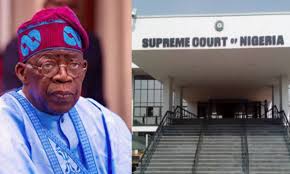
- In a split six-to-one ruling, the Supreme Court has upheld the President’s constitutional authority to declare a state of emergency and, where necessary, temporarily suspend elected state officials to restore order.

The Supreme Court on Monday affirmed the constitutional powers of the President to declare a state of emergency in any part of the country to prevent a breakdown of law and order or a slide into chaos and anarchy.
In a majority decision of six to one, the apex court held that the President is empowered under the 1999 Constitution to proclaim a state of emergency and adopt extraordinary measures to restore normalcy.
The court further ruled that, during such a period, the President may suspend elected officials, provided such suspensions are for a limited duration.
Delivering the lead judgment, Justice Mohammed Idris relied on Section 305 of the Constitution, which he said grants the President wide discretion to act decisively once a state of emergency has been declared.
He noted that while the Constitution authorises extraordinary measures, it does not clearly define their scope, thereby leaving the nature of such actions to the President’s judgment.
The ruling followed a suit filed by Attorneys-General of states governed by the Peoples Democratic Party (PDP), who challenged President Bola Ahmed Tinubu’s declaration of a state of emergency in Rivers State.
The declaration had resulted in the suspension of elected state officials for six months. The Supreme Court had reserved judgment in the matter in October.

The plaintiffs included the Attorneys-General of Adamawa, Enugu, Osun, Oyo, Bauchi, Akwa Ibom, Plateau, Delta, Taraba, Zamfara, and Bayelsa states, while the defendants were the Federal Government and the National Assembly. The suit, marked SC/CV/329/2025, was brought on eight grounds.
Among other reliefs, the plaintiffs asked the court to determine whether the President has the constitutional authority to suspend a democratically elected governor, deputy governor, and state legislature under a state of emergency, or replace them with unelected administrators. They also questioned whether the procedure adopted in the Rivers State emergency declaration violated key provisions of the Constitution.
DON’T MISS: FULL LIST: Nigerian Governors by Political Party
In an earlier part of the judgment, Justice Idris upheld the preliminary objections raised by the defendants, holding that the plaintiffs failed to establish a valid cause of action capable of invoking the Supreme Court’s original jurisdiction. On this basis, the suit was struck out for want of jurisdiction.
Despite this, the court proceeded to consider the substantive issues and dismissed the case on its merits. The majority agreed that the plaintiffs did not demonstrate the existence of a justiciable dispute between themselves and the Federation.
However, Justice Obande Ogbuinya dissented. While he agreed that the President has the constitutional power to declare a state of emergency, he held that such power does not extend to the suspension of elected officials, including governors, deputy governors, and members of state legislatures.






Champions League Quarter-Finals Confirmed, See Fixtures
The UEFA Champions League quarter-final lineup is set, with blockbuster clashes including PSG vs Liverpool and Real Madrid vs Bayern...


‘We Miss Aregbesola’: Nigerian Youths Slam Tunji-Ojo Over Public Holiday Declaration (Video)
Nigerian youths have criticised Interior Minister Olubunmi Tunji-Ojo over the choice of Thursday and Friday as Eid-el-Fitr holidays.

Israel Kills of Iran’s Intelligence Minister Esmail Khatib
Israel says it has killed Iran’s Intelligence Minister Esmail Khatib, though Iranian authorities have yet to confirm the claim amid...


Rival Fans Hold Mock Candlelight Procession for Chelsea After 8–2 Loss to PSG in Champions League (Video)
A viral video shows rival fans staging a mock candlelight procession for Chelsea after their 8–2 aggregate loss to Paris...


74-Year-Old Woman Gifts Governor Soludo Live Fowl at Inauguration (Video)
A 74-year-old woman drew attention at Governor Chukwuma Soludo’s inauguration in Awka after presenting a live fowl in appreciation of...

‘This War Will Hit Everyone No Matter Race, Religion’ – Iran Warns
Iran’s Foreign Minister Abbas Araghchi has warned that the ongoing war will impact people worldwide, urging more international voices to...


Court Declares It Legal to Record Police Officers on Duty
A Federal High Court in Warri has affirmed the right of Nigerians to record police officers in public.


BREAKING: FG Declares Two-Day Public Holiday
The Federal Government has announced two-day public holiday.

IPOB Accuses Nigerian Govt, Army of Plot to Demonise Group and Justify Attacks in South-East
The Indigenous People of Biafra has accused the Nigerian government and the military of fabricating insecurity in the South-East.


List of Approved 114 Universities to Run Law Programmes in Nigeria (Full List)
The Council of Legal Education has released the list of 114 universities authorised to run Bachelor of Laws (LL.B) programmes...