
Politics
FULL TEXT: President Tinubu’s 2026 Budget Speech
President Bola Tinubu has presented the 2026 Appropriation Bill to the National Assembly, describing it as a Budget of Consolidation, Renewed Resilience and Shared Prosperity…

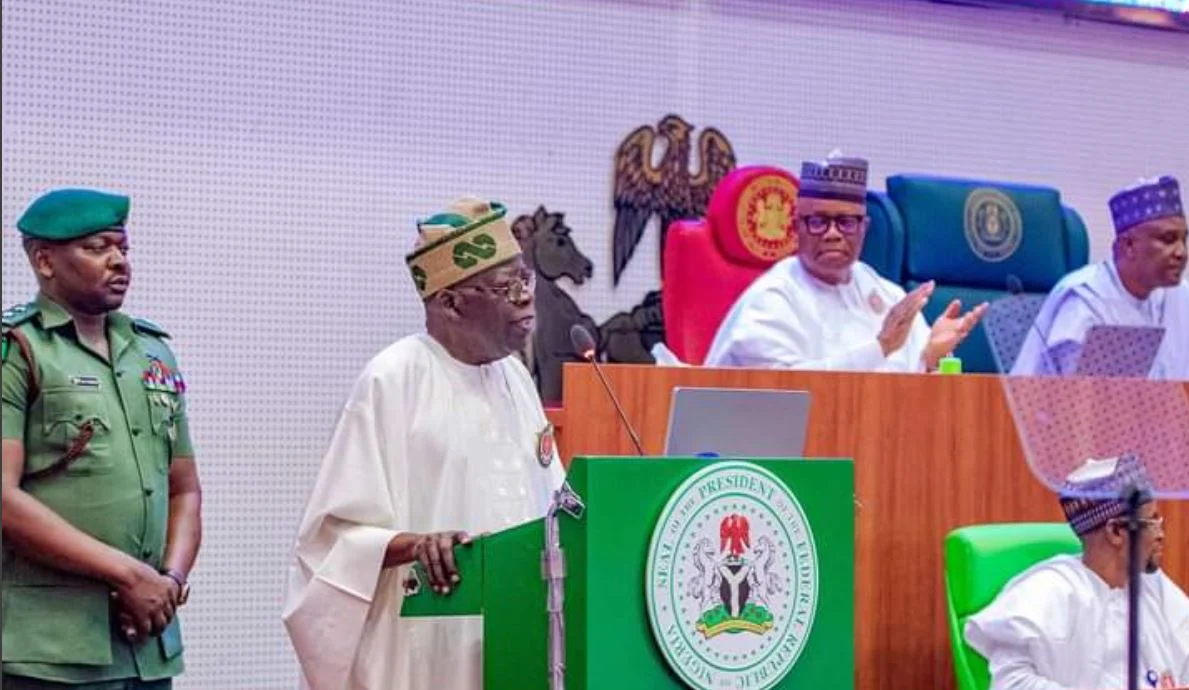
- President Bola Tinubu has presented the 2026 Appropriation Bill to the National Assembly, describing it as a Budget of Consolidation, Renewed Resilience and Shared Prosperity aimed at strengthening economic stability, boosting security, creating jobs, and delivering inclusive growth for Nigerians.

“BUDGET OF CONSOLIDATION, RENEWED RESILIENCE AND SHARED PROSPERITY”
Presented by:
His Excellency, Asiwaju Bola Ahmed Tinubu, GCFR
President, Federal Republic of Nigeria
At the Joint Session of the National Assembly, Abuja
Friday, 19 December 2025
PROTOCOLS
- Distinguished Senate President,
- Rt. Honourable Speaker and Honourable Members of the House of Representatives,
- Distinguished Senators and Honourable Members of the National Assembly,
- Fellow Nigerians,
- Today, I am here to discharge a fundamental constitutional duty by presenting the 2026 Appropriation Bill to this distinguished Joint Session of the National Assembly for your consideration.
- This Budget marks a defining point in our nation’s reform and transformation journey. Over the past two and a half years, my administration has deliberately addressed deep-rooted structural weaknesses, stabilised the economy, restored confidence, and laid a solid foundation for building a more resilient, inclusive, and dynamic Nigeria.
- These reforms, though necessary, have not been painless. Families and businesses have felt the strain; long-standing systems have been disrupted; and budget implementation has been tested. I acknowledge these challenges openly. However, I assure Nigerians today that their sacrifices are not in vain. Reform is rarely smooth, but it remains the surest path to lasting stability and shared prosperity.
- Today, I present a Budget that consolidates our gains, strengthens our resilience, and moves our nation out of the dark tunnel of hopelessness — from mere survival to sustainable growth.
- The 2026 Budget is themed “Budget of Consolidation, Renewed Resilience and Shared Prosperity.” It reflects our resolve to entrench macroeconomic stability, deepen competitiveness, and ensure that growth delivers decent jobs, higher incomes, and an improved quality of life for every Nigerian.
- Mr Chairman and leaders of the National Assembly, even as the global outlook continues to improve, this Budget is designed to further strengthen Nigeria’s economy for the benefit of all citizens.
- I am encouraged that our reform efforts are already producing measurable results:
- Economic growth reached 3.98 per cent in Q3 2025, up from 3.86 per cent in Q3 2024.
- Inflation has moderated for eight consecutive months, declining to 14.45 per cent in November 2025 from 24.23 per cent in March 2025. With stabilising food and energy prices, tighter monetary conditions, and improving supply responses, this deflationary trend is expected to continue into 2026, barring major supply shocks.
- Oil production has improved due to enhanced security, technology deployment, and sector reforms.
- Non-oil revenue has expanded significantly through improved tax administration.
- Investor confidence is returning, as reflected in increased capital inflows, renewed project financing, and stronger private-sector participation.
- External reserves have risen to a seven-year high of approximately US$47 billion, providing over ten months of import cover and a stronger buffer against shocks.
- These achievements are not accidental. They are the result of deliberate and difficult policy decisions. Our next goal is to deepen these gains in pursuit of enduring and inclusive prosperity.
- Mr Chairman and Distinguished Members, the 2025 budget implementation reflected the realities of transition and competing execution demands. As of Q3 2025, government recorded:
- ₦18.6 trillion in revenue, representing 61 per cent of the target; and
- ₦24.66 trillion in expenditure, representing 60 per cent of the target.
- Following the extension of the 2024 capital budget to December 2025, a total of ₦2.23 trillion was released for the implementation of 2024 capital projects as of June 2025.
- Despite persistent fiscal challenges, the government met its key obligations. However, only ₦3.10 trillion — about 17.7 per cent of the 2025 capital budget — was released by Q3, reflecting the priority given to completing ongoing 2024 capital projects during the transition period.
- Let me be clear: 2026 will be a year of stronger discipline in budget execution. I have directed the Honourable Minister of Finance and Coordinating Minister of the Economy, the Honourable Minister of Budget and Economic Planning, the Accountant-General of the Federation, and the Director-General of the Budget Office to ensure strict implementation of the 2026 Budget in line with approved details and timelines.
- Improved revenue performance is expected from the new National Tax Acts and ongoing reforms in the oil and gas sector — reforms aimed not only at increasing revenue, but also at promoting transparency, efficiency, fairness, and long-term value.
- Clear directives have also been issued to Government-Owned Enterprises. All agency heads must meet their assigned revenue targets. To support this, we will deploy end-to-end digitisation of revenue mobilisation, including standardised e-collections, interoperable payment systems, automated reconciliation, data-driven risk profiling, and real-time performance dashboards. Nigeria can no longer tolerate leakages, inefficiencies, or underperformance. Every institution must play its role.
- Mr Chairman and fellow Nigerians, the 2026 Budget is guided by four key objectives:
- Consolidating macroeconomic stability;
- Improving the business and investment climate;
- Promoting job-rich growth and reducing poverty; and
- Strengthening human capital development while protecting the vulnerable.
- In summary, we will spend with purpose, manage debt with discipline, and pursue broad-based, sustainable growth.
- Distinguished Members, the 2026 Federal Budget is anchored on realism, prudence, and growth.
- The key aggregates include:
- Expected total revenue of ₦34.33 trillion;
- Total expenditure of ₦58.18 trillion, including ₦15.52 trillion for debt servicing;
- Recurrent (non-debt) expenditure of ₦15.25 trillion;
- Capital expenditure of ₦26.08 trillion; and
- A budget deficit of ₦23.85 trillion, representing 4.28 per cent of GDP.
- These figures represent our national priorities and reaffirm our commitment to fiscal sustainability, debt transparency, and value-for-money spending.
- The 2026–2028 Medium-Term Expenditure Framework and Fiscal Strategy Paper underpin this Budget, based on:
- a conservative oil benchmark of US$64.85 per barrel;
- production of 1.84 million barrels per day; and
- an average exchange rate of ₦1,400 to the US dollar.
- We will continue to reduce waste, strengthen controls, and ensure that every naira spent or borrowed delivers measurable public value.
- Key sectoral allocations reflect the Renewed Hope Agenda:
- Defence and security: ₦5.41 trillion
- Infrastructure: ₦3.56 trillion
- Education: ₦3.52 trillion
- Health: ₦2.48 trillion
These priorities are interconnected. Without security, investment cannot thrive. Without education and healthcare, productivity will suffer. Without infrastructure, enterprises cannot scale. This Budget therefore provides a coherent framework for national renewal.
A. National Security and Peacebuilding
- National security remains the foundation of development. The 2026 Budget strengthens support for:
- modernisation of the Armed Forces;
- intelligence-driven policing and joint operations;
- border security and technology-enabled surveillance; and
- community-based peacebuilding and conflict prevention.
- We will invest in security with clear accountability for outcomes, because security spending must deliver results. To secure our nation, our priority will remain increasing the fighting capacity of the Armed Forces and other security agencies, as well as enhancing their effectiveness through cutting-edge equipment and other critical hardware.
- We will usher in a new era of criminal justice. No mercy will be shown to those who commit or support acts of terrorism, banditry, kidnapping for ransom, or other violent crimes.
- Our administration is resetting the national security architecture and establishing a new national counter-terrorism doctrine — a comprehensive redesign anchored on unified command, intelligence gathering, community stability, and counter-insurgency. This doctrine will fundamentally transform how we confront terrorism and violent crime.
- Under this new framework, any armed group or gun-wielding non-state actor operating outside the authority of the state will be regarded as a terrorist organisation.
- Bandits, militias, armed gangs, armed robbers, violent cults, forest-based armed groups, and foreign-linked mercenaries will all be targeted. We will pursue those who perpetrate violence for political or sectarian purposes, as well as those who finance, support, or facilitate their activities.

B. Human Capital Development: Education and Health
- No nation can rise beyond the quality of its people. The 2026 Budget strengthens investment in education, skills development, healthcare, and social protection.
- In education, access to higher education is being expanded through the Nigerian Education Loan Fund. More than seven hundred and eighty-eight thousand students have been supported in partnership with two hundred and twenty-nine tertiary institutions nationwide.
- In healthcare, I am pleased to note that investment in the sector represents six per cent of the total budget size, net of liabilities.
- We also appreciate the support of international partners. Recent high-level engagements with the Government of the United States have unlocked over five hundred million United States dollars for health interventions across Nigeria. We welcome this partnership and assure Nigerians that these resources will be deployed transparently and effectively.
C. Infrastructure and Economic Productivity
- Across the country, projects of various scales are moving from vision to reality. These include transport and energy infrastructure, port modernisation, agricultural reforms, and strategic investments aimed at unlocking private capital.
DON’T MISS: Tinubu Allocates ₦5.41 Trillion to Security in ₦58.47 Trillion 2026 Budget, Highest Sectoral Spending
- Decisive steps will be taken to strengthen agricultural markets. Food security remains a national priority. The 2026 Budget focuses on input financing and mechanisation; irrigation and climate-resilient agriculture; storage and processing; and the development of agro-value chains.
- These measures will reduce post-harvest losses, improve incomes for smallholders, deepen agro-industrialisation, and build a more resilient and diversified economy.
- In 2026, the Bank of Agriculture plans to restore confidence in the agricultural sector by mechanising operations through seven regional hubs, protecting harvests with fair pricing and strategic reserves, providing affordable financing to millions of smallholders, and expanding export value. Under this plan, Nigerian farmers will cultivate one million hectares, create hundreds of thousands of jobs, and demonstrate that prosperity can grow from better use of our God-given land.
D. Procurement
- Beginning in November of the previous year, the government embarked on a comprehensive procurement reform framework. These reforms have improved efficiency and generated significant cost savings, reduced contract processing times, and strengthened enforcement against erring contractors and government officials.
- The Nigeria First Policy has been established to promote self-sufficiency and sustainable growth by prioritising domestic products and businesses. By mandating that Ministries, Departments, and Agencies give preference to Nigerian-made goods and local companies, the policy seeks to support local industries, create jobs, reduce import dependence, enhance competitiveness, and foster innovation, ultimately contributing to national economic development.
- Distinguished Members and fellow Nigerians, the most important budget is not the one we announce, but the one we successfully deliver.
- Accordingly, 2026 will be guided by three practical commitments:
- Improved revenue mobilisation through efficiency, transparency, and compliance;
- Better spending by prioritising projects that can be completed, measured, and felt by citizens; and
- Stronger accountability through enhanced procurement discipline, monitoring, and reporting.
- We will build trust by aligning our words with results and our allocations with tangible outcomes.
- Distinguished Members of the National Assembly and fellow Nigerians, the 2026 Budget is not a budget of promises. It is a Budget of consolidation, renewed resilience, and shared prosperity. It builds on the reforms of the past two and a half years, addresses emerging challenges, and charts a clear path toward a more secure, competitive, equitable, and hopeful Nigeria.
- I commend Nigerians for their understanding and resilience. My administration remains committed to easing the burdens of transition toward a more stable and prosperous nation, and to ensuring that the benefits of reform reach households and communities across the Federation.
- In unity of purpose between the Executive and the Legislature, and with the resilience of the Nigerian people, we will deliver the full promise of the Renewed Hope Agenda.
- It is therefore with great pleasure that I lay before this distinguished Joint Session of the National Assembly the 2026 Appropriation Bill of the Federal Republic of Nigeria, titled “Budget of Consolidation, Renewed Resilience and Shared Prosperity.” I seek your partnership in charting the nation’s fiscal path for the coming year.
- May God bless the Federal Republic of Nigeria.
- Thank you.
Bola Ahmed Tinubu, GCFR
President and Commander-in-Chief of the Armed Forces
Federal Republic of Nigeria





Kanu Family Fires Back: ‘No Statutory Transition Means No Valid Sentence’
The Okwu-Kanu Family has called for the immediate hearing of Nnamdi Kanu’s appeal, questioning the written law underpinning his conviction...

IPOB Accuses Nigerian Judiciary of ‘Judicial Banditry’ Over Nnamdi Kanu Conviction
IPOB has accused the Nigerian judiciary of violating constitutional provisions in Nnamdi Kanu’s conviction, questioning the legal basis of the...

IPOB: Nnamdi Kanu Must Be Released Unconditionally, Appeal Must Be Listed — Chris Nwaọgụ
IPOB has renewed its demand for the immediate and unconditional release of Nnamdi Kanu, while calling for his pending appeal...
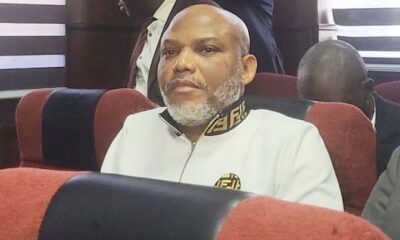

‘Show Me the Law’ Is Not a Joke — It Is Section 36, Section 122, and the Supreme Court, Spoken from the Dock
Ifedi argues that Kanu’s conviction relied on a repealed terrorism law, raising fundamental constitutional questions about its validity.
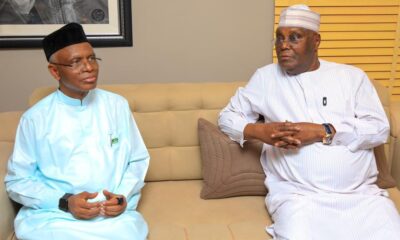

BREAKING: Atiku Appoints El-Rufai, Hayatu-Deen in ADC Presidential Campaign Council
Atiku Abubakar has announced the appointment of Nasir el-Rufai and Mohammed Hayatu-Deen to key positions in his African Democratic Congress,...

NECO Releases 2026 SSCE Results, Records Drop in Examination Malpractice
NECO has released the 2026 SSCE results, with 1,496 candidates recorded for examination malpractice, representing a 64.74% decrease from 2025.


PHOTOS: Anthony Joshua Endures ‘Torture’ Training Ahead of Fury Fight
Anthony Joshua has stepped up his preparations for a potential Tyson Fury showdown with an unusual stretching machine that has...
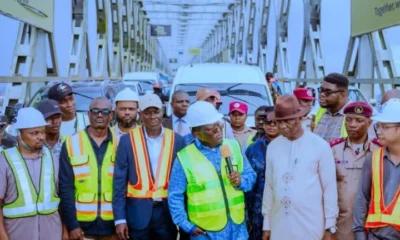

Umahi Orders Tinubu’s Pictures on First Niger Bridge
Works Minister David Umahi has ordered that President Bola Tinubu’s pictures be displayed on the First Niger Bridge after its...

INEC to Deploy Intelligence Against Vote Buying Ahead of 2027 Elections
INEC Chairman Joash Amupitan says the commission will activate intelligence operations and pursue a joint task force to tackle vote...

Diverting Tithes, Offerings, Others to Private Businesses is a Criminal Offence – EFCC Warns Churches
The Economic and Financial Crimes Commission, EFCC, has warned religious leaders against diverting tithes, offerings, zakat and other funds entrusted...