
News
NBA Demands for Suspension of Tax Reform Acts Over Alleged Alterations
The Nigerian Bar Association has urged the Federal Government to suspend implementation of the new Tax Reform Acts…

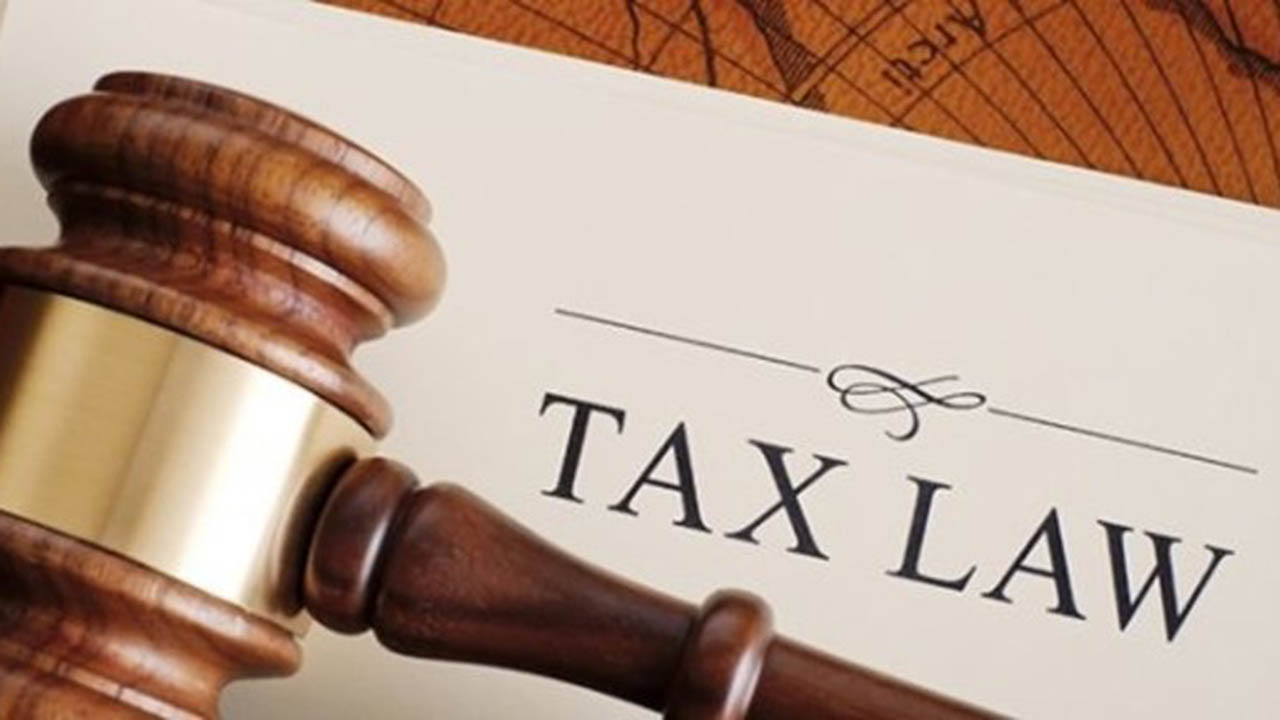
- The Nigerian Bar Association has urged the Federal Government to suspend implementation of the new Tax Reform Acts, warning that alleged alterations have created legal uncertainty and could harm investor confidence.

The Nigerian Bar Association (NBA) has called for the immediate suspension of the newly enacted Tax Reform Acts following allegations that the versions signed into law differ from what was passed by the National Assembly.
The association warned that the controversy surrounding the laws has created serious legal uncertainty capable of negatively affecting Nigeria’s economy, business environment, and investor confidence.
The call follows an alarm raised by a member of the House of Representatives from Sokoto State, Abdulsamad Dasuki, who alleged discrepancies between the tax bills approved by lawmakers and the versions later gazetted as law. According to him, some sections appear to have been altered, triggering widespread concern within legal and political circles.
Reacting to the development, the NBA said the situation raises serious questions about the integrity and credibility of Nigeria’s legislative process, describing the matter as troubling and unacceptable in a democracy anchored on due process and transparency.
In a statement issued on Tuesday and signed by its President, Afam Osigwe, the association demanded a thorough, transparent investigation into how the alleged alterations occurred.
The NBA stressed that the circumstances surrounding the enactment of the laws must be fully clarified to protect public confidence in the lawmaking process.
“Until these issues are fully examined and resolved, all plans for the implementation of the Tax Reform Acts should be immediately suspended,” the statement said.
Osigwe noted that the allegations go beyond minor technical errors and strike at the heart of constitutional governance, stressing that lawmaking must strictly follow laid-down procedures to safeguard the rule of law.

The association further warned that uncertainty surrounding the tax laws could have far-reaching economic implications. According to the NBA, unclear or disputed legislation unsettles the business climate, weakens investor confidence, and creates unpredictability for individuals, companies, and institutions expected to comply with the laws.
President Bola Tinubu signed four tax reform bills into law in June after months of debate and public scrutiny. The laws include the Nigeria Tax Bill, Nigeria Tax Administration Bill, Nigeria Revenue Service (Establishment) Bill, and the Joint Revenue Board (Establishment) Bill.
DON’T MISS: Presidency Breaks Silence Over Claims of Secretly Altered Tax Reform Laws
The Federal Government has fixed January 2026 as the commencement date for implementation, a move that has continued to generate nationwide controversy.
Several opposition figures and political groups, including Peter Obi of the Labour Party and the African Democratic Party, have also called for the suspension of the reforms, citing concerns over both the process and potential impact.
Despite the criticism, the Chairman of the Presidential Fiscal Policy and Tax Reforms Committee, Taiwo Oyedele, has defended the reforms, insisting they are not designed to introduce new taxes but to restructure the system for greater efficiency.
The Federal Government maintains that the reforms aim to simplify tax administration, eliminate multiple taxation, ease compliance, and boost domestic productivity.






Elochukwu Ohagi Describes Nnamdi Kanu as ‘Anointed Builder’ in Biafran Cenotaph Tribute
Elochukwu Ohagi has described Nnamdi Kanu as an “anointed builder” and “divine instrument” in the struggle for Biafran restoration, highlighting...


Delta Commissioner, Three Others Arrested Over Deputy Director’s Death
Five suspects are now in custody, while police have declared two others wanted as investigations into the ministry official’s death...

Kanu Family Fires Back: ‘No Statutory Transition Means No Valid Sentence’
The Okwu-Kanu Family has called for the immediate hearing of Nnamdi Kanu’s appeal, questioning the written law underpinning his conviction...

IPOB Accuses Nigerian Judiciary of ‘Judicial Banditry’ Over Nnamdi Kanu Conviction
IPOB has accused the Nigerian judiciary of violating constitutional provisions in Nnamdi Kanu’s conviction, questioning the legal basis of the...

IPOB: Nnamdi Kanu Must Be Released Unconditionally, Appeal Must Be Listed — Chris Nwaọgụ
IPOB has renewed its demand for the immediate and unconditional release of Nnamdi Kanu, while calling for his pending appeal...
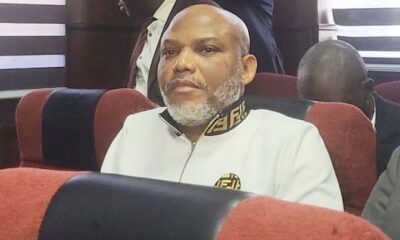

‘Show Me the Law’ Is Not a Joke — It Is Section 36, Section 122, and the Supreme Court, Spoken from the Dock
Ifedi argues that Kanu’s conviction relied on a repealed terrorism law, raising fundamental constitutional questions about its validity.
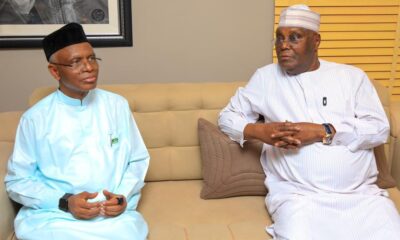

BREAKING: Atiku Appoints El-Rufai, Hayatu-Deen in ADC Presidential Campaign Council
Atiku Abubakar has announced the appointment of Nasir el-Rufai and Mohammed Hayatu-Deen to key positions in his African Democratic Congress,...

NECO Releases 2026 SSCE Results, Records Drop in Examination Malpractice
NECO has released the 2026 SSCE results, with 1,496 candidates recorded for examination malpractice, representing a 64.74% decrease from 2025.


PHOTOS: Anthony Joshua Endures ‘Torture’ Training Ahead of Fury Fight
Anthony Joshua has stepped up his preparations for a potential Tyson Fury showdown with an unusual stretching machine that has...
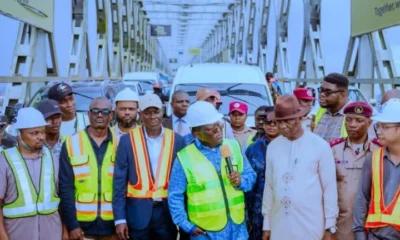

Umahi Orders Tinubu’s Pictures on First Niger Bridge
Works Minister David Umahi has ordered that President Bola Tinubu’s pictures be displayed on the First Niger Bridge after its...