
News
IPOB Raises Alarm Over Sharia Debate, Says Nigeria’s Structure Threatens Religious Freedom
IPOB has warned that ongoing debates over Sharia law highlight deeper structural issues in Nigeria…

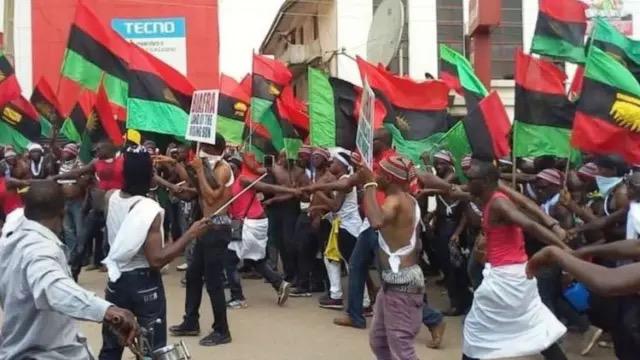
- IPOB has warned that ongoing debates over Sharia law highlight deeper structural issues in Nigeria, insisting that only a separate Biafra state can guarantee religious freedom and security.

The Indigenous People of Biafra (IPOB) has expressed concern over ongoing debates surrounding Sharia law in Nigeria, stating that the situation highlights deep structural challenges affecting religious freedom in the country.
In a statement issued on February 27, 2026, and signed by its spokesperson, Emma Powerful, the group referenced recent reports, including those linked to Riley Moore, and discussions involving former U.S. President Donald Trump, regarding the status of Sharia law in Nigeria.
IPOB, under the leadership of Nnamdi Kanu, stated that while it supports the right of Muslims to practice their religion, including the use of Sharia within their communities, it opposes what it described as the imposition of such laws on non-Muslims.
The group argued that the broader issue reflects what it called an inability of the Nigerian state to effectively protect citizens from religious-based violence and discrimination, particularly in parts of Northern Nigeria.
DON’T MISS: Businesswoman Who Accused Umahi of ₦250m Debt Collapses After Arrest, Hospitalised in Abuja (Video)
According to the statement, IPOB believes that Nigeria’s legal and governance structure allows for conflicting systems that undermine true secularism and equal protection under the law.
Reiterating its long-standing position, the group maintained that the creation of a separate Biafra state remains, in its view, the only solution to guarantee security, religious freedom, and human rights for affected populations.
IPOB also called on international actors, including the United States and other global institutions, to take note of the situation and engage with developments concerning religious freedom in Nigeria.





VIDEO: President Tinubu Receives Oyinkansola Badejo-Okusanya, NBA President-Elect at State House
President Bola Tinubu has received Nigerian Bar Association President-elect Oyinkansola Badejo-Okusanya and members of her delegation at the State House...


Sabotage Unmasked: From Malami Stay Disaster to Current Division — Why Ejiofor Must Be Kept Far From IPOB
The Indigenous People of Biafra (IPOB) has reaffirmed that Barrister Ifeanyi Ejiofor remains dismissed as its legal representative, insisting that...


Tems Leads Children of Blood and Bone Soundtrack: What Her New Role Means
Tems has been named executive music producer and curator of the Children of Blood and Bone soundtrack, marking another major...


Ghana’s Tallest Man Awuche Dies at 33, Cause of Death Emerges
Sulemana Abdul Samed, popularly known as Awuche and recognized as Ghana's tallest man, has died at the age of 33...


FG Job Recruitment Scams: How to Spot Fake Government Job Portals Before You Apply
Fake government job portals are targeting Nigerian job seekers. Here is how to identify real FG recruitment websites and avoid...


Nigeria vs Malawi: Five Reasons Super Falcons Lost Their WAFCON 2026 Opener
Nigeria’s Super Falcons suffered a shocking 3-2 defeat to Malawi in their WAFCON 2026 opener. Here are five key reasons...


BBNaija Day 3 Update: Neche and Ricky Spark Early Ship Rumours in Biggie’s House
BBNaija Season 11 Day 3 update as Neche and Ricky spark early ship rumours, with fans watching their chemistry, conversations...


BBNaija The Gambit Twist: Why Two Housemates May Reach Final But Lose ₦160m Prize
BBNaija Season 11 introduces The Gambit twist, where one male and one female housemate can reach the finale but lose...
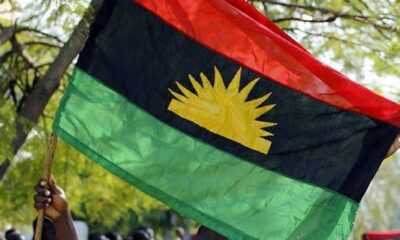

IPOB: Ifeanyi Ejiofor Remains Sacked; Re-Appointment by Expelled Renegades is Dead on Arrival
The Indigenous People of Biafra (IPOB) has insisted that Barrister Ifeanyi Ejiofor remains removed as its legal representative.

Alleged Rape: Body of 20-Year-Old Favour Agbro Exhumed for Autopsy as Investigation Deepens
The body of 20-year-old Favour Agbro, who died after accusing a Delta-based content creator of rape, has been exhumed for...