
Politics
BREAKING: India, Other Countries Rejects Tinubu’s Newly Appointed Ambassadors
Some countries, including India, are reportedly reluctant to accept several of President Bola Tinubu’s newly appointed ambassadors.

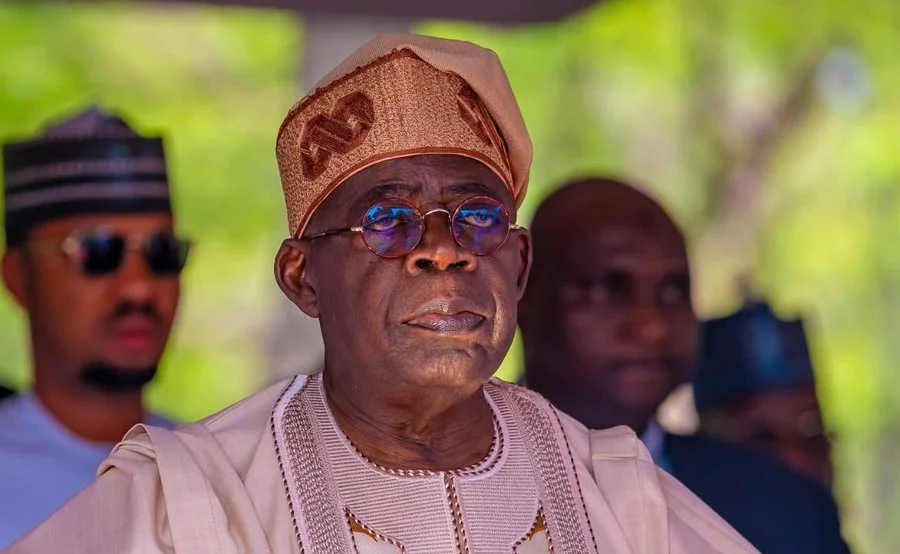
- Some countries, including India, are reportedly reluctant to accept several of President Bola Tinubu’s newly appointed ambassadors because of diplomatic conventions that discourage receiving envoys from administrations with less than two years remaining in office.

India and some other countries have reportedly declined to accept a number of President Bola Tinubu’s recently appointed ambassadors-designate due to diplomatic policies that discourage receiving envoys from governments with less than two years remaining in office.
VerseNews reports that senior officials within the Presidency and Nigeria’s foreign service disclosed that India, where career diplomat Ambassador Muhammad Dahiru has been posted, operates a long-standing policy against accepting ambassadors from administrations with limited time left in office.
According to sources familiar with the diplomatic exchanges, the Asian country is already signalling reluctance to grant agrément for Dahiru’s posting. Agrément is the formal approval a host country must give before a designated ambassador can assume duty.
A Presidency official explained that the hesitation is not necessarily about the individuals nominated but the timing of their appointment.
“They don’t accept an ambassador from an administration that has less than two years in office. They are already giving us that body language,” the official said.
The source added that some countries view the Tinubu administration as nearing the end of its current term, raising concerns about the stability of diplomatic postings.
“Some countries are reluctant to accept some people, not because of the individuals but because of time. They see the government as having about a year left, and if there is a change in government after the election, the ambassadors could be recalled,” the official explained.
A senior foreign service official also confirmed India’s position but expressed hope that Nigeria might still secure an exception due to the strong diplomatic relationship between both countries.
“I know India has that policy. If there are less than two years left in a government’s tenure, accepting an ambassador becomes difficult. However, we may be able to leverage our relationship with them,” the official said.
VerseNews reports that while India’s policy is the most clearly established, other countries may apply similar diplomatic conventions depending on their internal practices.
“India is the only one I can confirm for now. Others may follow their own conventions, but India clearly has a standing rule, so we will have to do a lot of convincing,” the official added.
Another government source disclosed that although the Ministry of Foreign Affairs has secured funds for the mandatory induction programme for ambassadors-designate, the exact timeline for the training remains uncertain.
President Tinubu had on March 6 approved the posting of 65 ambassadors-designate and high commissioners to various countries and international organisations.
Among the nominees are former Aviation Minister Femi Fani-Kayode (Germany), presidential aide Reno Omokri (Mexico), former Chief of Army Staff Abdulrahman Dambazau (China), and Senator Jimoh Ibrahim (Nigeria’s Permanent Representative to the United Nations).
So far, only two countries have granted agrément — the United Kingdom for High Commissioner-designate Aminu Dalhatu and France for Ambassador Ayodele Oke — leaving the status of the remaining envoys uncertain.
The next presidential election in Nigeria has been scheduled for January 16, 2027, while Tinubu’s first term is expected to end in May of the same year.
DON’T MISS: INEC Shifts 2027 Elections, Releases Full Revised Timetable
Diplomatic experts say the situation reflects pragmatic considerations by host countries. A former Nigerian envoy to Singapore, Ambassador Ogbole Amedu-Ode, noted that nations often assess the political timeline of the sending country before accepting ambassadors.
According to him, receiving states may delay approval if they believe a new administration could soon take office and possibly replace the envoys.
Another former Nigerian ambassador, Mohammed Mabdul, however suggested that political appointees may face more scrutiny than career diplomats.
He explained that political envoys are usually expected to remain in office for at least two to three years, but with elections approaching in about a year, some may return home to participate in political campaigns rather than fully carry out their diplomatic assignments.
VerseNews reports that the situation could further delay Nigeria’s effort to restore full ambassadorial representation abroad after the Tinubu administration recalled all 83 ambassadors in September 2023, leaving many of the country’s 109 diplomatic missions without substantive heads.






Asherkine Responds to Claims Viral Video of Ogun Canteen Worker Was Staged (Video)
Nigerian content creator Asherkine has addressed criticism surrounding a viral video in which he flew a woman he met at...


Heartbreaking Video of BBL Lady Crying in Pain Before Death Surfaces Online – WATCH
A disturbing video showing a woman identified as Jessica crying in severe pain during wound dressing after a BBL surgery...

BREAKING: Reps Imposes ₦10m Fine, Two-Year Jail Term in Amended Electoral Act 2026
The House of Representatives has amended the Electoral Act 2026 to prohibit Nigerians from belonging to more than one political...

BREAKING: India, Other Countries Rejects Tinubu’s Newly Appointed Ambassadors
Some countries, including India, are reportedly reluctant to accept several of President Bola Tinubu’s newly appointed ambassadors.

BREAKING: US Orders Non-Emergency Staff to Leave Bahrain, Jordan, Iraq
The United States has ordered the withdrawal of non-emergency personnel from Bahrain, Jordan, and Iraq.

FG Approves N4bn Each for 12 Universities to Upgrade Engineering Workshops (Full List)
The Federal Government has approved N4 billion for each of 12 universities to rehabilitate engineering workshops and procure modern equipment.


King Mitchy Management Retracts Death Claim After Suicide Attempt Using Hypo
King Mitchy’s management has given fresh update on her death report after attempting to commit suicide by drinking hypo...


Is VeryDarkMan and King Mitchy Dead After Drinking Hypo? What We Know So Far (Video)
Confusion surrounds reports involving VeryDarkMan and King Mitchy death rumor after attempts to commit suicide by drinking hypo...


PHOTOS: All You Need to Know as Alex Otti Flags Off Enyimba-Radisson Hotel Project in Aba
Governor Alex Otti has commissioned the reconstructed Ovom Road and flagged off the Enyimba-Radisson Hotel in Aba.


IPOB Raises Alarm Over Sharia Debate, Says Nigeria’s Structure Threatens Religious Freedom
IPOB has warned that ongoing debates over Sharia law highlight deeper structural issues in Nigeria...