
News
Court Declares It Legal to Record Police Officers on Duty
A Federal High Court in Warri has affirmed the right of Nigerians to record police officers in public.

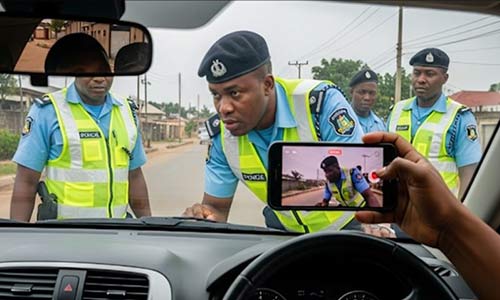
- A Federal High Court in Warri has affirmed the right of Nigerians to record police officers in public, awarding ₦7 million in damages and reinforcing accountability within the force.

The Federal High Court sitting in Warri, Delta State, has ruled that Nigerians have the constitutional right to record police officers performing their duties in public.
VerseNews reports that Justice H. A. Nganjiwa delivered the judgment on Tuesday in a suit marked FHC/WR/CS/87/2025, declaring that police officers must not harass, intimidate, arrest, or confiscate devices from citizens who record their activities.
The court also directed that officers must wear visible name tags and display their force numbers during operations, particularly in public engagements such as patrols and stop-and-search duties.
The suit was filed by Maxwell Uwaifo as a public interest litigation, challenging the legality of police operations carried out without proper identification. The respondents included the Inspector-General of Police, the Nigeria Police Force, the Police Service Commission, and the Attorney-General of the Federation.
VerseNews reports that the court awarded Uwaifo ₦5 million in damages for the violation of his fundamental rights and an additional ₦2 million to cover litigation costs, granting all the reliefs sought in the suit.
In his argument, the applicant maintained that citizens have the constitutional right under Section 39 to freely express themselves, including recording and publishing matters of public interest such as police conduct.
The court agreed, ruling that any attempt by police officers to prevent or punish citizens for recording them—through threats, harassment, or seizure of devices—is unlawful and unconstitutional.
DON’T MISS: BREAKING: FG Declares Two-Day Public Holiday
The case stemmed from multiple incidents in which the applicant was allegedly stopped by officers operating without proper identification and was threatened for attempting to record their actions.
The judgment is considered a significant development for civil liberties and police accountability in Nigeria, especially amid longstanding concerns over misconduct during stop-and-search operations.
It also reinforces existing positions by the Nigeria Police Force, which had previously stated that recording officers on duty is not an offence, while warning that any form of harassment against citizens who do so constitutes misconduct.
The ruling is expected to set a strong precedent for policing standards and the protection of citizens’ rights across the country.






‘We Miss Aregbesola’: Nigerian Youths Slam Tunji-Ojo Over Public Holiday Declaration (Video)
Nigerian youths have criticised Interior Minister Olubunmi Tunji-Ojo over the choice of Thursday and Friday as Eid-el-Fitr holidays.
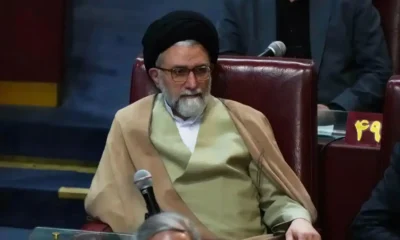

Israel Kills of Iran’s Intelligence Minister Esmail Khatib
Israel says it has killed Iran’s Intelligence Minister Esmail Khatib, though Iranian authorities have yet to confirm the claim amid...


Rival Fans Hold Mock Candlelight Procession for Chelsea After 8–2 Loss to PSG in Champions League (Video)
A viral video shows rival fans staging a mock candlelight procession for Chelsea after their 8–2 aggregate loss to Paris...


74-Year-Old Woman Gifts Governor Soludo Live Fowl at Inauguration (Video)
A 74-year-old woman drew attention at Governor Chukwuma Soludo’s inauguration in Awka after presenting a live fowl in appreciation of...
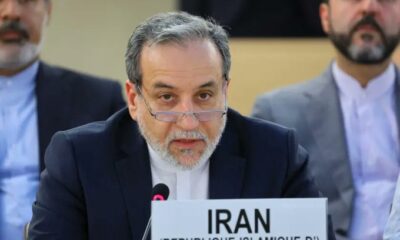

‘This War Will Hit Everyone No Matter Race, Religion’ – Iran Warns
Iran’s Foreign Minister Abbas Araghchi has warned that the ongoing war will impact people worldwide, urging more international voices to...

Court Declares It Legal to Record Police Officers on Duty
A Federal High Court in Warri has affirmed the right of Nigerians to record police officers in public.


BREAKING: FG Declares Two-Day Public Holiday
The Federal Government has announced two-day public holiday.

IPOB Accuses Nigerian Govt, Army of Plot to Demonise Group and Justify Attacks in South-East
The Indigenous People of Biafra has accused the Nigerian government and the military of fabricating insecurity in the South-East.

List of Approved 114 Universities to Run Law Programmes in Nigeria (Full List)
The Council of Legal Education has released the list of 114 universities authorised to run Bachelor of Laws (LL.B) programmes...


FG, States, LGs Share N1.89tn February Revenue
The Federation Account Allocation Committee has shared a total of N1.894 trillion as Federation Account revenue for February 2026...