
Politics
US Congress Faults FG, Declares Nigerian Christians Are Being ‘Targeted for Death’
Senior US lawmakers have dismissed Nigeria’s claims on religious violence, insisting new findings show Christians are being deliberately targeted in ongoing attacks across the country.

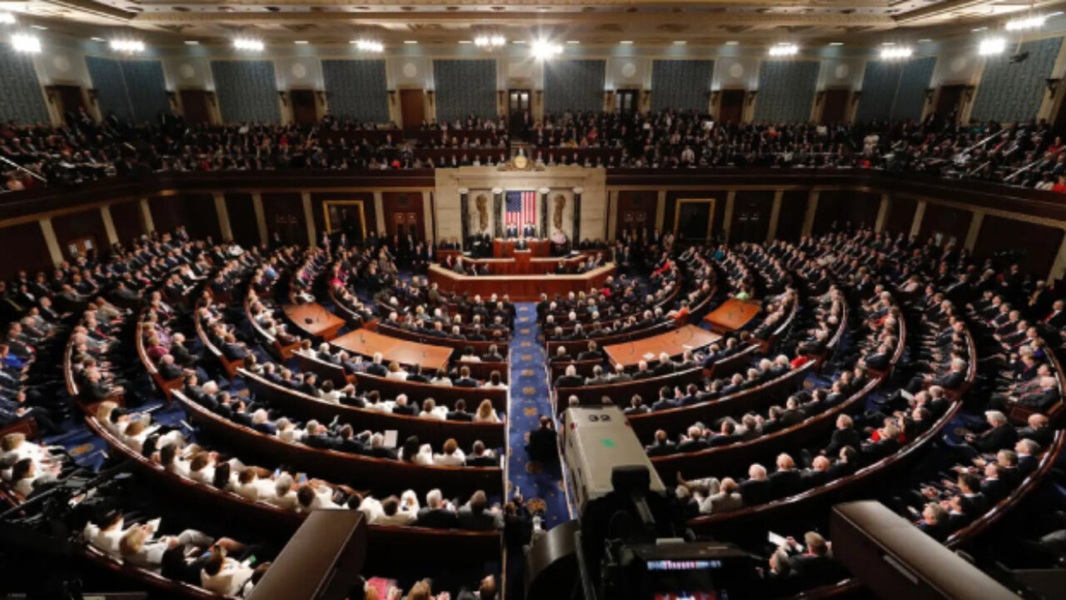
- Senior US lawmakers have dismissed Nigeria’s claims on religious violence, insisting new findings show Christians are being deliberately targeted in ongoing attacks across the country.

The controversy surrounding alleged mass killings of Christians in Nigeria has resurfaced powerfully in Washington, as senior members of the United States Congress again faulted the Federal Government’s position and insisted that available evidence points to clear religious targeting.
The latest confrontation followed a joint briefing held by the House Appropriations Committee and the House Foreign Affairs Committee, where lawmakers reviewed fresh findings on Nigeria’s insecurity. Both committees warned that the situation demands urgent international attention.
The session formed part of a wider congressional investigation ordered by former US President Donald Trump. He directed Congress to compile a detailed report on the alleged persecution of Christians in Nigeria and recommend actions the US government could take.
House Appropriations Vice Chair, Mario Díaz-Balart, who led the meeting, said the briefings so far reveal serious lapses in Nigeria’s security response. He noted that the committee’s final report would advise Washington on possible diplomatic steps and security measures.
One of the strongest warnings came from Vicky Hartzler, Chair of the US Commission on International Religious Freedom. She told lawmakers that “religious freedom [is] under siege,” citing incidents where “radical Muslims kill entire Christian villages and burn churches.” She referenced the abduction of schoolchildren and rising attacks in remote communities, describing the violations as widespread, brutal, and overwhelmingly directed at Christians.
According to her, Christians are targeted “at a 2.2 to 1 rate” compared to Muslims.
Hartzler acknowledged some recent actions by the Nigerian government, including President Bola Tinubu’s withdrawal of about 100,000 police officers from VIP protection duties, calling it a “promising start.” However, she warned that the country is entering “a coordinated and deeply troubling period of escalated violence” and pushed for sanctions on Nigerian officials believed to be complicit.
She also urged stricter conditions on US aid, enhanced oversight, and a Government Accountability Office review. A key priority, she said, was for the Nigerian government to reclaim villages overtaken by armed groups so displaced families could return.

Dr. Ebenezer Obadare of the Council on Foreign Relations added that claims extremists attack Muslims and Christians equally were a “myth.” He argued that Boko Haram and similar terror networks operate primarily for religious purposes and criticised the Nigerian military as “too corrupt and incompetent” to dismantle the extremists without external pressure.
Obadare called for disbanding armed groups enforcing Islamic law in rural areas and urged immediate government responses to early-warning alerts.
DON’T MISS: BREAKING: FG Releases List of Terrorism Financiers in Nigeria, Blacklists Six Companies
Sean Nelson of ADF International described Nigeria as “the deadliest country in the world for Christians,” noting that more Christians are killed in Nigeria than in all other countries combined. He said extremists also target Muslims who reject their ideology and called for closer monitoring of how US aid is utilised, including transparency around ransom payments and rescue efforts for kidnap victims.
Díaz-Balart criticised the Biden administration for removing Nigeria from the list of “countries of particular concern” in 2021, arguing that the move had “clearly deadly consequences.” He pledged that Congress would intensify oversight as Trump’s ordered report nears completion.
Despite acknowledging a few improved security steps, Hartzler stressed that Nigeria must demonstrate clear intent to “quell injustice,” respond swiftly to early signs of violence, and ensure accountability for security failures.
The Nigerian Embassy in Washington did not respond to inquiries at the time of filing this report.






‘You’d Be Detained If You Were Igbo’ — Police Arrest 4 Officers Caught in Viral Video Over Ethnic Comments
The Ondo State Police Command has arrested four police officers captured in a viral video allegedly making ethnically insensitive remarks...

2027: ‘Your Votes Will Count’ — INEC Chairman Sends Strong Message to Nigerians
The Chairman of the Independent National Electoral Commission (INEC), Prof. Joash Amupitan, has assured Nigerians that their votes will count...

Lagos Introduces Compulsory Building Insurance to Landlords
The Lagos State Government has launched the Lagos State Building Insurance Scheme (LAGBIS) to enforce compulsory building insurance...

FG Begins Review of VAT Rules, Sets Up Committee to Draft New Tax Order
The Federal Government has inaugurated an inter-ministerial committee to develop a new Value Added Tax (VAT) Modification Order aimed at...

₦69m Fraud: Court Grants Blessing CEO ₦20m Bail, Imposes Strict Conditions
A Lagos State Special Offences Court has granted social media personality Blessing CEO ₦20 million bail in her ongoing trial...

‘No More Mercy, Shoot on Sight’ – IGP Issues Tough New Order Against Illegal Gun Carriers
The Inspector-General of Police (IGP), Olatunji Disu, has directed police officers across the country to shoot on sight anyone found...

UNICAL Suspends Admission Into Medicine, Dentistry, Two Other Courses
The University of Calabar (UNICAL) has suspended admissions into Medicine and Surgery, Dentistry, and Medical Laboratory Science for the 2026/2027...

‘He Gave Na’Abba ₦5m to Impeach Me’ ; ‘You’re Still Bitter Over Third-Term Saga’ — Obasanjo, Atiku in Fresh War of Words
Former President Olusegun Obasanjo has alleged that former Vice President Atiku Abubakar gave the late former Speaker of the House...


Nigerian-American Engineer Develops World’s First Braid-Assist Robot, Raises $7 Million
Nigerian-American engineer and Harvard graduate, Yinka Ogunbiyi, has developed HaloBraid, the world's first braid-assist robot.

BREAKING: US Reacts to Killing of Plateau Pastor’s Family, Makes Demand
The United States has condemned the killing of nine members of the family of Plateau pastor, Rev. Ezekiel Dachomo, describing...