
World News
BREAKING: U.S. Freezes Visa Processing for Applicants From Nigeria, 74 Other Countries (Full List)
The United States State Department is preparing to indefinitely suspend visa processing for applicants from at least 75 countries…

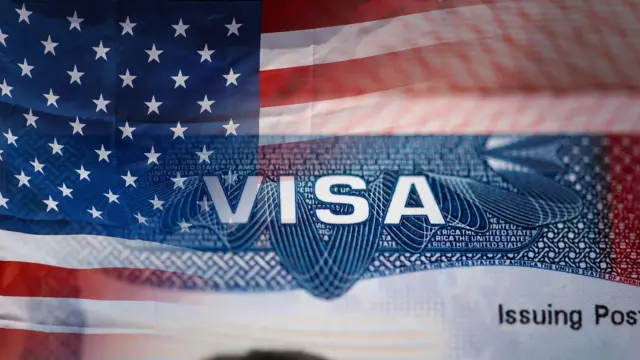
- The United States State Department is preparing to indefinitely suspend visa processing for applicants from at least 75 countries as part of a renewed crackdown on immigration under expanded “public charge” rules.

The United States State Department is preparing to indefinitely suspend visa processing for applicants from at least 75 countries, as part of a renewed immigration crackdown aimed at blocking individuals deemed likely to rely on U.S. government assistance.
According to reports citing an internal State Department memo, consular officers worldwide have been instructed to refuse visas under existing legal authorities while the agency undertakes a comprehensive reassessment of its screening and vetting procedures. The suspension is expected to take effect from January 21.
The move is anchored in an expanded interpretation of the long-standing “public charge” provision of U.S. immigration law, which allows authorities to deny entry to non-citizens who are considered likely to become primarily dependent on government support for subsistence.
Expanded Criteria for Visa Refusal
Under the updated guidance, visa officers are empowered to evaluate applicants using a broad “totality of circumstances” approach. Key factors include:
- Health and Age: Elderly applicants or individuals with chronic medical conditions such as diabetes, heart disease, or cancer may face heightened scrutiny.
- Physical Condition: Obesity may be considered a negative factor if it is projected to result in expensive, long-term medical costs.
- Financial Stability and Skills: Greater emphasis is now placed on English language proficiency, level of education, employment prospects, and immediate access to financial resources.
- Benefit History: Any past reliance on government cash assistance or institutional care is treated as a significant red flag.
A State Department spokesperson said the agency would use its long-standing authority to prevent entry by immigrants who could become a public burden, adding that the policy is intended to protect U.S. taxpayers.
Policy Shift From Biden-Era Rules
While the “public charge” test has existed for decades under the Immigration and Nationality Act, its application has varied widely between administrations. The Biden-era rules introduced in 2022 significantly narrowed its scope, focusing mainly on long-term institutional care and cash assistance while excluding non-cash benefits such as SNAP (food stamps) and Medicaid.
The new directive seeks to reverse that leniency, restoring broad discretion to consular officers to assess an applicant’s potential future economic impact on the United States.
The suspension follows a November 2025 cable from Secretary of State Marco Rubio, instructing U.S. diplomatic posts worldwide to implement more rigorous screening measures and to deny visas when applicants fail to clearly overcome public charge concerns. Officials noted that exceptions to the pause will be “very limited” and granted only to individuals who can demonstrably meet the threshold.
DON’T MISS: INEC Resumes Nationwide Voter Registration as Second Phase Begins
Full List of Affected Countries
According to the report, the suspension applies to applicants from the following countries:
Afghanistan, Albania, Algeria, Antigua and Barbuda, Armenia, Azerbaijan, Bahamas, Bangladesh, Barbados, Belarus, Belize, Bhutan, Bosnia, Brazil, Burma, Cambodia, Cameroon, Cape Verde, Colombia, Côte d’Ivoire, Cuba, Democratic Republic of the Congo, Dominica, Egypt, Eritrea, Ethiopia, Fiji, Gambia, Georgia, Ghana, Grenada, Guatemala, Guinea, Haiti, Iran, Iraq, Jamaica, Jordan, Kazakhstan, Kosovo, Kuwait, Kyrgyzstan, Laos, Lebanon, Liberia, Libya, Macedonia, Moldova, Mongolia, Montenegro, Morocco, Nepal, Nicaragua, Nigeria, Pakistan, Republic of the Congo, Russia, Rwanda, Saint Kitts and Nevis, Saint Lucia, Saint Vincent and the Grenadines, Senegal, Sierra Leone, Somalia, South Sudan, Sudan, Syria, Tanzania, Thailand, Togo, Tunisia, Uganda, Uruguay, Uzbekistan, and Yemen.
Broader Context
The decision comes amid a broader tightening of U.S. immigration policy during the Trump administration’s return to office, with officials citing concerns over welfare dependency, benefit fraud, and national economic interests.
The State Department maintains that the measure is lawful, temporary in scope, and necessary to strengthen immigration controls while updated vetting standards are finalized.






Bus Driver Returns Over N400,000 Forgotten by Passenger in Abia
An Abia commercial bus driver, Onyekachi Ikpendu, has been praised after returning over N400,000 and personal belongings accidentally left behind...


FG Begins N18bn Payment to 2,700 Ex-Nigeria Airways Workers After 20 Years
The Federal Government has commenced the payment of N18bn in outstanding severance benefits to 2,700 former Nigeria Airways workers...


Nigerians to Get Free Data Daily for Online Learning
The Nigerian Communications Commission has launched a zero-rated data initiative that will provide eligible users with up to 100MB of...


BREAKING: Peter Obi Breaks Silence on Stepping Down for Atiku
Peter Obi says any alliance with Atiku Abubakar must be negotiated by their political parties, while outlining his positions on...


BREAKING: National Assembly Suspends South Africa Trips, Orders Legislative Boycott
The National Assembly has suspended official visits to South Africa and participation in its legislative events over reported xenophobic attacks...


How Justice Omotosho Turned Criminal Law Upside Down to Convict Nnamdi Kanu
According to Chidera, Section 36(12) of the Nigerian Constitution requires a criminal offence to be defined and its punishment prescribed...


IPOB: The Boycott Is Not a Threat — List Kanu’s Appeal or Lose Biafraland’s Vote
The Indigenous People of Biafra (IPOB) has threatened a total boycott of upcoming elections across Biafraland and other areas if...

Kanu Fires Lawyer for ‘Gross Incompetence’ — IPOB Warns Media: Stop Calling Him Our Counsel
The Indigenous People of Biafra (IPOB) has said lawyer Ifeanyi Ejiofor is no longer a member of its legal team,...

How Nigerian Media Buried the Constitutional Time Bomb in Kanu’s Conviction
Legal practitioner Christopher Chidera, Esq., has launched a sharp criticism against major Nigerian media outlet....
IPOB: List Kanu’s Appeal in 14 Days or We Boycott 2027 General Elections Across Biafraland
The Indigenous People of Biafra (IPOB) has given the Federal Government of Nigeria a 14-day ultimatum to list and hear...