
News
BREAKING: EU Removes Nigeria from ‘High-Risk’ Financial List
Nigeria has been taken off the European Union’s list of high-risk jurisdictions after strengthening its anti-money laundering framework.

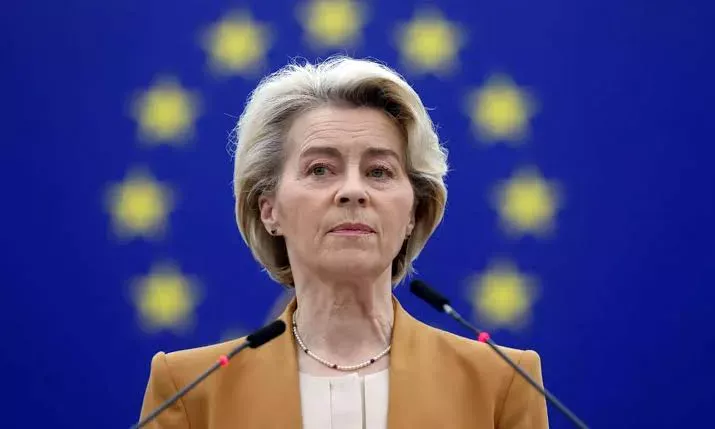
- Nigeria has been taken off the European Union’s list of high-risk jurisdictions after strengthening its anti-money laundering framework.

Nigeria has been officially removed from the European Union’s list of high-risk jurisdictions, a move expected to significantly improve trade relations, ease cross-border payments and attract increased investment from Europe.
According to a report by Business Insider on Wednesday, the European Commission confirmed that Nigeria, along with South Africa, Burkina Faso, Mali, Mozambique and Tanzania, had strengthened their anti-money laundering and counter-terrorism financing (AML/CFT) regimes and no longer posed “strategic deficiencies” under the EU’s assessment standards.
The commission stated that the affected countries implemented key reforms that aligned their financial systems with international benchmarks set by the Financial Action Task Force (FATF).
Reacting to the development, the Minister of State for Finance, Dr Doris Uzoka-Anite, described Nigeria’s removal from the list as a major boost to investor confidence and economic engagement with Europe.
In a post on X on Thursday, she wrote, “Big win for Nigeria! Removed from EU’s financial ‘high-risk’ list! Congrats to President @officialABAT on this achievement. As Minister of State for Finance, I’m proud of this boost to trade and investor confidence.”
DON’T MISS: BREAKING: U.S. Freezes Visa Processing for Applicants From Nigeria, 74 Other Countries (Full List)
Nigeria’s inclusion on the EU’s high-risk list in the past meant that financial transactions involving European partners were subjected to enhanced due diligence, stricter documentation requirements and increased regulatory oversight.
These measures often slowed cross-border trade, complicated investment flows and increased compliance costs for Nigerian businesses and financial institutions.

With the country’s removal from the list, analysts expect smoother financial transactions, improved access to European markets and renewed confidence among foreign investors seeking opportunities in Africa’s largest economy.




BREAKING: Adeleke Wins Osun Governorship Election, Defeats APC’s Oyebamiji (Full Results)
Governor Ademola Adeleke has been declared the winner of the Osun State governorship election after securing 511,067 votes across the...

Tinubu Dragged to Court, Faces Disqualification From 2027 Presidential Election Over Alleged Forged NYSC Certificate
Former Vice President Atiku Abubakar has asked the Federal High Court in Abuja to disqualify President Bola Tinubu from contesting...


‘I Did Not Create Myself’ — Man With Female-Breasts Like Chest Speaks Out Against Body Shaming (Video)
A slim man with prominent breasts has spoken out against body shaming, questioning why he is criticised for going topless...

IPOB: Sheikh Jingir Declares Nigeria a Muslim Country — Exactly What Nnamdi Kanu Warned the World About
IPOB says Sheikh Sani Yahaya Jingir’s reported remarks vindicate Nnamdi Kanu’s longstanding warnings about religious domination in Nigeria.


Air Peace Flight Operations Grounded Nationwide
Air Peace has announced temporary disruptions to its flight operations after members of the Nigeria Labour Congress and aviation unions...


FG, NBA, UNICEF Unveil Free Legal Services for Children
The Federal Government, Nigerian Bar Association and UNICEF have launched a new partnership aimed at expanding access to pro bono...


VIDEO: Osun Businesswoman Shares Rice, Tells Residents to Vote APC Candidate
An Osun businesswoman, Alhaja Falilat Yusuf, popularly known as Ero-Arike, has sparked reactions online after a video showed her distributing...


UK Radio Station Fined After Accidentally Announcing King Charles III’s Death
UK broadcaster Radio Caroline has been found to have breached broadcasting rules after accidentally airing a false announcement of King...

WAEC Demands Strict CBT to Tackle ‘Miracle Centres’, Examination Malpractice
WAEC, Examination Malpractice, Miracle Centres, Computer-Based Testing, CBT, Benue Education, WAEC Exams,


BBNaija Season 11: Nenche Becomes Second Female Housemate to Win HoH
Big Brother Naija Season 11 housemate Nenche has emerged as the Head of House for Week 3 after winning Monday’s...