
Politics
170 Killed in Kwara as Silence Prevails, While Man Who Issued Warnings Faces Life Sentence
As over 170 people are reported killed in attacks on Kwara communities, critics question why mass violence is met with silence.

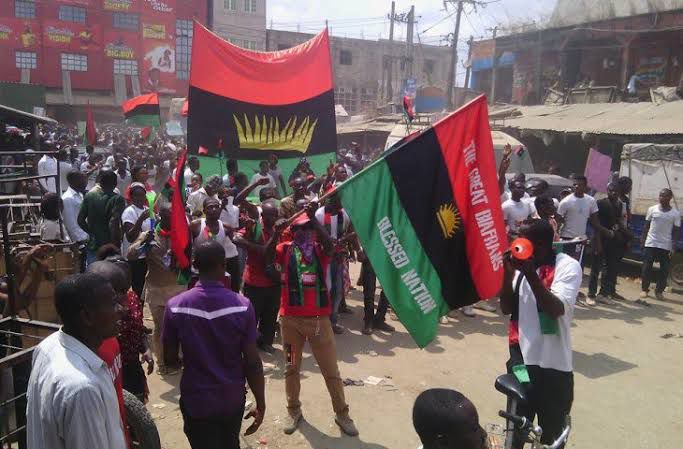
- As over 170 people are reported killed in attacks on Kwara communities, critics question why mass violence is met with silence, while Nnamdi Kanu, who warned about rising insecurity, continues to serve a life sentence over his words.

A stark moral contradiction has resurfaced in Nigeria following reports that at least 170 people were killed in coordinated attacks on rural communities in Kwara State, even as the man who long warned about the spread of violence and extremism, Mazi Nnamdi Kanu, remains sentenced to life imprisonment.
In an opinion piece, Rev. Tony Uzor describes the situation as a troubling inversion of justice, where mass killings are met with muted national response, while speech and warnings are punished with the full force of the state. According to reports, gunmen attacked villages in Woro and Nuku areas of Kwara State, killing residents, burning homes and displacing families. Security forces were later deployed to the area, but only after the attacks had taken place.
The incident, which occurred in Yoruba-speaking communities, has drawn limited sustained national outrage compared to the intense media and political focus often directed at issues surrounding IPOB and its detained leader, Nnamdi Kanu. Uzor argues that this imbalance reflects a broader failure to prioritise the protection of lives over the suppression of dissenting voices.
Kanu, who has consistently warned about insecurity, religious extremism and state failure, was convicted in November 2025 by the Federal High Court in Abuja on terrorism-related charges linked to his broadcasts and agitation for Biafran self-determination. Justice James Omotosho sentenced him to life imprisonment, with the terms ordered to run concurrently.
DON’T MISS: Trump Acknowledges Nigeria’s First Lady, Remi Tinubu, at US National Prayer Breakfast
The article contends that Kanu was punished not for acts of violence, but for words that challenged the political and security status quo, while armed groups responsible for mass killings across parts of the country continue to operate with limited accountability.
Uzor further argues that Nigeria’s response to insecurity reveals a dangerous precedent where those who speak are harshly sanctioned, while those who kill are managed through delayed interventions and official statements. He warns that a society that prioritises silencing voices over saving lives risks losing its moral foundation.
The piece concludes that Nigeria’s enduring instability is rooted not only in insecurity, but in fear of ideas, fear of accountability and fear of confronting uncomfortable truths.






How Justice Omotosho Turned Criminal Law Upside Down to Convict Nnamdi Kanu
According to Chidera, Section 36(12) of the Nigerian Constitution requires a criminal offence to be defined and its punishment prescribed...

IPOB: The Boycott Is Not a Threat — List Kanu’s Appeal or Lose Biafraland’s Vote
The Indigenous People of Biafra (IPOB) has threatened a total boycott of upcoming elections across Biafraland and other areas if...


Kanu Fires Lawyer for ‘Gross Incompetence’ — IPOB Warns Media: Stop Calling Him Our Counsel
The Indigenous People of Biafra (IPOB) has said lawyer Ifeanyi Ejiofor is no longer a member of its legal team,...

How Nigerian Media Buried the Constitutional Time Bomb in Kanu’s Conviction
Legal practitioner Christopher Chidera, Esq., has launched a sharp criticism against major Nigerian media outlet....
IPOB: List Kanu’s Appeal in 14 Days or We Boycott 2027 General Elections Across Biafraland
The Indigenous People of Biafra (IPOB) has given the Federal Government of Nigeria a 14-day ultimatum to list and hear...
No Court Can Confer Jurisdiction — So Who Gave the Supreme Court the Power to Resurrect Dead Counts?
In a legal briefing issued by Onyedikachi Ifedi, Esq., the consortium questioned the legal basis upon which counts earlier quashed...

IPOB Reveals What Nnamdi Kanu Has Achieved for Biafrans
The Indigenous People of Biafra (IPOB) has credited its leader, Nnamdi Kanu, with playing a major role in mobilising public...


FULL LIST: Arsenal Host Real Madrid, Man City Face PSG In Champions League Draw
Full list of 2026/27 UEFA Champions League league phase draw as Arsenal host Real Madrid, Man City face PSG and...


NYSC Sets September Registration Date for 2026 Batch C, Issues Mandatory Clearance Warning
The National Youth Service Corps has fixed September 7 to 13, 2026, for online registration of prospective corps members in...

BREAKING: Gunmen Kill Kogi APC Chairman, Abduct Passenger in Highway Attack
Gunmen have killed the APC chairman in Dekina Local Government Area of Kogi State, Ishaq Yunusa...