
News
BREAKING: Tinubu Launches $3.05b Poverty Reduction Plan
President Bola Tinubu has launched five major poverty reduction plan worth $3.05 billion to tackle poverty, improve healthcare and education, support displaced persons…

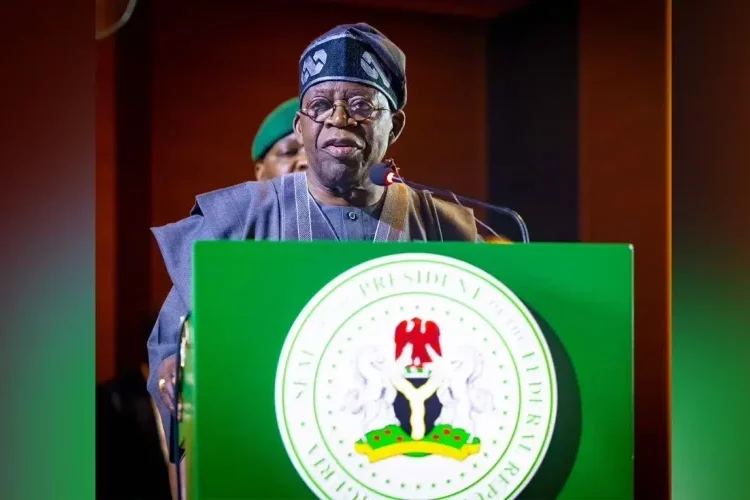
- President Bola Tinubu has launched five major poverty reduction plan worth $3.05 billion to tackle poverty, improve healthcare and education, support displaced persons, and boost community development across Nigeria.

President Bola Ahmed Tinubu has unveiled five coordinated social intervention programmes valued at approximately $3.05 billion, describing them as a major step toward reducing poverty, strengthening communities, and investing in Nigeria’s human capital.
The programmes, launched on Thursday, include the Nigeria Community Action for Resilience and Economic Stimulus Additional Financing (NG-CARES), the Solutions for Internally Displaced Persons and Host Communities (SOLID) initiative, and the three-component Human Capital Opportunities for Prosperity and Equity (HOPE) programme, comprising HOPE Gov, HOPE PHC, and HOPE Edu.
Represented by the Minister of Finance and Coordinating Minister of the Economy, Wale Edun, President Tinubu said the interventions are designed to ensure that the country’s recent economic reforms translate into tangible benefits for Nigerians at the grassroots.
“This is not just a set of programmes; these are promises kept,” the President said.
“Under the Renewed Hope Agenda, we pledged to reform our economy, protect the vulnerable, and invest in our people. Today, we are fulfilling that promise by empowering communities, supporting families, and building the human capital that will drive Nigeria’s future.”
According to the President, NG-CARES will receive about $1.25 billion in additional financing from the World Bank to support smallholder farmers, vulnerable households, and small businesses affected by economic challenges.
The SOLID programme, backed by $300 million, is aimed at improving the lives of internally displaced persons (IDPs) and their host communities by bridging the gap between humanitarian assistance and long-term development.
Tinubu explained that the remaining $1.5 billion HOPE package will strengthen governance, improve primary healthcare services, expand access to quality education, support teachers, and enhance learning outcomes nationwide.
He stressed that the five programmes are not isolated initiatives but part of one coordinated national strategy to reduce poverty, improve healthcare and education, and build resilient communities.
Minister of Budget and Economic Planning, Atiku Bagudu, described the interventions as a comprehensive government response to rising living costs, poverty, and Nigeria’s human capital challenges.
He noted that the programmes were carefully designed to cushion the effects of global economic shocks, including disruptions caused by the Russia-Ukraine conflict and tensions in the Middle East, which have significantly impacted energy prices and the cost of living worldwide.
Minister of Health and Coordinating Minister of Social Welfare, Prof. Muhammad Ali Pate, disclosed that the HOPE PHC component will benefit about 40 million Nigerians by improving access to quality healthcare, reducing maternal and child mortality, and strengthening the country’s primary healthcare system.
He revealed that the $570 million health programme will fund the rehabilitation of thousands of primary healthcare centres, improve access to medicines and medical equipment, and strengthen service delivery through performance-based financing.
According to Pate, over 3,000 primary healthcare centres have already been upgraded to Level 2 status, with another 1,000 facilities nearing completion. He also said more than 69,000 frontline health workers have been trained, while 60,000 have received uniforms and medical kits.
Minister of Education, Tunji Alausa, said the HOPE Edu programme, valued at $562 million, will expand Nigeria’s education reform efforts to nearly 30 million children across all 36 states and the Federal Capital Territory.
The initiative will support approximately 65,000 public schools, train and support 500,000 teachers, fund school construction and innovation, and improve foundational learning outcomes.
“Education remains the greatest investment any responsible government can make in its people, and this administration is committed to making that investment,” Alausa said.
Minister of Humanitarian Affairs and Poverty Reduction, Dr. Bernard Doro, said the programmes demonstrate the government’s commitment to ensuring that no Nigerian, regardless of location or circumstance, is left behind.
The World Bank also welcomed the initiative, with its Country Representative, Matthew Burges, describing the programmes as strategic investments in Nigeria’s greatest asset—its people.
Representing the Nigeria Governors’ Forum, Ondo State Governor Lucky Aiyedatiwa pledged the support of state governments in ensuring the successful implementation of the programmes, while the National Assembly also assured the Federal Government of its legislative backing through oversight and necessary legal support.





IPOB Embraces Hausa Nation and All Northern Ethnic Nationalities in Historic Solidarity Declaration for Universal Freedom
IPOB has declared solidarity with Hausa people and other ethnic nationalities in Northern Nigeria, calling for a peaceful...

Nnamdi Kanu’s Legal Team Raises Fresh Questions Over Omotosho’s Judgment in Part 3 Commentary
Onyedikachi Ifedi, Esq., has questioned the legal basis of Nnamdi Kanu’s conviction, alleging irregularities involving Count 7....


IPOB Denies Plans to Resume Monday Sit-at-Home, Rejects Alleged Police Intelligence Report
IPOB has dismissed a purported police intelligence report alleging plans to resume Monday sit-at-home enforcement in the South-East...

‘No Negotiations, Only Referendum’ — Kanu’s Message to American Veterans of Igbo Descent
IPOB leader Nnamdi Kanu has reaffirmed his demand for a referendum on Biafra's self-determination, insisting he will reject any political...
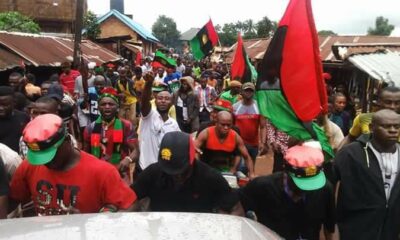

IPOB Condemns NYSC Abductions in Imo, Accuses Uzodinma of Political Conspiracy
IPOB has condemned the reported abduction and rescue of NYSC members in Imo State, denying involvement and accusing Governor Hope...
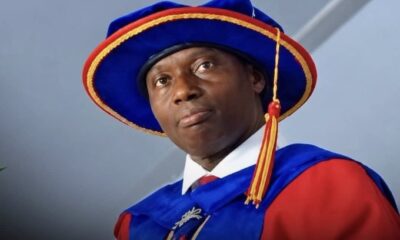

Ambrose Alli University Lecturer Dies in Hotel Room After Sexual Encounter With 21-Year-Old Woman
A senior lecturer at Ambrose Alli University, Ekpoma, Dr Matthew Uwuigbe, has died in a hotel room in Edo State...

Omotosho’s First Jurisdictional Failure — The Court Lacked Authority to Try Kanu
The Mazi Nnamdi Kanu Global Legal Consortium has alleged that the Federal High Court lacked jurisdiction to try Kanu on...
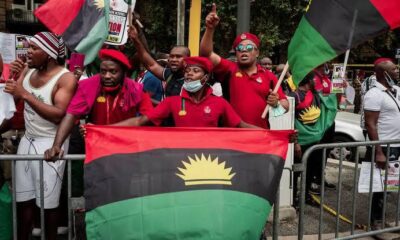

‘No Government Without a Country’: IPOB Rejects Self-Appointed Biafra Government Officers
Mazi Chris Nwaọgụ has reiterated IPOB’s demand for Nnamdi Kanu’s freedom and Biafra’s restoration, while calling for Kanu’s appeal to...
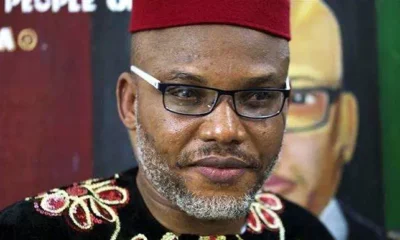

Sokoto Declaration: Emma Powerful Dismantles False Claims, Reaffirms Onyendu Mazi Nnamdi Okwu Kanu’s Referendum Position
Kanu’s camp has rejected claims that he did not approve or co-sign the Sokoto Declaration, while stressing that he does...
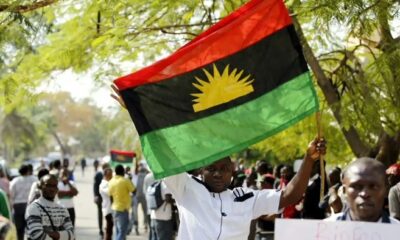

Kanu’s Unlawful Conviction, the Law That Was Already Dead, and the Shame That Is Waiting for Nigeria’s Judiciary
Christopher Chidera, Esq., has challenged the legal basis of Nnamdi Kanu’s conviction, arguing that the trial court relied on a...