
Business
BREAKING: World Bank Warns Nigeria to Diversify Exports, Reform Finances Amid Rising Debt
The World Bank has cautioned Nigeria and other Sub-Saharan African nations to implement export diversification and fiscal reforms as public debt and servicing costs continue to rise,

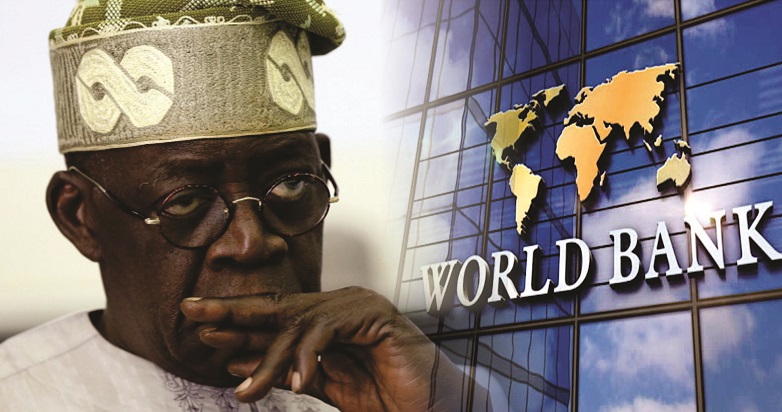
- The World Bank has cautioned Nigeria and other Sub-Saharan African nations to implement export diversification and fiscal reforms as public debt and servicing costs continue to rise, despite sluggish economic growth.

The World Bank has raised alarms over Nigeria’s rising debt levels, urging the country to pursue export diversification and fiscal reforms to prevent worsening economic strain.
The warning was contained in the International Debt Report 2025, which highlights Sub-Saharan Africa as an outlier where debt levels and servicing costs increased through 2024 despite weak GDP growth, driven largely by countercyclical official financing rather than productive investment.
According to the report, Nigeria’s public debt stock, which combines external and domestic obligations, rose 2.01 per cent quarter-on-quarter to N152.39tn (US$99.65bn) in Q2 2025, up from N149.38tn (US$97.23bn) in Q1.
Financial analysts have expressed concern over the nation’s growing debt profile, especially as the government plans to borrow N17.89tn in 2026, following approvals for N1.15tn domestic loans in late 2025.
The report notes that Sub-Saharan Africa diverged from other regions post-COVID, with external debt continuing to rise even as economic output lagged. “Sub-Saharan Africa stands out as an exception, both debt levels… and servicing burdens have continued to rise even as growth remains subdued, underscoring persistent fiscal stress,” the analysis states.
DON’T MISS: CBN Directs Banks to Enforce Multi-Factor Authentication for Foreign Card Transactions
Negative correlations between GDP growth and debt accumulation became pronounced across the region during 2020–2024, affecting 64 per cent of low- and middle-income countries (LMICs).
High debt levels, according to the World Bank, amplify vulnerabilities by crowding out critical sectors such as health, education, and infrastructure, and can exacerbate nutrition insecurity and institutional weaknesses.
“High external debt burdens are also associated with broader systemic fragility, because countries with weaker institutions… face elevated vulnerability,” the report warns.
The World Bank report also highlighted Nigeria’s return to the international bond market in 2024, raising US$2.2bn in Eurobonds at yields of 9.625 and 10.375 per cent to fund budget deficits. While this reflects renewed investor confidence, the rates are notably higher than pre-2008 levels, emphasizing the cost of borrowing.

Despite the challenges, Nigeria posted one of Africa’s largest current account surpluses in 2024, alongside Djibouti and Angola, contrasting with many LMIC peers running deficits.
The country remains one of the top recipients of World Bank inflows, alongside Bangladesh, Kenya, and Pakistan, benefiting from record multilateral credit totaling US$36bn in 2024, up 30.4 per cent from the previous year.
The report underscores that Nigeria and other Sub-Saharan African nations must take urgent action to diversify exports, implement prudent fiscal management, and ensure debt sustainability to avoid deepening economic vulnerabilities in the years ahead.





King Mitchy Management Retracts Death Claim After Suicide Attempt Using Hypo
King Mitchy’s management has given fresh update on her death report after attempting to commit suicide by drinking hypo...


Is VeryDarkMan and King Mitchy Dead After Drinking Hypo? What We Know So Far (Video)
Confusion surrounds reports involving VeryDarkMan and King Mitchy death rumor after attempts to commit suicide by drinking hypo...

PHOTOS: All You Need to Know as Alex Otti Flags Off Enyimba-Radisson Hotel Project in Aba
Governor Alex Otti has commissioned the reconstructed Ovom Road and flagged off the Enyimba-Radisson Hotel in Aba.

IPOB Raises Alarm Over Sharia Debate, Says Nigeria’s Structure Threatens Religious Freedom
IPOB has warned that ongoing debates over Sharia law highlight deeper structural issues in Nigeria...

Businesswoman Who Accused Umahi of ₦250m Debt Collapses After Arrest, Hospitalised in Abuja (Video)
Businesswoman Tracy Nicolas Ohiri collapsed and was hospitalised in Abuja after her arrest over cyberbullying allegations linked to a ₦250...

Bandits Kill 29, Abduct Many in Fresh Attacks
Coordinated attacks across Adamawa, Kebbi, Sokoto, and Kwara states have left dozens dead and many abducted.

INEC Shifts 2027 Elections, Releases Full Revised Timetable
INEC has brought forward Nigeria’s 2027 general elections to January and February, releasing a detailed timetable after adjusting the schedule...


BREAKING: Court Jails Popular Herbalist Akwa Okuku Tiwaraki na Oba, Orders Shrine Demolition
A court has sentenced popular herbalist Akwa Okuku Tiwaraki na Oba to 11 months imprisonment, ordered the demolition of his...

BREAKING: Fubara Appoints New Chief of Staff, SSG
Governor Siminalayi Fubara has appointed new top aides in Rivers State, a move coming amid ongoing political tension.

Embarrassing Moment ‘Nepa’ Took Light During Tunji Disu’s Decoration as Acting IGP in Abuja (Video)
A power outage disrupted the decoration of Tunji Disu as acting IGP in Abuja, sparking reactions after the incident occurred...