
News
UN Warns 35 Million Nigerians Face Acute Hunger in 2026
The United Nations says nearly 35 million Nigerians could face acute food insecurity and hunger during the 2026 lean season, with women and children worst affected…

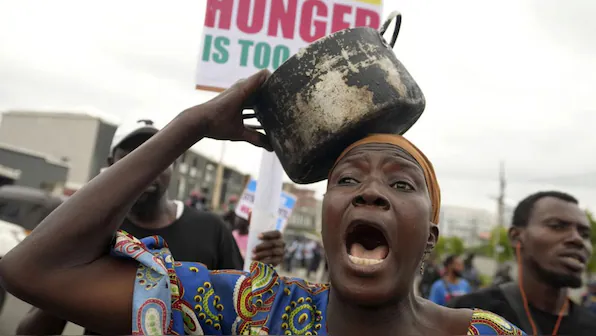
- The United Nations says nearly 35 million Nigerians could face acute food insecurity and hunger during the 2026 lean season, with women and children worst affected, as humanitarian funding drops sharply and needs escalate in the conflict-hit North-East.

The United Nations, through its Office for the Coordination of Humanitarian Affairs in Nigeria (UN OCHA Nigeria), has warned that about 35 million Nigerians are at risk of acute hunger in 2026, raising fresh concerns over the country’s worsening humanitarian situation.
In a statement issued on Thursday by the Head of Public Information at OCHA Nigeria, Ann Weru, the UN said the grim projection is contained in the 2026 Humanitarian Needs and Response Plan (HNRP) for Nigeria. According to the plan, 5.8 million people in Borno, Adamawa and Yobe (BAY) States are expected to be among those facing the most severe levels of food insecurity during the lean season.
The UN also disclosed that around three million children under the age of five are projected to suffer from life-threatening severe acute malnutrition in 2026, with one million of them located in the BAY States. Women and children, it added, account for eight out of every ten people in immediate need of humanitarian assistance.
To address the most urgent needs, the Federal Government and its humanitarian partners are seeking $516 million to support 2.5 million vulnerable people across Borno, Adamawa and Yobe States this year. OCHA noted that the appeal comes amid spiralling humanitarian needs driven by a 16-year conflict, widespread displacement, climate shocks, economic hardship, limited access to basic services and shrinking livelihood opportunities.
Speaking on the funding crisis, the UN Resident and Humanitarian Coordinator in Nigeria, Mohamed Malick Fall, warned that dwindling resources are arriving at a time when needs are worsening.
“Humanitarian needs are dramatically worsening at a time when we are facing the steepest decline in international funding for humanitarian operations,” he said. “Every day that funding gaps persist is a day that another malnourished child is pushed closer to a preventable death.”
The 2026 HNRP also outlines a gradual transition to nationally led humanitarian action, as international support declines globally. OCHA stressed that the success of this transition would depend on strong partnerships between government authorities and humanitarian organisations.
Reaffirming the Federal Government’s position, the Minister of Humanitarian Affairs and Poverty Reduction, Bernard Doro, said Nigeria would continue to provide leadership and coordination to ensure humanitarian efforts align with broader national reforms. He noted that such reforms are aimed at reducing poverty, strengthening human capital and building resilient communities.
Similarly, the governors of the three affected states — Babagana Zulum, Ahmadu Fintiri, and Mai Mala Buni — reiterated their commitment to closer collaboration with humanitarian partners to deliver urgent assistance and pursue durable solutions.
DON’T MISS: BREAKING: U.S. Freezes Visa Processing for Applicants From Nigeria, 74 Other Countries (Full List)
OCHA further revealed that funding for the 2025 HNRP, estimated at $282 million, was about half of what was received in 2024, leading to a sharp reduction in humanitarian assistance. The agency warned that in 2026, additional resources — including increased government investment — are urgently needed to provide lifesaving food, nutrition, healthcare, water, sanitation and protection services.
Beyond the humanitarian response, broader poverty indicators remain alarming. According to the World Bank, about 139 million Nigerians, nearly 62 per cent of the population, were living below the poverty line as of 2025, with projections suggesting the figure could rise further by the end of 2026 due to inflation and economic pressures.
Data from the World Poverty Clock and the Brookings Institution also show that Nigeria has remained the country with the largest number of people living in extreme poverty since overtaking India in 2018.
The UN warned that without urgent and sustained action, millions more Nigerians — especially children — could face irreversible consequences in the year ahead.





BREAKING: US Orders Non-Emergency Staff to Leave Bahrain, Jordan, Iraq
The United States has ordered the withdrawal of non-emergency personnel from Bahrain, Jordan, and Iraq.

FG Approves N4bn Each for 12 Universities to Upgrade Engineering Workshops (Full List)
The Federal Government has approved N4 billion for each of 12 universities to rehabilitate engineering workshops and procure modern equipment.


King Mitchy Management Retracts Death Claim After Suicide Attempt Using Hypo
King Mitchy’s management has given fresh update on her death report after attempting to commit suicide by drinking hypo...


Is VeryDarkMan and King Mitchy Dead After Drinking Hypo? What We Know So Far (Video)
Confusion surrounds reports involving VeryDarkMan and King Mitchy death rumor after attempts to commit suicide by drinking hypo...


PHOTOS: All You Need to Know as Alex Otti Flags Off Enyimba-Radisson Hotel Project in Aba
Governor Alex Otti has commissioned the reconstructed Ovom Road and flagged off the Enyimba-Radisson Hotel in Aba.


IPOB Raises Alarm Over Sharia Debate, Says Nigeria’s Structure Threatens Religious Freedom
IPOB has warned that ongoing debates over Sharia law highlight deeper structural issues in Nigeria...


Businesswoman Who Accused Umahi of ₦250m Debt Collapses After Arrest, Hospitalised in Abuja (Video)
Businesswoman Tracy Nicolas Ohiri collapsed and was hospitalised in Abuja after her arrest over cyberbullying allegations linked to a ₦250...


Bandits Kill 29, Abduct Many in Fresh Attacks
Coordinated attacks across Adamawa, Kebbi, Sokoto, and Kwara states have left dozens dead and many abducted.

INEC Shifts 2027 Elections, Releases Full Revised Timetable
INEC has brought forward Nigeria’s 2027 general elections to January and February, releasing a detailed timetable after adjusting the schedule...


BREAKING: Court Jails Popular Herbalist Akwa Okuku Tiwaraki na Oba, Orders Shrine Demolition
A court has sentenced popular herbalist Akwa Okuku Tiwaraki na Oba to 11 months imprisonment, ordered the demolition of his...