
Education
Reverse WAEC, NECO Fee Hike or Risk Explosion in Out-of-School Children, Atiku Slams Tinubu
Former Vice President Atiku Abubakar has condemned the proposed ₦50,000 WAEC and NECO examination fee from 2027…

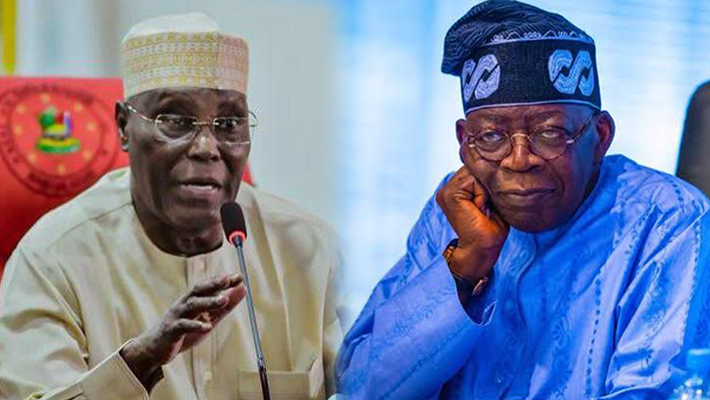
- Former Vice President Atiku Abubakar has condemned the proposed ₦50,000 WAEC and NECO examination fee from 2027.

Former Vice President and African Democratic Congress (ADC) presidential candidate, Atiku Abubakar, has criticised the Federal Government over the reported approval of a uniform ₦50,000 registration fee for the West African Senior School Certificate Examination (WAEC) and the National Examinations Council (NECO) examinations from 2027.
Atiku warned that the proposed increase, alongside the recent hike in fees for Federal Unity Colleges, would place education beyond the reach of millions of Nigerian children and worsen the country’s already alarming out-of-school crisis.
In a statement issued on Sunday by his Senior Special Assistant on Public Communication, Phrank Shaibu, the former Vice President described the policy as economically insensitive and inconsistent with the government’s constitutional responsibility to make education accessible to every Nigerian child.
According to Atiku, the Tinubu administration is imposing additional financial burdens on families already struggling with soaring inflation, rising food prices, increased transportation costs, higher electricity tariffs, stagnant incomes and widespread unemployment.
“It is unconscionable that at a time when Nigerian families are battling record inflation, soaring food prices, rising transportation costs, crippling electricity tariffs, stagnant incomes and widespread unemployment, the Tinubu administration has chosen to make education even more expensive,” he said.
The former Vice President stressed that education remains the most effective tool for breaking the cycle of poverty and warned that making schooling more expensive would only deepen inequality across the country.
“A government that genuinely believes in the future of its people does not erect financial barriers between children and education. It removes them. Education is not a privilege reserved for the wealthy; it is the birthright of every Nigerian child and the foundation upon which prosperous nations are built,” Atiku stated.
He noted that the proposed examination fee and higher Unity School charges come at a time Nigeria already has one of the world’s largest populations of out-of-school children.
According to him, between 10.5 million and 15 million Nigerian children and young people are currently outside the classroom.
“Nigeria already bears the painful distinction of having one of the largest populations of out-of-school children in the world. Any government confronted with such a national emergency should be investing aggressively to bring these children back into school. Instead, this administration is choosing policies that will inevitably swell those numbers,” he said.
Atiku argued that the proposed ₦50,000 WAEC and NECO examination fee would disproportionately affect children from poor and middle-income families, many of whom are already struggling to meet basic educational expenses.
He warned that the consequences would extend beyond education, exposing more young Nigerians to unemployment, poverty, child labour, crime, drug abuse and insecurity.
“The consequences of these policies extend far beyond school gates. Every child priced out of education today becomes tomorrow’s victim of unemployment, poverty, child labour, criminal exploitation, drug abuse or insecurity. Nations do not become prosperous by making education more expensive; they prosper by making education more accessible,” he added.
The ADC chieftain further argued that the increased examination fee would create another barrier for academically qualified but indigent students seeking admission into tertiary institutions.
“It is a systemic filter that will inevitably restrict access to tertiary education for thousands of indigent but academically qualified Nigerian students. For many children from low-income families, the journey to university does not end at the admission gate—it is terminated long before then by the inability to afford the qualifying examinations that determine their future,” he stated.
Atiku also linked the issue to Nigeria’s limited university admission capacity, noting that although more than two million candidates seek admission annually, public universities admit only between 500,000 and 700,000 students due to inadequate infrastructure.
Rather than expanding educational infrastructure and increasing admission capacity, he said the government was making access even more difficult through higher school fees and examination charges.
“Rather than addressing this structural deficit by expanding infrastructure and increasing admission capacity, the government is effectively constricting access even further through higher Unity School fees and the proposed ₦50,000 WAEC and NECO examination fee. The result is a cruel double punishment,” he said.
The former Vice President also questioned the government’s emphasis on the Nigerian Education Loan Fund (NELFUND), arguing that student loans cannot solve problems that begin long before university admission.
“A university loan offers little comfort to a child who has already been priced out of secondary education or cannot afford the qualifying examination required to secure admission. A government cannot credibly claim to be expanding access to higher education while simultaneously erecting financial barriers that prevent millions of young Nigerians from ever reaching the university gates,” he noted.
Atiku maintained that meaningful education reform should focus on making education affordable at the primary and secondary school levels, expanding university infrastructure and ensuring that poverty does not determine access to learning.
“No nation has ever taxed its way into educational excellence. Countries that aspire to economic greatness invest more—not less—in education during difficult times because they understand that human capital is the engine of sustainable development,” he stressed.
He called on President Bola Tinubu to reverse the increase in Unity School fees and shelve the proposed ₦50,000 WAEC and NECO examination fee, while convening a stakeholders’ dialogue on sustainable financing for public education.
He also urged the Federal Government to invest more in public schools, recruit additional teachers, expand tertiary institution capacity and ensure that no Nigerian child is denied access to education because of financial hardship.





Ambrose Alli University Lecturer Dies in Hotel Room After Sexual Encounter With 21-Year-Old Woman
A senior lecturer at Ambrose Alli University, Ekpoma, Dr Matthew Uwuigbe, has died in a hotel room in Edo State...


Omotosho’s First Jurisdictional Failure — The Court Lacked Authority to Try Kanu
The Mazi Nnamdi Kanu Global Legal Consortium has alleged that the Federal High Court lacked jurisdiction to try Kanu on...


‘No Government Without a Country’: IPOB Rejects Self-Appointed Biafra Government Officers
Mazi Chris Nwaọgụ has reiterated IPOB’s demand for Nnamdi Kanu’s freedom and Biafra’s restoration, while calling for Kanu’s appeal to...

Sokoto Declaration: Emma Powerful Dismantles False Claims, Reaffirms Onyendu Mazi Nnamdi Okwu Kanu’s Referendum Position
Kanu’s camp has rejected claims that he did not approve or co-sign the Sokoto Declaration, while stressing that he does...


Kanu’s Unlawful Conviction, the Law That Was Already Dead, and the Shame That Is Waiting for Nigeria’s Judiciary
Christopher Chidera, Esq., has challenged the legal basis of Nnamdi Kanu’s conviction, arguing that the trial court relied on a...


Elochukwu Ohagi Describes Nnamdi Kanu as ‘Anointed Builder’ in Biafran Cenotaph Tribute
Elochukwu Ohagi has described Nnamdi Kanu as an “anointed builder” and “divine instrument” in the struggle for Biafran restoration, highlighting...


Delta Commissioner, Three Others Arrested Over Deputy Director’s Death
Five suspects are now in custody, while police have declared two others wanted as investigations into the ministry official’s death...
Kanu Family Fires Back: ‘No Statutory Transition Means No Valid Sentence’
The Okwu-Kanu Family has called for the immediate hearing of Nnamdi Kanu’s appeal, questioning the written law underpinning his conviction...
IPOB Accuses Nigerian Judiciary of ‘Judicial Banditry’ Over Nnamdi Kanu Conviction
IPOB has accused the Nigerian judiciary of violating constitutional provisions in Nnamdi Kanu’s conviction, questioning the legal basis of the...

IPOB: Nnamdi Kanu Must Be Released Unconditionally, Appeal Must Be Listed — Chris Nwaọgụ
IPOB has renewed its demand for the immediate and unconditional release of Nnamdi Kanu, while calling for his pending appeal...