
Sports
Meet Akeem Busari, the Coach Who Won Nigeria’s First U-17 Women’s World Cup in Seven Months
Akeem Busari led Nigeria to their first U-17 Women’s World Cup title just seven months after taking charge, guiding the Flamingos past Japan in the final.

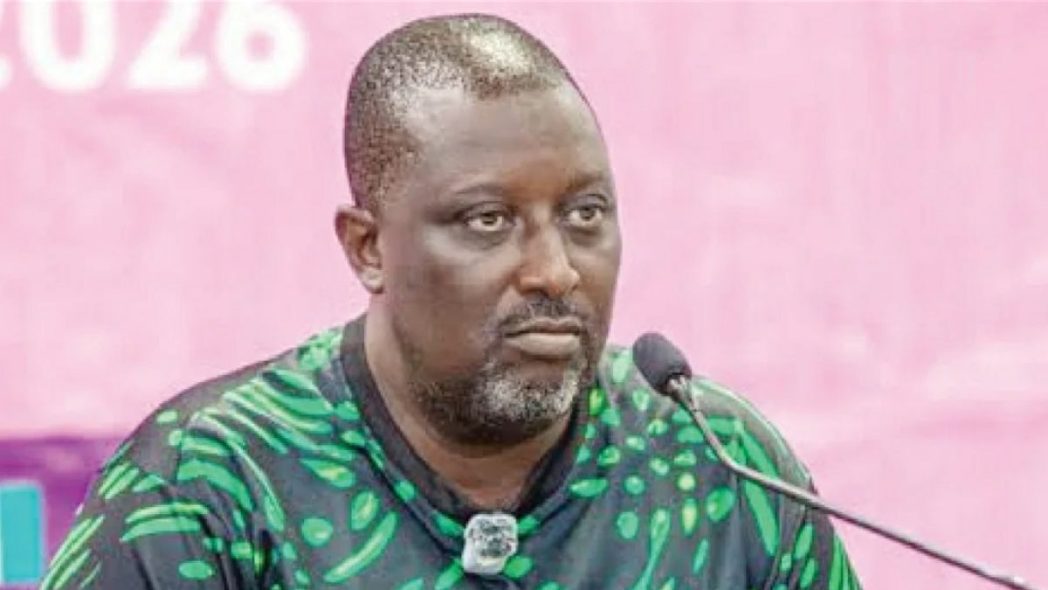
- Akeem Busari led Nigeria to their first U-17 Women’s World Cup title just seven months after taking charge, guiding the Flamingos past Japan in the final.

When Akeem Ishola Busari took charge of Nigeria’s U-17 women’s national team in April, his first task was to secure qualification for the World Cup. Seven months later, he had guided the Flamingos to the greatest achievement in their history.
Nigeria defeated Japan 2-1 in the final of the 2026 FIFA U-17 Women’s World Cup in Morocco on Saturday, November 7, becoming the first African country to win the competition.
For Busari, the triumph came seven months and five days after his appointment on April 2, 2026. His team recovered from an opening defeat to Poland, eliminated several strong opponents and held off Japan’s late fightback to claim the trophy.
From Pacesetter Queens to the Flamingos
Before taking the national assignment, Busari was head coach of Pacesetter Queens Football Club of Ibadan.
The Nigeria Football Federation appointed him following its Executive Committee’s approval of a recommendation from the Technical and Development Committee.
He succeeded Bankole Olowookere, who had spent several years with the Flamingos and guided Nigeria to a bronze medal at the 2022 edition in India.
Busari inherited a team with an established international record. His immediate responsibility was to prepare the players for the African qualifying campaign and secure a place at the tournament in Morocco.
Coaching education began more than two decades earlier
Busari’s World Cup success followed years of professional preparation.
According to National Institute for Sports Director-General Philip Shaibu, the coach obtained his initial coaching qualification from the institute in Lagos in 1999.
He returned for the institute’s Higher Programmes between 2003 and 2006, with his final coaching certificates issued in October 2006.
That training formed part of a career that eventually took him from club football to the national team and a global title.
Building his squad
Eight days after his appointment, Busari began assembling the team for the qualifying campaign.
On April 10, the NFF announced his invitation of 36 players to camp. The group comprised five goalkeepers, 10 defenders, 13 midfielders and eight forwards.
Players were drawn from Nigeria Women Football League clubs and academies, including Fidel Pepple and Aminat Abiodun of Pacesetter Queens.
The federation also endorsed Jegede-Idakwo and Omodiaghe as his assistants, completing key appointments to the technical team.
Nigeria secured qualification in July
Busari delivered his first major result as Flamingos coach when Nigeria qualified for the World Cup in July.
The team defeated Benin Republic 3-2 in the first leg of their qualifying tie in Ikenne, Ogun State, before winning the return fixture 5-3 in Lomé.
The results gave Nigeria an 8-5 aggregate victory and a ticket to Morocco.
Mary Dustan opened the scoring in the sixth minute of the second leg, while Esther Stephen and Queen Joseph were also among the scorers. Joseph scored her second goal in the 76th minute as Nigeria completed the victory.
With qualification secured, Busari’s attention shifted to preparing the squad for the demands of the tournament.
Final preparations for Morocco
On August 28, the NFF announced a 26-player squad for the first phase of the team’s final camping programme in Abuja.
The players were directed to report on August 30, giving the technical crew time to assess the squad before making its final selections.
Busari’s 21-player World Cup squad was announced on October 6. It included captain Harmony Chidi, Elizabeth Adesuyi, Esther Stephen, Mary Dustan, Favour Nkwocha, Tosin Rafiu, Queen Joseph, Precious Oscar and Oluwakemi Adegbuyi.
The Flamingos departed Nigeria on October 7 ahead of the tournament’s opening on October 17.
Opening defeat threatened Nigeria’s campaign
Nigeria’s tournament began with a setback as the Flamingos lost 2-1 to Poland in their opening group match.
They responded with a 2-0 victory over Puerto Rico before defeating defending champions North Korea 3-1 on October 23 to reach the knockout stage.
From there, the team continued to build momentum, winning matches with both narrow margins and convincing attacking performances.
Stage Opponent Result Group stage Poland Nigeria lost 2-1 Group stage Puerto Rico Nigeria won 2-0 Group stage North Korea Nigeria won 3-1 Round of 16 Mexico Nigeria won 2-1 Quarter-final Venezuela Nigeria won 1-0 Semi-final Brazil Nigeria won 3-1 Final Japan Nigeria won 2-1
Bashiru rewarded Busari’s selection decision
One of Busari’s significant decisions came ahead of the semi-final against Brazil.
Awawu Bashiru, who had largely appeared as a substitute, was handed a starting opportunity. She responded with two goals as Nigeria defeated the South Americans 3-1.
The victory sent the Flamingos into their first final and gave them an opportunity to surpass the bronze-medal finish achieved in 2022.
Bashiru would make another decisive contribution against Japan.
Flamingos held off Japan to claim the trophy
In the final at the Mohammed VI Football Complex in Rabat, Nigeria took the lead in the 39th minute.
Bashiru struck from distance, with her effort slipping past Japanese goalkeeper Kou Kadowaki to put the Flamingos ahead before the break.
Oluebube Umejiaku doubled the advantage in the 47th minute. After receiving a pass from Esther Stephen, she lifted the ball over the advancing goalkeeper.
Japan reduced the deficit through Fuki Ito in the 80th minute, setting up a tense closing period. Nigeria held on to complete a 2-1 victory and secure their maiden title.
Umejiaku was named Player of the Tournament, adding an individual honour to Nigeria’s historic achievement.
Busari celebrates a breakthrough for Africa
Reflecting on the triumph, Busari described the result as a statement about the progress of African youth football.
“This is a turnaround for Africa,” he said.
“In terms of youth-age football, it’s improving and here we could really come and compete. Being a champion is going to go a long way to really motivate us, and we are sending a signal, a message to the world that Africa is really coming.”
His appointment on April 2 had begun with the challenge of qualifying for Morocco. By November 7, Busari and the Flamingos had completed a campaign that delivered Nigeria’s first FIFA U-17 Women’s World Cup trophy.





Meet Akeem Busari, the Coach Who Won Nigeria’s First U-17 Women’s World Cup in Seven Months
Akeem Busari led Nigeria to their first U-17 Women’s World Cup title just seven months after taking charge, guiding the...

No Hearing Date, No Participation: IPOB DOS Boss Chris Nwaọgụ Accuses FG of ‘Judicial Panic’ Over Unlisted Kanu Appeal
The Indigenous People of Biafra (IPOB) has renewed its demand for the immediate and unconditional release of its detained Supreme...

How Omotosho Trashed Nyako’s Ruling to Validate a Black-Market Proscription – Ifedi
Legal practitioner Onyedikachi Ifedi, Esq., has raised serious constitutional and judicial concerns over the September 2017 proscription of the Indigenous...

VIDEO: Flamingos Arrive in Abuja After Historic U-17 Women’s World Cup Triumph in Morocco
Nigeria’s Flamingos have arrived in Abuja after defeating Japan 2-1 to win their maiden FIFA U-17 Women’s World Cup title...


BREAKING: FG Seeks Fresh $500m World Bank Loan Days Before Tinubu’s Exit, Approval Slated for May 2027
The Federal Government is seeking a $500m World Bank loan to establish an infrastructure financing platform, with approval scheduled for...


Dangote Refinery IPO Draws ₦6.4tn Orders but Misses 10 Million Investor Target
The Dangote Refinery IPO attracted about ₦6.4 trillion in subscription orders, but Aliko Dangote says time constraints and access difficulties...


LASEMA Explores AI Tools to Improve Emergency Reporting
LASEMA has trained officers in artificial intelligence tools to improve incident documentation and emergency reporting, although an operational rollout has...

Carrick Faces Fresh Scrunity as Manchester United’s 4–4 Draw Leaves Them 18th
Michael Carrick faces fresh scrutiny after Manchester United rescued a dramatic 4–4 draw against Aston Villa but remained 18th in...

Air Force Announces Command Changes in Senior Officers’ Reshuffle
The Nigerian Air Force has announced new commanders and senior appointments across its formations, directing affected officers to complete handover...

Osun Workers Begin Three-Day Strike as NLC Demands Release of Withheld Council Funds
Osun workers begin a three-day strike over withheld local government allocations, with the NLC directing affiliated unions to comply after...