
News
‘We Fixed It’ — Power Minister Says Electricity Restored, Assures Nigerians of Stable Supply in 3 to 5 Years
The Power Minister says electricity has been restored to affected areas and projects more stable supply within three to five years, outlining a $2bn grid plan.

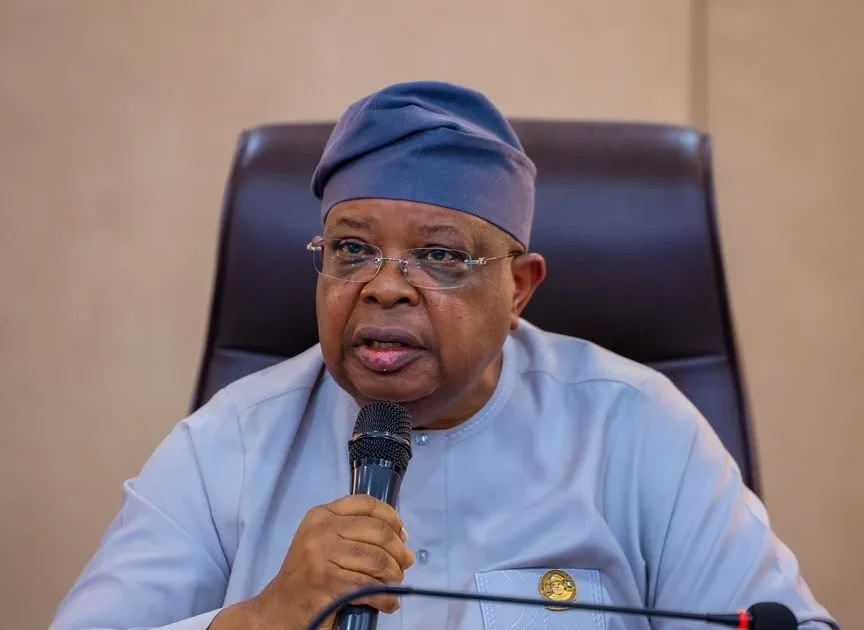
- The Power Minister says electricity has been restored to affected areas and projects more stable supply within three to five years, outlining a $2bn grid plan.

The Minister of Power, Joseph Tegbe, has said the immediate challenges behind recent electricity outages have been resolved, while projecting that Nigeria could achieve more stable supply within the next three to five years.
Speaking during a television interview on Monday, Tegbe said maintenance at Egbin Power Station had been completed and interventions had helped restore electricity to several affected locations.
“Number one, we’ve sorted out this little challenge we had in the last few days. It was painful for most of you. But look, we fixed it. And we will ensure that that stability remains. My focus is to ensure grid stability,” he said.
His remarks followed supply disruptions in parts of the country, including Lagos and the Federal Capital Territory.
On November 7, the minister had attributed the outages to scheduled maintenance at Egbin, inadequate gas supply to some thermal power plants and alleged sabotage of transmission lines. He said the combination had reduced the electricity available on the national grid.
Minister lists Lagos areas where supply has returned
Tegbe said he personally contacted residents to confirm that electricity had returned to several parts of Lagos by Sunday night.
“I’m sure in Lagos, I confirm as at last night because I made personal calls, Ajah, Lekki, Ikoyi, Magodo, Ikeja, lights are back,” he said.
“And people have attested to it, people have sent me messages. Nigerians, again, I appeal to you, just bear with us, we’ll get there.”
He said the government’s immediate priority was to optimise existing infrastructure, improve supply and reduce disruptions while pursuing longer-term investments.
Stable supply projected within three to five years
Beyond the immediate restoration, Tegbe said sustained improvements would depend on expanding electricity generation and transmission capacity.
“Honestly speaking, you already see some visible improvement despite the challenge we have had. By the time we fix the grid… okay? I’ll look at the horizon of about three to five years from now,” Tegbe said.
He explained that infrastructure expansion required time and needed to keep pace with demand from businesses, data services, artificial intelligence applications and people working from home.
“Infrastructure build out is not done overnight. Even when we fix some of the challenges we have today, we need to build the capacity.
“Everybody’s building capacity for AI, for data. Most young people work from home, and because of that, there’s a need for bandwidth and for electricity supply,” he said.
FG plans $2bn super grid
The minister also disclosed plans for a $2 billion east-west super grid intended to strengthen the transmission network and increase its capacity.
According to Tegbe, the proposed infrastructure would complement existing facilities and improve the national grid’s resilience.
He said the project would link Funtua, Gwagwalada, Ikot Ekpene, Benin, Epe and Ilorin.
The procurement process had commenced, he said, with completion expected within two years.
Tegbe projected that the initiative would increase the grid’s transmission capacity from about 4,000 megawatts to 19,000 megawatts.
Greater private sector participation planned
The minister said the government was also working towards increased private sector participation in electricity transmission within the next two to three years.
He maintained that investment in infrastructure and capacity would be central to meeting growing demand and delivering more reliable electricity.
“So give me a time horizon of three to five years. Nigeria will enjoy stable life. And as demand improves, it will get better,” he said.
Tegbe appealed for patience, acknowledging the difficulties that unreliable electricity supply had caused households and businesses.






Niger Gets New Police Commissioner as PSC Approves Salisu Fago’s Posting
Salisu Fago has been approved as Niger State’s new police commissioner, with the PSC urging him to remain neutral and...


2027 UTME: JAMB Lists Six Things Candidates Must Get Right Before Registration
JAMB has outlined six preparation steps for 2027 UTME candidates, covering NIMC biodata, phone numbers, email addresses, courses, institutions and...

‘We Fixed It’ — Power Minister Says Electricity Restored, Assures Nigerians of Stable Supply in 3 to 5 Years
The Power Minister says electricity has been restored to affected areas and projects more stable supply within three to five...

NFF Officials Stopped Him From Greeting Flamingos at Abuja Airport, Peter Obi Cries Out
Peter Obi says NFF officials stopped him from greeting the victorious Flamingos at Abuja airport, describing the alleged incident as...


Trump Says Fresh War With Iran ‘Highly Unlikely’, Sets Condition for Peace
Trump says renewed fighting with Iran is “highly unlikely” but ties his decision to a strong agreement ahead of talks...

Meet Akeem Busari, the Coach Who Won Nigeria’s First U-17 Women’s World Cup in Seven Months
Akeem Busari led Nigeria to their first U-17 Women’s World Cup title just seven months after taking charge, guiding the...

No Hearing Date, No Participation: IPOB DOS Boss Chris Nwaọgụ Accuses FG of ‘Judicial Panic’ Over Unlisted Kanu Appeal
The Indigenous People of Biafra (IPOB) has renewed its demand for the immediate and unconditional release of its detained Supreme...


How Omotosho Trashed Nyako’s Ruling to Validate a Black-Market Proscription – Ifedi
Legal practitioner Onyedikachi Ifedi, Esq., has raised serious constitutional and judicial concerns over the September 2017 proscription of the Indigenous...


VIDEO: Flamingos Arrive in Abuja After Historic U-17 Women’s World Cup Triumph in Morocco
Nigeria’s Flamingos have arrived in Abuja after defeating Japan 2-1 to win their maiden FIFA U-17 Women’s World Cup title...

BREAKING: FG Seeks Fresh $500m World Bank Loan Days Before Tinubu’s Exit, Approval Slated for May 2027
The Federal Government is seeking a $500m World Bank loan to establish an infrastructure financing platform, with approval scheduled for...