
News
Lawyer Faults Eculaw Analysis, Says Nnamdi Kanu’s Appeal Brief Was Fundamentally Misread
Constitutional lawyer Christopher Chidera has faulted Eculaw’s assessment of Nnamdi Kanu’s appeal, arguing that the legal platform misread the structure of the appellate brief…

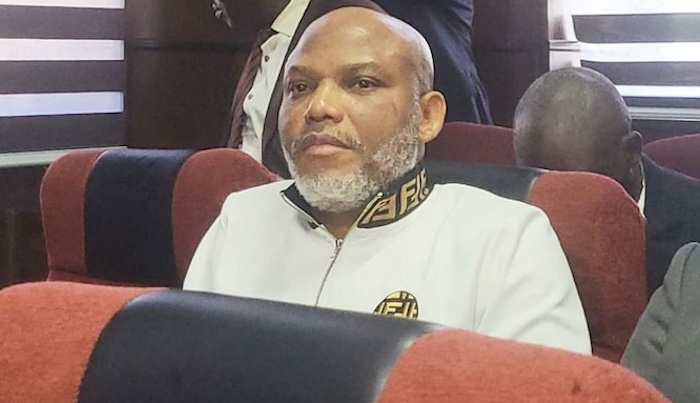
- Constitutional lawyer Christopher Chidera has faulted Eculaw’s assessment of Nnamdi Kanu’s appeal, arguing that the legal platform misread the structure of the appellate brief and overlooked several interconnected constitutional arguments at the heart of the case.

A fresh legal dispute has emerged over the appeal filed by IPOB leader Nnamdi Kanu, following a detailed rebuttal by constitutional lawyer Christopher Chidera Esq., who has accused legal analysis platform Eculaw of fundamentally misunderstanding the arguments contained in the appellate brief.
In a response titled “The Eculaw Assessment Misreads the Brief’s Actual Structure,” Chidera argued that the assessment critiqued a simplified version of the appeal rather than the constitutional arguments actually placed before the court.
According to the lawyer, Eculaw treated the appeal as a collection of separate legal complaints that could be individually evaluated and assigned strengths or weaknesses. However, he maintained that the brief was intentionally designed around a broader constitutional framework in which all the issues are interconnected.
Appeal Built on Linked Constitutional Questions
Chidera explained that the eight grounds raised in the appeal were not intended to stand alone but were structured as a chain of constitutional requirements that must each be satisfied before a criminal conviction can be considered lawful.
According to him, the appeal adopts what he described as a “vertical” constitutional approach, requiring the court to examine a sequence of linked legal questions.
These questions, he said, include whether the trial court possessed the authority to proceed, whether a valid written law governed the charges, whether jurisdiction existed, whether the prosecution established its case, whether fair hearing rights were respected, and whether any legally sustainable dispute remained throughout the proceedings.
He argued that the failure of any one of those constitutional conditions could undermine the validity of the entire case.
By contrast, Chidera claimed Eculaw adopted a “horizontal” approach by examining each issue in isolation and assigning individual ratings without considering how the issues interact with one another.
According to him, this method failed to engage with the overall constitutional architecture of the appeal.
Disagreement Over the Repeal Argument
One of the major points of contention concerns the appeal’s first issue, which relates to the repeal of the Terrorism Prevention (Amendment) Act 2013.
Chidera accused Eculaw of reducing the argument to a broad claim that the repeal of the legislation automatically invalidated Kanu’s conviction.
He argued instead that the appeal advances a more technical constitutional question tied to observations made by Justice Lawal Garba during the Supreme Court’s remittal judgment.
According to Chidera, the appeal focuses on whether the statutes cited in the charge remained valid and subsisting laws at the relevant time. He maintained that this question serves as a gateway requirement established by the Supreme Court itself.
The lawyer contended that because the charge sheet allegedly referenced laws that were no longer in force as of March 21, 2025, the constitutional condition identified by the Supreme Court was not satisfied, thereby affecting the legality of subsequent proceedings.
Questions Over the Legal Framework Used in the Trial
Chidera also challenged Eculaw’s interpretation of the second issue in the appeal.
According to him, the argument goes beyond the repeal of legislation and instead questions whether a valid written law governed every stage of the criminal proceedings, from the filing of charges to plea-taking, trial and eventual conviction.
He maintained that the appeal repeatedly asks whether an extant written law remained operative throughout the entire legal process and argued that neither the prosecution nor the trial court clearly identified such a law.
Fair Hearing Complaint Tied to Earlier Objections
Addressing the fair hearing ground, Chidera argued that Eculaw incorrectly treated the complaint as a routine procedural issue.
According to him, the appeal links the alleged denial of final address and allocutus to earlier objections concerning jurisdiction and the legal basis of the charges.
He claimed the defence had been led to believe those issues would be addressed during final written submissions, only for that opportunity to allegedly be denied before judgment was delivered.
As a result, he argued that the complaint is not merely about preventing a defendant from speaking but about denying the defence the opportunity to address what it considered fundamental legal defects in the proceedings.
Defence of Jurisdictional Challenge
Chidera also defended the appeal’s jurisdictional argument, which Eculaw reportedly described as innovative but lacking support in Nigerian legal authorities.
According to him, the issue is grounded in statutory interpretation and established principles governing jurisdiction.
He argued that the National Assembly has the authority to prescribe conditions that must be met before courts can exercise jurisdiction and that such conditions cannot simply be ignored or waived.
The lawyer pointed specifically to provisions of the Terrorism Prevention and Prohibition Act 2022 dealing with offences involving an international element, including the requirement of double criminality.
According to him, the appeal argues that double criminality is a mandatory statutory condition that must be satisfied before jurisdiction can arise.
He maintained that because the requirement was allegedly not established, questions remain regarding the legal foundation of the proceedings.
Clarification on Supreme Court-Related Issue
Chidera also rejected suggestions that the appeal seeks to challenge or declare a Supreme Court judgment unconstitutional.
According to him, the eighth issue in the appeal is more narrowly framed and focuses on the legal consequences of the Court of Appeal judgment delivered on October 13, 2022.
He said the appeal asks whether constitutional protections against repeated prosecution were triggered and what legal mechanism was subsequently relied upon to permit continuation of the case.
The lawyer argued that the issue is supported by existing judicial authorities dealing with judgments delivered in favour of an accused person and the legal basis required for proceedings to resume afterward.
Defence of the Appeal’s Length
Responding to criticism that the appeal is lengthy and contains cascading arguments, Chidera defended both its structure and presentation.
According to him, the brief expressly explains that its issues are interconnected constitutional conditions rather than independent complaints.
He also argued that the volume of arguments reflects the lengthy procedural history of the case and what the defence considers missed opportunities to fully address several legal issues before the trial court.
DON’T MISS: Orji Uzor Kalu Accused of Seeking Massive Cut From SEDC Funds
Final Position
In concluding his rebuttal, Chidera maintained that Eculaw’s assessment only partially engaged with the appeal and failed to evaluate several of its most significant constitutional arguments as they were actually presented.
He argued that while the Court of Appeal may ultimately adopt a different interpretation of the issues, any meaningful legal analysis should first assess the arguments contained in the filed brief rather than simplified versions of them.
According to the lawyer, the debate is no longer only about whether the appeal will succeed, but whether its arguments are being accurately understood and represented in public legal discussions.
The latest exchange adds another layer to the growing legal and constitutional debate surrounding Kanu’s appeal, a case that continues to attract significant attention from lawyers, scholars and political observers across Nigeria.





Sanwo-Olu, Fashola, Ambode, Others Named in Lagos APC 2027 Campaign Council (Full List)
The Lagos State chapter of the APC has unveiled its campaign council ahead of the 2027 general elections, naming Governor...


South African Woman Jailed 25 Years for Smuggling 5.75kg Heroin Into Nigeria
A Federal High Court in Abuja has sentenced 38-year-old South African woman Will Ann to 25 years in prison after...


NAFDAC Threatens to Shut Bakeries Over Banned Bread Improvers
NAFDAC has warned bakers in Niger State against using banned substances, including potassium bromate and saccharin, in bread production.


Meet Chelsea’s new owners, Clearlake Capital
Chelsea have entered a new ownership era after American investment firm Clearlake Capital acquired the stakes of Todd Boehly and...


JAMB Explains ‘Not Admitted’, ‘Admission in Progress’ and ‘Admitted’ Statuses
JAMB has explained what “Not Admitted,” “Admission in Progress” and “Admitted” mean on candidates’ CAPS, advising applicants to keep checking...


Peter Obi Advises Nigerians on Dangote Refinery IPO
Former Anambra State governor Peter Obi has urged Nigerians at home and abroad to consider investing in the ongoing Dangote...


14 Days to Keep Him in Custody, Endless Silence to Hear Him: How Nigeria’s Court of Appeal Built a Cage — Then Locked the Courtroom Door
A lawyer, Onyedikachi Ifedi, has challenged the legal basis of Nnamdi Kanu’s conviction, alleging reliance on a repealed law and...


Atiku Reveals What He Discussed With Aisha Buhari During Abuja Meeting
Former First Lady Aisha Buhari has visited former Vice-President and African Democratic Congress (ADC) presidential candidate Atiku Abubakar in Abuja.


Anambra Government Releases Peter Obi’s Debt Records, Puts Outstanding Loans at N127.4bn
The Anambra Government says eight external loans contracted during Peter Obi’s tenure as governor had an outstanding balance of N127.4...


Iran War Supply Shock Pushes Nigeria’s Cooking Gas Demand Down 23%
Nigeria’s cooking gas (LPG) demand fell by nearly 23 per cent to a seven-month low in June as import constraints...