
Politics
NDC Moves to End Political Defections, Makes Candidates Sign ‘No Cross-Carpeting’ Agreement
The Nigeria Democratic Congress (NDC) has unveiled a strict anti-defection policy requiring all candidates to sign legally binding agreements.

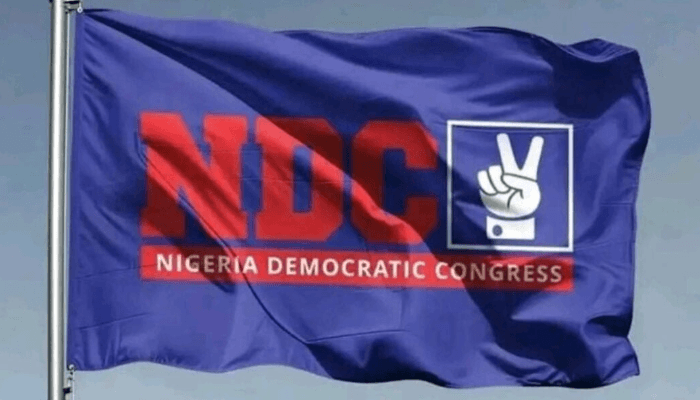
- The Nigeria Democratic Congress (NDC) has unveiled a strict anti-defection policy requiring all candidates to sign legally binding agreements.

The Nigeria Democratic Congress (NDC) has introduced a sweeping anti-defection policy aimed at curbing the culture of political cross-carpeting in Nigeria ahead of the 2027 general elections.
Under the new policy, every aspirant seeking elective office on the party’s platform—from State House of Assembly candidates to National Assembly hopefuls—must sign legally binding indemnity agreements and sworn affidavits committing not to defect after winning an election.
According to the party, any elected official who abandons the NDC for another political party would be expected to vacate the office won under its platform, arguing that electoral mandates belong to political parties rather than individuals.
The move has generated mixed reactions across the political and legal landscape, with supporters praising it as a bold step toward strengthening party discipline, while critics argue it could violate constitutional rights.
Legal experts remain divided over the policy’s enforceability.
Senior Advocate of Nigeria John Olusola Baiyeshea described the initiative as a commendable moral response to Nigeria’s long-standing defection culture but warned that lasting reforms would require amendments to both the Constitution and the Electoral Act.
He noted that while politicians could voluntarily sign such agreements, the courts would ultimately determine whether they amount to a waiver of constitutionally guaranteed rights.
Abuja-based lawyer Chief Tunde Falola argued that the policy conflicts with Section 40 of the Constitution, which guarantees every Nigerian the freedom of association, including the right to join or leave a political party.
Citing the Supreme Court’s decision in Attorney-General of the Federation v. Atiku Abubakar, Falola maintained that no political party can impose constitutional disabilities through private agreements or affidavits.
However, another Abuja lawyer, Oluwole Adaja, defended the policy, insisting that political parties are voluntary organisations whose members are bound by their constitutions and internal rules.
According to him, aspirants dissatisfied with the anti-defection clause are free to reject the party’s ticket, but those who accept it must abide by the agreed conditions.
Lawyer Sunday Essienekak adopted a middle-ground position, saying there is nothing unconstitutional about requiring candidates to sign anti-defection undertakings. However, he argued that automatically forcing elected executives to vacate office upon defection would likely be struck down because such sanctions are not recognised by the Constitution.
The debate has also revived discussions around landmark Supreme Court judgments, including Amaechi v. INEC, Abegunde v. Ondo State House of Assembly, and Attorney-General of the Federation v. Atiku Abubakar, which have shaped Nigeria’s legal position on political defections.
Supporters believe the policy could restore public confidence in political parties, discourage opportunistic defections and strengthen ideological politics. Critics, however, warn that it could trigger prolonged court battles, suppress internal dissent and clash with constitutionally protected freedoms.
As political alliances continue to shift ahead of the 2027 elections, the NDC’s anti-defection framework has placed party loyalty, electoral mandates and constitutional rights at the centre of Nigeria’s political conversation, with many expecting the courts to eventually determine its legality.






Omotosho’s First Jurisdictional Failure — The Court Lacked Authority to Try Kanu
The Mazi Nnamdi Kanu Global Legal Consortium has alleged that the Federal High Court lacked jurisdiction to try Kanu on...


‘No Government Without a Country’: IPOB Rejects Self-Appointed Biafra Government Officers
Mazi Chris Nwaọgụ has reiterated IPOB’s demand for Nnamdi Kanu’s freedom and Biafra’s restoration, while calling for Kanu’s appeal to...


Sokoto Declaration: Emma Powerful Dismantles False Claims, Reaffirms Onyendu Mazi Nnamdi Okwu Kanu’s Referendum Position
Kanu’s camp has rejected claims that he did not approve or co-sign the Sokoto Declaration, while stressing that he does...


Kanu’s Unlawful Conviction, the Law That Was Already Dead, and the Shame That Is Waiting for Nigeria’s Judiciary
Christopher Chidera, Esq., has challenged the legal basis of Nnamdi Kanu’s conviction, arguing that the trial court relied on a...


Elochukwu Ohagi Describes Nnamdi Kanu as ‘Anointed Builder’ in Biafran Cenotaph Tribute
Elochukwu Ohagi has described Nnamdi Kanu as an “anointed builder” and “divine instrument” in the struggle for Biafran restoration, highlighting...


Delta Commissioner, Three Others Arrested Over Deputy Director’s Death
Five suspects are now in custody, while police have declared two others wanted as investigations into the ministry official’s death...
Kanu Family Fires Back: ‘No Statutory Transition Means No Valid Sentence’
The Okwu-Kanu Family has called for the immediate hearing of Nnamdi Kanu’s appeal, questioning the written law underpinning his conviction...
IPOB Accuses Nigerian Judiciary of ‘Judicial Banditry’ Over Nnamdi Kanu Conviction
IPOB has accused the Nigerian judiciary of violating constitutional provisions in Nnamdi Kanu’s conviction, questioning the legal basis of the...


IPOB: Nnamdi Kanu Must Be Released Unconditionally, Appeal Must Be Listed — Chris Nwaọgụ
IPOB has renewed its demand for the immediate and unconditional release of Nnamdi Kanu, while calling for his pending appeal...


‘Show Me the Law’ Is Not a Joke — It Is Section 36, Section 122, and the Supreme Court, Spoken from the Dock
Ifedi argues that Kanu’s conviction relied on a repealed terrorism law, raising fundamental constitutional questions about its validity.