
News
Top 10 Nigerian States With the Highest Number of HIV Infections in 2025 (Full List)
Lagos recorded the highest number of newly reported HIV infections in Nigeria in 2025, followed by Rivers and Kano…


- Lagos recorded the highest number of newly reported HIV infections in Nigeria in 2025, followed by Rivers and Kano, according to the Federal Ministry of Health and Social Welfare.

Lagos State recorded the highest number of newly reported HIV infections in Nigeria in 2025, with 10,430 new cases, according to the Federal Ministry of Health and Social Welfare’s State of the Health of the Nation Report 2025.
The report revealed that 102,025 new HIV infections were recorded across Nigeria’s 36 states and the Federal Capital Territory (FCT) during the year, underscoring the continued burden of the virus despite ongoing prevention and treatment efforts.
Rivers State ranked second with 6,287 newly reported infections, while Kano State followed closely with 6,106 cases.
Other states recording significant numbers of new HIV infections included Akwa Ibom (5,413), Taraba (4,854), Benue (4,804), Anambra (4,468), Kaduna (3,659), Adamawa (2,989) and the Federal Capital Territory (2,764).
Top 10 States With the Highest New HIV Infections in 2025
- Lagos – 10,430
- Rivers – 6,287
- Kano – 6,106
- Akwa Ibom – 5,413
- Taraba – 4,854
- Benue – 4,804
- Anambra – 4,468
- Kaduna – 3,659
- Adamawa – 2,989
- Federal Capital Territory (FCT) – 2,764
The report also identified several other states that recorded more than 2,000 newly reported HIV infections during the year. These include Cross River (2,595), Sokoto (2,592), Abia (2,546), Imo (2,537), Delta (2,469), Borno (2,311), Ogun (2,107), Plateau (2,084), Niger (2,020) and Ebonyi (2,015).
At the other end of the ranking, Ekiti State recorded the fewest newly reported HIV infections with 462 cases. It was followed by Bayelsa (982), Gombe (1,083), Osun (1,093), Kwara (1,371), Enugu (1,429), Yobe (1,483), Katsina (1,541) and Kebbi (1,572).
The report provides a snapshot of the geographical distribution of newly reported HIV infections across the country and comes amid renewed calls by public health experts for sustained investment in HIV prevention, testing and treatment programmes.
Health experts also noted that the figures represent newly reported cases, not the overall prevalence of HIV in each state. They explained that factors such as population size, urbanisation and access to HIV testing services can significantly influence the number of infections detected.
According to the National Agency for the Control of AIDS (NACA), Nigeria’s national adult HIV prevalence remains about 1.3 per cent, with an estimated 1.9 million people living with HIV.






Ambrose Alli University Lecturer Dies in Hotel Room After Sexual Encounter With 21-Year-Old Woman
A senior lecturer at Ambrose Alli University, Ekpoma, Dr Matthew Uwuigbe, has died in a hotel room in Edo State...


Omotosho’s First Jurisdictional Failure — The Court Lacked Authority to Try Kanu
The Mazi Nnamdi Kanu Global Legal Consortium has alleged that the Federal High Court lacked jurisdiction to try Kanu on...


‘No Government Without a Country’: IPOB Rejects Self-Appointed Biafra Government Officers
Mazi Chris Nwaọgụ has reiterated IPOB’s demand for Nnamdi Kanu’s freedom and Biafra’s restoration, while calling for Kanu’s appeal to...
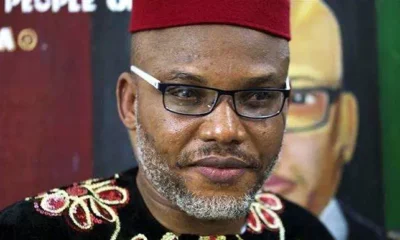

Sokoto Declaration: Emma Powerful Dismantles False Claims, Reaffirms Onyendu Mazi Nnamdi Okwu Kanu’s Referendum Position
Kanu’s camp has rejected claims that he did not approve or co-sign the Sokoto Declaration, while stressing that he does...


Kanu’s Unlawful Conviction, the Law That Was Already Dead, and the Shame That Is Waiting for Nigeria’s Judiciary
Christopher Chidera, Esq., has challenged the legal basis of Nnamdi Kanu’s conviction, arguing that the trial court relied on a...


Elochukwu Ohagi Describes Nnamdi Kanu as ‘Anointed Builder’ in Biafran Cenotaph Tribute
Elochukwu Ohagi has described Nnamdi Kanu as an “anointed builder” and “divine instrument” in the struggle for Biafran restoration, highlighting...


Delta Commissioner, Three Others Arrested Over Deputy Director’s Death
Five suspects are now in custody, while police have declared two others wanted as investigations into the ministry official’s death...
Kanu Family Fires Back: ‘No Statutory Transition Means No Valid Sentence’
The Okwu-Kanu Family has called for the immediate hearing of Nnamdi Kanu’s appeal, questioning the written law underpinning his conviction...
IPOB Accuses Nigerian Judiciary of ‘Judicial Banditry’ Over Nnamdi Kanu Conviction
IPOB has accused the Nigerian judiciary of violating constitutional provisions in Nnamdi Kanu’s conviction, questioning the legal basis of the...
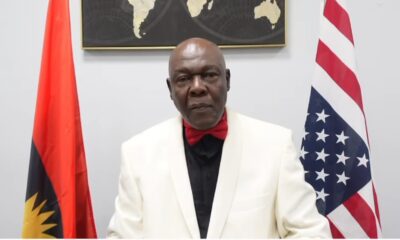

IPOB: Nnamdi Kanu Must Be Released Unconditionally, Appeal Must Be Listed — Chris Nwaọgụ
IPOB has renewed its demand for the immediate and unconditional release of Nnamdi Kanu, while calling for his pending appeal...