
Business
CBN Orders Banks, Fintechs to Reveal Real Owners, Store Data in Nigeria
The Central Bank of Nigeria has introduced fresh regulations requiring banks and fintech companies to disclose their ultimate owners…

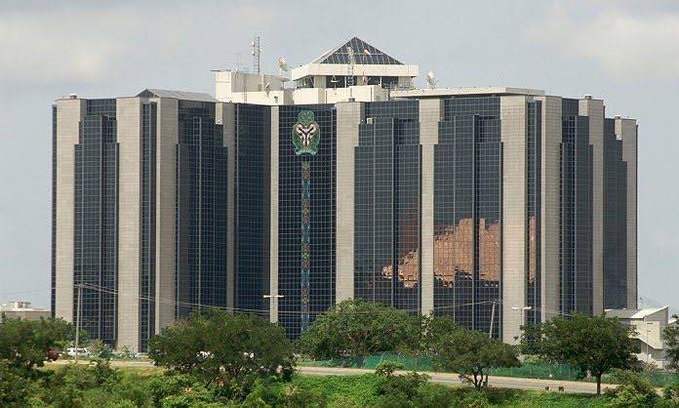
- The Central Bank of Nigeria has introduced fresh regulations requiring banks and fintech companies to disclose their ultimate owners and store payment data locally as part of efforts to strengthen transparency and competition.

The Central Bank of Nigeria (CBN) has directed banks, fintech firms, and other financial institutions operating digital payment services to disclose the Ultimate Beneficial Ownership (UBO) of significant shareholders.
According to the apex bank, the measure is aimed at promoting transparency, reducing market concentration risks, and strengthening the resilience of Nigeria’s digital payments ecosystem.
In a circular issued on Monday to Deposit Money Banks (DMBs), Payment Service Providers (PSPs), fintechs, and other financial institutions, the CBN noted that the rapid growth of electronic payments has raised concerns over ownership transparency and market dominance.
The regulator said increasing adoption of digital financial services and the rise of dominant players in key payment activities have also raised concerns about the localisation of critical payment data.
“All Deposit Money Banks, Payment Service Providers, and Other Financial Institutions with digital payment footprints shall disclose the Ultimate Beneficial Ownership (UBO) of significant shareholders in accordance with applicable extant laws and regulations.”
The CBN further directed institutions to maintain accurate and updated ownership records and make them available to the bank whenever requested.
“Institutions shall maintain accurate and up-to-date UBO records and make such information available to the CBN upon request.”
As part of the new framework, all payment transaction data generated within Nigeria must be stored and managed locally in compliance with data protection laws.
The apex bank stated that full compliance with the data localisation requirement will take effect from January 1, 2027.
To prevent excessive market dominance, the CBN also introduced new rules governing card issuing and merchant acquiring activities.
Under the framework, any institution controlling more than 25 per cent of the card-issuing market within a 12-month period will not be allowed to hold more than 15 per cent of the merchant-acquiring market during the same period.
Likewise, institutions with over 25 per cent market share in merchant acquiring will be restricted to a maximum of 15 per cent share in card issuing.
The regulator also directed all affected institutions to submit monthly market-share reports using prescribed templates and timelines.
DON’T MISS: Yaba Stores Officially Launches to Revolutionize Online Shopping in Nigeria
“Any licensed financial institution engaged in card-issuing activities… that holds more than 25 per cent market share in card issuing within any rolling 12-month period shall not hold more than 15 per cent market share in merchant-acquiring activities during the same period.”
The CBN said all affected entities must achieve full compliance with the new market structure requirements by December 31.
The apex bank warned that it would monitor compliance and impose sanctions on institutions that fail to comply with the provisions of the circular.






‘I’m Deeply Sorry, Daddy’ — Desmond Elliot Kneels Before Gbajabiamila
Desmond Elliot has apologised to Femi Gbajabiamila after their fallout over the APC primary in Surulere, with the Lagos lawmaker...

Dangote Refinery IPO: Nigerians Can Become Part-Owners With Just N5,250
Aliko Dangote has urged Nigerians and Africans to invest in the Dangote Refinery IPO, describing the N1.6bn offer as an...


BREAKING: Peter Obi Faces Fresh Certificate Scrutiny as Court Asked to Order WAEC, UNN, NYSC to Release Records
Labour Party chieftain Abayomi Arabambi has asked an Abuja Federal High Court to compel WAEC, UNN and NYSC to release...


IPOB: One Family, One Command — Unity Team Inaugurated to End the Era of Manufactured Factions
IPOB has renewed its call for Nnamdi Kanu’s release, warning that it will proceed with a total election boycott across...


Pharaoh Still Won’t Let the People Go — Abuja and London Will Pay
The Concerned Igbo Ministers have linked renewed separatist sentiments in the UK to Nnamdi Kanu’s continued detention, warning of wider...


Bus Driver Returns Over N400,000 Forgotten by Passenger in Abia
An Abia commercial bus driver, Onyekachi Ikpendu, has been praised after returning over N400,000 and personal belongings accidentally left behind...


FG Begins N18bn Payment to 2,700 Ex-Nigeria Airways Workers After 20 Years
The Federal Government has commenced the payment of N18bn in outstanding severance benefits to 2,700 former Nigeria Airways workers...


Nigerians to Get Free Data Daily for Online Learning
The Nigerian Communications Commission has launched a zero-rated data initiative that will provide eligible users with up to 100MB of...


BREAKING: Peter Obi Breaks Silence on Stepping Down for Atiku
Peter Obi says any alliance with Atiku Abubakar must be negotiated by their political parties, while outlining his positions on...


BREAKING: National Assembly Suspends South Africa Trips, Orders Legislative Boycott
The National Assembly has suspended official visits to South Africa and participation in its legislative events over reported xenophobic attacks...