
News
Diverting Tithes, Offerings, Others to Private Businesses is a Criminal Offence – EFCC Warns Churches
The Economic and Financial Crimes Commission, EFCC, has warned religious leaders against diverting tithes, offerings, zakat and other funds entrusted to churches and mosques into their personal businesses.

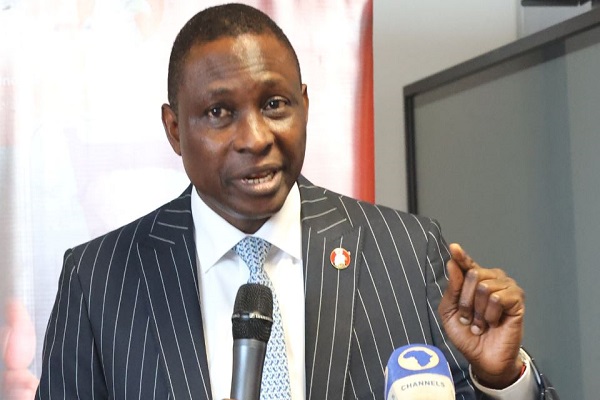
- The Economic and Financial Crimes Commission, EFCC, has warned religious leaders against diverting tithes, offerings, zakat and other funds entrusted to churches and mosques into their personal businesses.

The Economic and Financial Crimes Commission, EFCC, has warned religious leaders against diverting funds belonging to religious organisations into private businesses.
EFCC Chairman, Ola Olukoyede, issued the warning on Wednesday in Abuja during the 2026 Second Council Meeting of the Nigeria Inter-Religious Council, NIREC.
Olukoyede urged churches and mosques to establish effective regulatory and compliance mechanisms to ensure that religious funds are properly managed and protected.
According to him, diverting money entrusted to a religious organisation for personal or private business purposes constitutes a criminal act.
He also called on religious leaders to demonstrate integrity and lead by example in the fight against corruption, noting that their conduct could significantly influence the behaviour and values of their followers.
“When the followers know that there is no difference between the money that is meant to propagate the faith that you stand for and your own personal resources, you miss everything together.
“You are not supposed to mingle in. That’s nothing that says you can’t do any other vocation. You sell cars, you are a farmer and all of that.
“Don’t mix the money from the purse of your organisation with that of your own personal money. Don’t do that. When money is paid to your organisation, don’t divert it to your business.
“That’s criminal and some of our adherents and followers see some of these things we do.”
The EFCC chairman stressed that religious institutions have a significant responsibility in promoting ethical conduct and preventing corruption within society.
He noted that while the EFCC has the statutory responsibility to investigate and prosecute financial crimes, religious communities also have an important role to play in shaping character, encouraging honesty and discouraging corrupt practices.
Olukoyede further criticised the practice of religious centres celebrating individuals whose wealth cannot be reasonably explained by their legitimate earnings.
He gave an example of a public servant who constructed a mosque allegedly worth far more than what he could have legitimately earned over many years.
“A public servant says he has built a mosque that is worth more than his earnings in the next 500 years. And you go there to dedicate it. You are dedicating the proceeds of crime,” he said.
The EFCC chairman urged religious leaders to carefully consider the source of wealth associated with individuals before publicly celebrating or honouring them, stressing the need for faith communities to uphold accountability and integrity.






Umahi Orders Tinubu’s Pictures on First Niger Bridge
Works Minister David Umahi has ordered that President Bola Tinubu’s pictures be displayed on the First Niger Bridge after its...


INEC to Deploy Intelligence Against Vote Buying Ahead of 2027 Elections
INEC Chairman Joash Amupitan says the commission will activate intelligence operations and pursue a joint task force to tackle vote...

Diverting Tithes, Offerings, Others to Private Businesses is a Criminal Offence – EFCC Warns Churches
The Economic and Financial Crimes Commission, EFCC, has warned religious leaders against diverting tithes, offerings, zakat and other funds entrusted...


Enugu Air Launches First International Flight to Cameroon
Enugu Air, Enugu Airport, Douala, Cameroon, Nigeria-Cameroon, International Flight, Peter Mbah, Enugu State, Akanu Ibiam International Airport,


Canadian Government Warns Citizens Against Buying Alcohol in Nigeria
The Canadian government has warned its citizens travelling to Nigeria to be cautious about where they buy alcohol following reports...


Kanu Was Discharged. The Courts Refused to Let the Law Stand.
A lawyer, Christopher Chidera, has challenged the legal foundation of Nnamdi Kanu’s conviction, questioning how quashed charges and a repealed...


2027: OK Movement Rejects NDC Takeover, Vows to Keep Its Structures
The Obi-Kwankwaso Movement has rejected calls for support groups to operate under the Nigeria Democratic Congress, insisting that it will...

Akpabio Speaks on Taking Over as Acting President Amid Tinubu’s Absence
Senate President Godswill Akpabio has dismissed claims that he is Nigeria’s Acting President as opposition figures demand answers over Tinubu’s...


2027: Ex SGF, Lawal Dumps ADC for NDC, Backs Obi–Kwankwaso Ticket
Former SGF Babachir Lawal has joined the NDC, saying concerns over poverty, hunger and insecurity prompted his return to active...


Police Arrest Enugu Man Who Allegedly Kills Girlfriend Over HIV Status, Hides Body in Toilet
Police in Enugu have arrested a 30-year-old man accused of killing his girlfriend during an argument over HIV infection and...