
Sports
Don’t Politicise Sports, Presidency Tells Peter Obi Over Alleged Flamingos Snub
The Presidency and Bashir Ahmad have challenged Peter Obi’s account of the Flamingos airport snub, arguing that access restrictions should not be portrayed as political persecution.

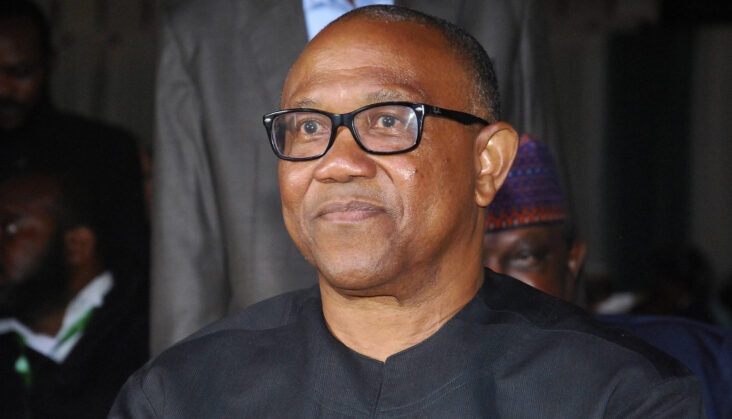
- The Presidency and Bashir Ahmad have challenged Peter Obi’s account of the Flamingos airport snub, arguing that access restrictions should not be portrayed as political persecution.

The Presidency and former presidential aide Bashir Ahmad have criticised Peter Obi over his allegation that Nigeria Football Federation officials prevented him from greeting the victorious Flamingos at an airport on Monday.
Obi, the Nigeria Democratic Congress presidential candidate, had described the alleged encounter as evidence of worsening political intolerance.
Responding in a statement on Monday, the Special Assistant to the President on Social Media, Dada Olusegun, accused the opposition of attempting to politicise national sports teams and institutions.
He said Nigerian athletes, including the Under-17 women’s team, “represent the entire Federal Republic of Nigeria, not any specific political party or individual ambition.”
Presidency defends team protocols
Olusegun said guidelines governing access to national teams were intended to protect young athletes from “political exploitation, commercial distractions, and unnecessary media circuses while on official duty.”
He accused Obi of presenting security and administrative procedures as political victimisation.
“To spin standard security and administrative protocols into a narrative of political victimisation is a disservice to the unity that sport is meant to foster in our country,” he said.
The presidential aide also accused Obi of using “unverified hearsay to build a victim narrative” and urged him to allow the athletes to concentrate on representing Nigeria.
Ahmad questions political persecution claim
Ahmad, the National Director of Media Monitoring and Rapid Response of the City Boy Movement, also rejected Obi’s description of the incident as a new dimension of toxic politics.
He argued that being denied access to the team did not automatically establish political persecution.
“Protocol, security and administrative considerations must have been involved,” he said.
Ahmad urged the former Anambra State governor to prioritise facts and responsibility, saying Nigeria was bigger than any individual or political party.
“A new Nigeria is possible, but not through perpetual political antagonism,” Ahmad added.
What Obi said happened
Obi had earlier said he was at the airport on Monday to catch a flight to Enugu when he noticed members of the Flamingos preparing to board a vehicle following their return to Nigeria.
According to him, he asked his protocol officer, Jackie Wayas, to find out whether he could approach the players to congratulate and welcome them.
Obi alleged that NFF officials objected to the request. He also said he was informed that officials feared losing their jobs if he approached the team.
The Presidency’s response defended access protocols, while Ahmad suggested that security and administrative considerations could have influenced the alleged restriction.
The NFF had not publicly commented on Obi’s account at the time of the report, leaving the federation’s explanation of the encounter outstanding.





Don’t Politicise Sports, Presidency Tells Peter Obi Over Alleged Flamingos Snub
The Presidency and Bashir Ahmad have challenged Peter Obi’s account of the Flamingos airport snub, arguing that access restrictions should...

₦50,000 Relief Payment: FG Gets Seven-Day Ultimatum to Explain Funding, Beneficiary Selection
SERAP has demanded details of the ₦50,000 relief payment, asking the Federal Government to clarify its payment schedule, beneficiary selection...


Niger Gets New Police Commissioner as PSC Approves Salisu Fago’s Posting
Salisu Fago has been approved as Niger State’s new police commissioner, with the PSC urging him to remain neutral and...

2027 UTME: JAMB Lists Six Things Candidates Must Get Right Before Registration
JAMB has outlined six preparation steps for 2027 UTME candidates, covering NIMC biodata, phone numbers, email addresses, courses, institutions and...

‘We Fixed It’ — Power Minister Says Electricity Restored, Assures Nigerians of Stable Supply in 3 to 5 Years
The Power Minister says electricity has been restored to affected areas and projects more stable supply within three to five...
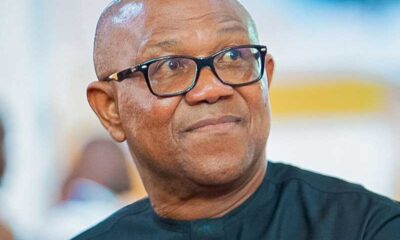

NFF Officials Stopped Him From Greeting Flamingos at Abuja Airport, Peter Obi Cries Out
Peter Obi says NFF officials stopped him from greeting the victorious Flamingos at Abuja airport, describing the alleged incident as...

Trump Says Fresh War With Iran ‘Highly Unlikely’, Sets Condition for Peace
Trump says renewed fighting with Iran is “highly unlikely” but ties his decision to a strong agreement ahead of talks...

Meet Akeem Busari, the Coach Who Won Nigeria’s First U-17 Women’s World Cup in Seven Months
Akeem Busari led Nigeria to their first U-17 Women’s World Cup title just seven months after taking charge, guiding the...

No Hearing Date, No Participation: IPOB DOS Boss Chris Nwaọgụ Accuses FG of ‘Judicial Panic’ Over Unlisted Kanu Appeal
The Indigenous People of Biafra (IPOB) has renewed its demand for the immediate and unconditional release of its detained Supreme...

How Omotosho Trashed Nyako’s Ruling to Validate a Black-Market Proscription – Ifedi
Legal practitioner Onyedikachi Ifedi, Esq., has raised serious constitutional and judicial concerns over the September 2017 proscription of the Indigenous...