
News
Who Is Aisha Achimugu, Why Is the EFCC Investigating Her, and Is She Guilty? Everything You Need to Know
Who is Aisha Achimugu? Businesswoman and oil executive Aisha Achimugu has become one of the most talked-about figures in Nigeria following a series of court rulings…


- Who is Aisha Achimugu? Businesswoman and oil executive Aisha Achimugu has become one of the most talked-about figures in Nigeria following a series of court rulings ordering the forfeiture of billions of naira worth of assets linked to her and one of her companies.

While Achimugu has not been convicted of any criminal offence, she remains at the centre of ongoing investigations by the Economic and Financial Crimes Commission (EFCC) over allegations bordering on money laundering and the suspected proceeds of unlawful activities. The courts have, however, granted civil forfeiture orders against several assets after finding that their lawful origin was not satisfactorily established.
Who is Aisha Achimugu?
Aisha Sulaiman Achimugu is a Nigerian entrepreneur and philanthropist. She is the Group Managing Director and Chief Executive Officer of Felak Group, a conglomerate with interests in engineering, maritime, oil and gas, ICT, and infrastructure development.
She is also associated with Oceangate Engineering Oil & Gas Limited, the company that became central to the EFCC’s investigations and subsequent court proceedings. Before her legal troubles, Achimugu was widely known in business and political circles and regularly attended high-profile public events.
Why Did the EFCC Investigate Her?
The EFCC said its investigation began after intelligence reports allegedly revealed massive financial transactions moving through more than 136 bank accounts linked to Achimugu and companies associated with her.
According to the anti-graft agency, investigators traced billions of naira and millions of dollars through those accounts and alleged that some of the funds were not declared as legitimate business revenue in financial records submitted to tax authorities. The commission also alleged that some of the money originated from unlawful sources.
The investigation later expanded to examine the financing of oil block acquisitions involving Oceangate Engineering Oil & Gas Limited.
What Crimes Was She Accused Of?
The EFCC has alleged that Achimugu and companies linked to her were involved in:
- Money laundering.
- Possession of assets suspected to be proceeds of unlawful activities.
- Moving large sums of money through multiple bank accounts without legitimate commercial justification.
- Failing to disclose certain assets during an assets declaration process.
- Using funds whose lawful origin could not be established.
It is important to note that these are allegations made by the EFCC. As of now, Achimugu has not been convicted of these offences.
The $13 Million Forfeiture Case
One of the biggest cases against Achimugu involved $13 million linked to Oceangate Engineering Oil & Gas Limited.
According to court documents, the money was allegedly used to pay part of the signature bonuses for two petroleum prospecting licences awarded during Nigeria’s 2024 oil licensing round.
The EFCC argued that the funds did not come from legitimate business activities. Instead, investigators alleged that the money was sourced through a network of cash transactions and intermediaries before eventually being transferred into Oceangate’s accounts.
Achimugu’s company denied the allegations, insisting the money came from legitimate business earnings and gifts. The company also argued that the foreign exchange used for the transactions was legally sourced through licensed operators.
However, in March 2026, the Federal High Court ruled in favour of the EFCC, holding that neither Achimugu nor Oceangate had satisfactorily proved the lawful origin of the $13 million. The court therefore ordered the money permanently forfeited to the Federal Government.
The Latest Judgment: ₦8.9 Billion Assets Forfeited
On 16 July 2026, the FCT High Court in Apo, Abuja, delivered another major judgment.
Justice Jude Onwugbuzie ordered the permanent forfeiture of assets valued at about ₦8.9 billion to the Federal Government after granting an application filed by the EFCC.
The forfeited assets include:
- Jewellery valued at ₦4.65 billion.
- 11 luxury vehicles worth about ₦4.29 billion.
- $50,000 in cash.
- ₦30 million in cash.
Why Did the Court Order the Forfeiture?
According to the EFCC, investigators recovered the assets after executing search warrants at Achimugu’s residence.
The commission argued that:
- The recovered assets were acquired with proceeds of unlawful activities.
- Large sums traced to companies linked to Achimugu could not be matched to legitimate business income.
- During questioning, Achimugu allegedly failed to declare the jewellery, luxury vehicles and cash on an assets declaration form.
After reviewing evidence from both parties, the court held that Achimugu failed to successfully rebut the EFCC’s evidence or establish that the assets were lawfully acquired. It therefore granted the commission’s application for final forfeiture.
What Was Achimugu’s Defence?
Achimugu and her companies denied wrongdoing throughout the proceedings.
Her legal team argued that:
- The money used in the transactions came from legitimate business activities.
- Some of the funds represented gifts made to Achimugu.
- The company complied with relevant financial regulations.
- The EFCC’s forfeiture proceedings were flawed and the court lacked jurisdiction.
The courts, however, found that the evidence presented was insufficient to establish the lawful origin of the disputed assets and funds.
Is Aisha Achimugu Guilty?
Not necessarily.
A key distinction is that the judgments so far relate to civil forfeiture proceedings, not criminal convictions.
The courts have ruled that certain assets should be forfeited to the Federal Government because their lawful origin was not satisfactorily established under the applicable forfeiture laws.
That does not amount to a criminal conviction for money laundering or fraud. Criminal liability would require separate criminal proceedings in which guilt is proved beyond a reasonable doubt.
Why the Case Matters
The Achimugu investigations have become one of Nigeria’s most closely watched anti-corruption cases because they involve:
- Billions of naira worth of assets.
- High-value oil and gas transactions.
- Alleged money laundering through complex financial networks.
- Multiple court-ordered forfeitures.
- Wider scrutiny of corporate transparency and financial compliance.
The case also underscores the EFCC’s increasing reliance on civil forfeiture laws to recover assets it alleges are linked to unlawful activities while broader investigations continue.






IPOB Embraces Hausa Nation and All Northern Ethnic Nationalities in Historic Solidarity Declaration for Universal Freedom
IPOB has declared solidarity with Hausa people and other ethnic nationalities in Northern Nigeria, calling for a peaceful...
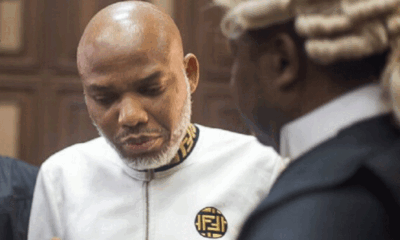

Nnamdi Kanu’s Legal Team Raises Fresh Questions Over Omotosho’s Judgment in Part 3 Commentary
Onyedikachi Ifedi, Esq., has questioned the legal basis of Nnamdi Kanu’s conviction, alleging irregularities involving Count 7....


IPOB Denies Plans to Resume Monday Sit-at-Home, Rejects Alleged Police Intelligence Report
IPOB has dismissed a purported police intelligence report alleging plans to resume Monday sit-at-home enforcement in the South-East...


‘No Negotiations, Only Referendum’ — Kanu’s Message to American Veterans of Igbo Descent
IPOB leader Nnamdi Kanu has reaffirmed his demand for a referendum on Biafra's self-determination, insisting he will reject any political...
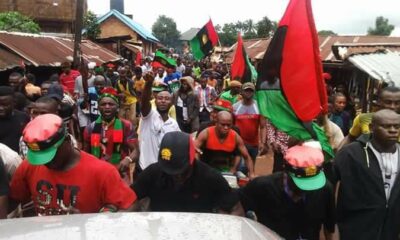

IPOB Condemns NYSC Abductions in Imo, Accuses Uzodinma of Political Conspiracy
IPOB has condemned the reported abduction and rescue of NYSC members in Imo State, denying involvement and accusing Governor Hope...


Ambrose Alli University Lecturer Dies in Hotel Room After Sexual Encounter With 21-Year-Old Woman
A senior lecturer at Ambrose Alli University, Ekpoma, Dr Matthew Uwuigbe, has died in a hotel room in Edo State...

Omotosho’s First Jurisdictional Failure — The Court Lacked Authority to Try Kanu
The Mazi Nnamdi Kanu Global Legal Consortium has alleged that the Federal High Court lacked jurisdiction to try Kanu on...
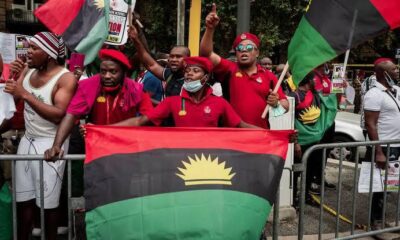

‘No Government Without a Country’: IPOB Rejects Self-Appointed Biafra Government Officers
Mazi Chris Nwaọgụ has reiterated IPOB’s demand for Nnamdi Kanu’s freedom and Biafra’s restoration, while calling for Kanu’s appeal to...

Sokoto Declaration: Emma Powerful Dismantles False Claims, Reaffirms Onyendu Mazi Nnamdi Okwu Kanu’s Referendum Position
Kanu’s camp has rejected claims that he did not approve or co-sign the Sokoto Declaration, while stressing that he does...


Kanu’s Unlawful Conviction, the Law That Was Already Dead, and the Shame That Is Waiting for Nigeria’s Judiciary
Christopher Chidera, Esq., has challenged the legal basis of Nnamdi Kanu’s conviction, arguing that the trial court relied on a...