
News
Electricity Supply to Improve Within 72 Hours, Power Minister Assures Nigerians
The FG promises improved electricity supply within 48 to 72 hours as maintenance, gas shortages and damaged transmission lines worsen outages.

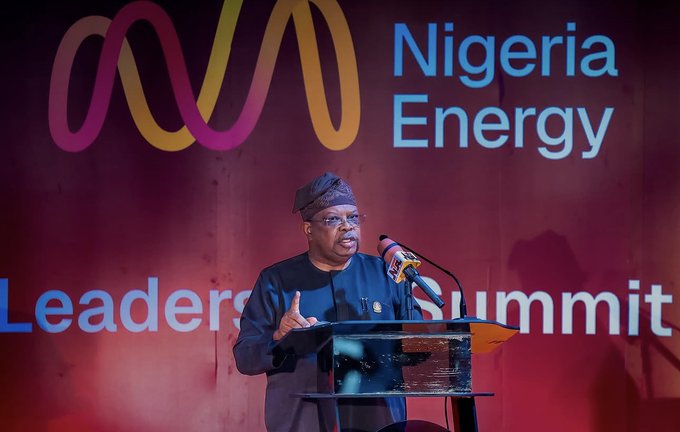
- The FG promises improved electricity supply within 48 to 72 hours as maintenance, gas shortages and damaged transmission lines worsen outages.

The Federal Government has promised improved electricity supply within 48 to 72 hours as it works to restore generating units and address constraints behind prolonged outages in parts of the country.
Minister of Power Joseph Tegbe gave the assurance in a statement titled ‘Update on Power Situation’, posted on his Facebook page on Friday.
He attributed the supply shortfall to planned maintenance at Egbin Power Station in Lagos, inadequate gas supplies to some thermal power plants and damage to transmission infrastructure.
According to the minister, Egbin contributes about 16 per cent of the electricity supplied to the national grid, making disruptions at the station a significant challenge for power availability.
“I am aware of the strain that the current outages have placed on households and businesses in four affected states, including Lagos and the Federal Capital Territory.
“Planned maintenance at Egbin Power Station and constraints in gas supply to some thermal power stations have reduced the amount of electricity available on the national grid. Grid operators have, therefore, implemented load shedding in some areas to manage the shortfall,” he said.
Generating units to return in phases
Tegbe said the sabotage of critical transmission lines had further complicated efforts to supply affected areas by restricting alternative transmission routes, particularly in Lagos.
He said his ministry was working with power-sector operators to return generating units to service, improve gas availability and repair damaged infrastructure.
“My team and I are working to return the affected generating units to service in phases, with the first units coming back online within the next 48 to 72 hours.
“We are also working with operators to improve gas supply and accelerate repairs to the damaged infrastructure,” he added.
The timetable covers the expected return of the first affected generating units. The minister said restoration would take place in phases.
His assurance followed complaints from consumers in Lagos and Ogun states over prolonged blackouts, with residents saying the outages had made the hot weather increasingly difficult to endure.
TCN challenges Ikeja Electric’s explanation
The supply crisis has also prompted a disagreement between the Transmission Company of Nigeria (TCN) and Ikeja Electric over the causes of recent interruptions.
In a statement on Friday, TCN rejected Ikeja Electric’s attribution of outages recorded on November 3 and 4 to grid instability.
The transmission company said inadequate gas supply to thermal power stations and reduced hydroelectric generation had lowered the electricity available for distribution. It described Ikeja Electric’s explanation as inaccurate and misleading, arguing that generation shortfalls had been wrongly attributed to the transmission network.
“TCN can only transmit the energy made available to it and cannot transmit energy that is not generated,” the company said.
TCN also maintained that the Nigerian Independent System Operator (NISO) had not identified a failure of its transmission network as the cause of the outages.
TCN gives breakdown of interruptions
According to TCN, frequency-control load shedding arising from low generation accounted for 68 per cent of interruptions recorded on feeders supplying Ikeja Electric.
The company attributed another 26 per cent to what it described as Ikeja Electric’s failure to comply with load allocations, alongside faults and maintenance on the distribution company’s network.
TCN said the remaining six per cent resulted from its own planned maintenance, switching operations or line limitations.
The disagreement followed an apology from Ikeja Electric to customers on some Band A feeders after it failed to meet the minimum daily supply requirement of 20 hours on November 3 and 4.
In an earlier statement on Thursday, Tegbe had linked the disruptions to maintenance and operational challenges, gas shortages at thermal stations and reduced output from hydropower plants.
He said the Federal Government was coordinating with TCN, NISO and electricity distribution companies to address the constraints and restore normal supply.






US offers $20 million reward, possible relocation for information on Iran’s nuclear programme
The US has offered a $20 million reward and possible relocation for information on Iran’s nuclear programme, despite Trump’s claims...

Electricity Supply to Improve Within 72 Hours, Power Minister Assures Nigerians
The FG promises improved electricity supply within 48 to 72 hours as maintenance, gas shortages and damaged transmission lines worsen...


Funke Akindele Targets ₦5 Billion With Upcoming Film
Funke Akindele has embraced a ₦5 billion box-office target for The Four: No One Fights Alone, while explaining why she...


Omotola Questions Nollywood Royalties After 30 Years Without Payments
Omotola says she has received no Nollywood royalties despite three decades in the industry, contrasting her experience with payments from...


Mr Macaroni Reveals Lucrative Gigs He Sacrificed for Master’s Degree
Mr Macaroni says he missed lucrative jobs and faced higher expenses while combining his entertainment career with a master’s degree...


New DStv and GOtv Packages: Full Prices and What Subscribers Should Check
The new DStv and GOtv packages are now in effect in Nigeria, with monthly prices starting at ₦6,000 and ₦4,000...

BREAKING: Tinubu Approves Ibom Deep Seaport, Makes Fresh Promises to Akwa Ibom
President Bola Tinubu has approved the Ibom Deep Seaport following Governor Umo Eno’s request, describing the project as an opportunity...


Mohbad: Court-Supervised DNA Samples Collected, Result Date Still Unknown
The Mohbad DNA test has reached the sample-collection stage, with specimens taken from the singer’s remains and Liam under court...


Flamingos vs Japan: Nigeria Chase Historic First U-17 Women’s World Cup Title
Flamingos vs Japan offers Nigeria a chance to make history, with the team targeting its first FIFA U-17 Women’s World...


BREAKING: Resident Doctors Threaten Nationwide Strike Over Proposed Jail Terms
Resident doctors have threatened nationwide industrial action over the emergency care bill, warning against punishing health workers for hospital failures...