
Business
BUA Food Expansion to Double Capacity Across Key Operations by 2027 — Rabiu
BUA food expansion projects are expected to double capacity across key manufacturing operations by 2027, according to Abdul Samad Rabiu, who says the investments will support jobs, farmers and Nigeria’s food security.

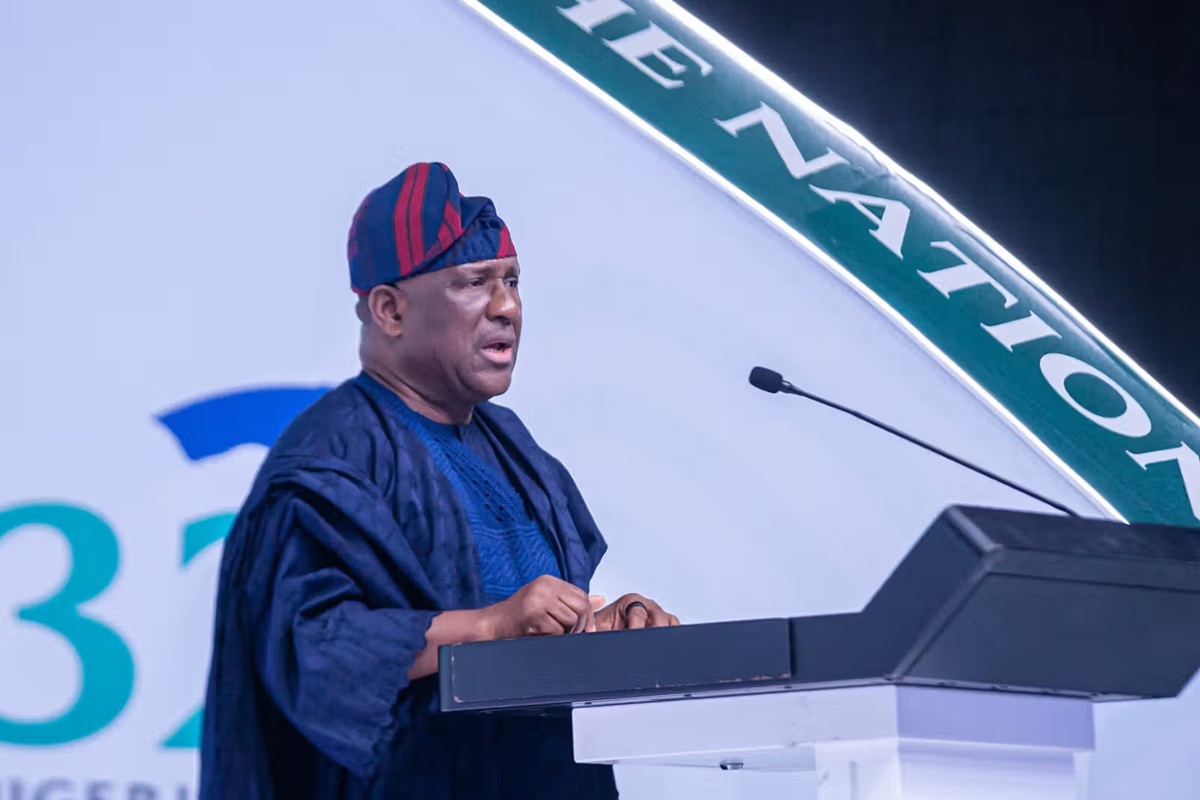
- BUA food expansion projects are expected to double capacity across key manufacturing operations by 2027, according to Abdul Samad Rabiu, who says the investments will support jobs, farmers and Nigeria’s food security.

BUA Group Founder and Executive Chairman, Abdul Samad Rabiu, says ongoing investments in the company’s food manufacturing businesses are expected to double production capacity across the affected operations by 2027.
VerseNews reports that Rabiu outlined the expansion plans during his keynote address at the 32nd Nigerian Economic Summit in Abuja.
The projects cover flour milling, pasta, noodles, edible oils, rice milling and animal feed production. According to Rabiu, the investments are intended to strengthen domestic production while expanding the group’s ability to serve markets across Africa.
Expansion targets food production and local suppliers
Rabiu said the projects would create employment opportunities and support farmers and suppliers connected to the group’s operations.
The expected capacity increase remains dependent on completing the projects. The announcement did not provide current and proposed production volumes for each business or separate completion dates for individual facilities.
It also did not specify how many jobs the expansion would create or announce changes to retail food prices. Details of the expansion announcement
Rabiu credits improved access to foreign exchange
The BUA chairman linked the group’s investment plans to improvements in access to foreign exchange under President Bola Tinubu’s economic reforms.
He said manufacturers previously struggled to obtain dollars for machinery and raw materials, even when they had sufficient naira to finance their purchases.
According to Rabiu, access to foreign currency through the market has made planning more predictable for businesses undertaking major industrial projects.
His assessment concerned the availability of foreign exchange rather than a claim that imported machinery or raw materials had become cheaper.
While acknowledging the difficulties still facing households and businesses, he said economic reforms must produce measurable gains in manufacturing, employment and living standards.
Affordable long-term financing remains a challenge
Rabiu identified access to affordable, long-term funding as a major obstacle to industrial expansion.
He said large manufacturing investments could take between 10 and 20 years to realise their full potential, making financing arrangements that support lengthy development periods essential.
The industrialist called for greater participation by banks, pension funds, insurance companies, development finance institutions and capital markets in funding productive businesses.
He also urged sustained policy stability, infrastructure development and investment in workers’ skills to help manufacturers expand their operations.
Nigeria needs more large indigenous manufacturers
Beyond BUA’s expansion, Rabiu challenged Nigeria to create conditions that would support at least 100 additional major indigenous industrial enterprises.
He said investment opportunities extended across manufacturing, agriculture, mining, technology and other productive sectors.
His appeal focused on building a broader industrial base capable of creating jobs and processing more of Nigeria’s resources locally. He also encouraged businesses to explore regional markets through the African Continental Free Trade Area.
Local processing central to BUA’s strategy
Rabiu cited the group’s integrated sugar project in Lafiagi, Kwara State, as another example of investment in domestic processing.
The project combines sugarcane cultivation, refining, ethanol production and electricity generation.
He argued that Nigeria should expand its ability to manufacture finished products rather than remain heavily dependent on selling raw materials and buying goods produced elsewhere.
The planned food manufacturing projects form part of that strategy, with completion targeted for 2027.






NECLive 2026: Femi Adebayo, Genoveva Umeh Join Push to Turn Nigerian Fans Into Global Power
NECLive 2026 brings Femi Adebayo, Genoveva Umeh, Kayode Kasum and music executives to Lagos to explore how Nigeria’s entertainment audience...

BUA Food Expansion to Double Capacity Across Key Operations by 2027 — Rabiu
BUA food expansion projects are expected to double capacity across key manufacturing operations by 2027, according to Abdul Samad Rabiu,...


Nigerian Stock Market Gains ₦1.75tn as NGX Index Rises 1.07%
The Nigerian stock market gained ₦1.75 trillion on October 27 as heavyweight shares lifted the NGX index by 1.07%, before...

Tinubu Orders Intensified Probe Into Killing of Cleric, Associate
President Bola Tinubu has directed security agencies to track down those responsible for killing Sheikh Yahaya Ibrahim Masussuka and Adamu...

BREAKING: Tinubu Seeks Fresh Approval for $20.52bn, €1.05bn External Loans
President Bola Tinubu has requested National Assembly approval for a supplementary external borrowing plan covering 2026–2027.

BREAKING: INEC Reviews Suspicious Voter Records Ahead of 2027 Elections
INEC says it is examining questionable photographs and registration records in its preliminary voter register following public concerns.


FG Announces ₦70,000 Transport Support for Workers, Agrees to Begin Minimum Wage Talks
The implementation date for a new minimum wage remains unresolved.


IPOB Tears Into UIPC Over Omotosho’s Repealed Law Scandal: Stop Covering Up a Daylight Legal Scam
The Indigenous People of Biafra (IPOB) has accused the United Igbo Political Congress (UIPC) of attempting to defend what it...


Rising Sun Foundation USA Offers $10,000 Reward for Nigerian Precedent Upholding Conviction Under Repealed Law
Rising Sun Foundation USA has offered a $10,000 reward to anyone who can produce a verifiable Nigerian judicial precedent upholding...


Convicted Without an Overt Act: The Catastrophic Pleading Failure at the Heart of Kanu’s Trial
A legal commentary by Onyedikachi Ifedi, Esq., has challenged the handling of the trial of Indigenous People of Biafra (IPOB)...