
News
US Visa Interview Rule 2026: Why Nigerians Should Apply From Nigeria Or Country Of Residence
US Visa Interview Rule 2026 explained for Nigerians: why applicants should apply from Nigeria or country of residence, who is affected, exceptions, fees and documents needed.

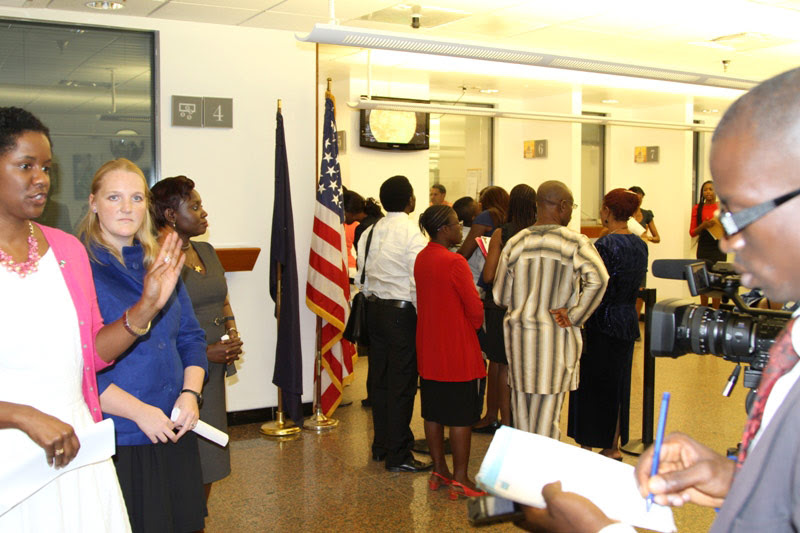
- US Visa Interview Rule 2026 explained for Nigerians: why applicants should apply from Nigeria or country of residence, who is affected, exceptions, fees and documents needed.

Nigerians applying for United States nonimmigrant visas have been advised to schedule their visa interviews in Nigeria or in the country where they legally reside.
The new guidance, issued by the US Department of State, affects applicants seeking temporary visas such as tourist visas, business visas, student visas, exchange visitor visas and other nonimmigrant visa categories.
The rule became effective immediately after it was updated on July 15, 2026.
Under the guidance, applicants for US nonimmigrant visas are expected to book their visa interview appointments at the US Embassy or Consulate in their country of nationality or country of residence.
For most Nigerian passport holders, this means applying through US visa services in Nigeria, unless they live legally in another country and can prove that residence.
What The New US Visa Rule Says
The US Department of State says nonimmigrant visa applicants should schedule interview appointments in their country of nationality or residence.
This means a Nigerian who lives in Nigeria should normally apply from Nigeria.
A Nigerian who legally lives in Canada, the United Kingdom, Ghana, South Africa, the United Arab Emirates or any other country may be allowed to apply there, but must be able to show proof of residence in that country.
The rule is important because many applicants often travel to other countries to look for faster appointment dates.
Some Nigerians, for example, have tried to book US visa appointments in Ghana, Benin Republic, South Africa, Kenya, Rwanda or other locations because of long waiting times in Nigeria.
The new guidance does not completely ban such applications, but it warns that applying outside your country of nationality or residence may make it more difficult to qualify.
Why Nigerians Should Pay Attention
This rule matters because US visa application fees are not refundable.
If a Nigerian books an appointment in another country where they do not live, attends the interview and is refused, the visa fee will not be returned.
The fee also cannot be transferred to another country.
That means an applicant who pays in another country may lose both the visa fee and travel expenses if the application becomes difficult because they cannot prove residence there.
The US Department of State also warned that applicants applying outside their country of nationality or residence should expect significantly longer appointment waits.
Who Is Affected By The Rule?
The rule affects applicants for US nonimmigrant visas, including:
- B1/B2 tourist and business visa applicants
- F1 student visa applicants
- J1 exchange visitor visa applicants
- H, L, O, P and Q petition-based visa applicants
- C and D transit or crew visa applicants
- Other temporary US visa categories
It does not apply to every diplomatic or official visa applicant.
The US Department of State listed exceptions for A, G, C-2, C-3 and NATO visas, as well as diplomatic-type or official-type visas.
Rare exceptions may also be made for humanitarian or medical emergencies, or for foreign policy reasons.
Can Nigerians Still Apply Outside Nigeria?
Yes, but only in the right circumstances.
A Nigerian can apply outside Nigeria if they are legally resident in that country and can prove it.
For example, a Nigerian living legally in the UK may apply through a US Embassy or Consulate in the UK if they can show valid residence documents.
A Nigerian studying in Canada may also apply in Canada if they can prove they live there.
But a Nigerian who only travels to another country for a short visit in order to get a faster appointment may face more difficulty.
The consular officer may ask why the applicant is applying there and whether they actually live in that country.
Documents That May Prove Residence
Applicants applying outside Nigeria should be ready to prove legal residence in the country where they are applying.
Possible documents include:
- Residence permit
- Work permit
- Student permit
- Valid long-term visa
- Utility bills
- Tenancy agreement
- Employment letter
- School admission or enrolment letter
- Tax or social security records
- Bank statements showing local activity
- Government-issued residence card
A hotel booking or short visitor visa may not be enough to prove residence.
What Happens To Existing Appointments?
The US Department of State says existing nonimmigrant visa appointments will generally not be cancelled.
However, in specific cases where appointments are cancelled at particular posts, applicants will be notified.
This means Nigerians who already booked appointments outside Nigeria should not panic immediately, but they should check the embassy or consulate website where they booked and monitor their email for updates.
Why The US Made The Change
The guidance appears designed to reduce pressure on embassies and consulates that receive large numbers of applicants from other countries.
It also helps consular officers assess applicants more properly.
When a person applies in their own country or country of residence, the officer can more easily review the applicant’s employment, family ties, school status, income, travel history and reason for returning.
When an applicant applies in a country where they do not live, it may be harder to establish strong ties.
This can affect the final decision.
What Nigerian Applicants Should Do Now
Nigerians planning to apply for a US visa should first decide the correct location for their interview.
If they live in Nigeria, they should apply through the US visa system serving Nigeria.
If they live outside Nigeria, they should apply in the country where they legally reside and prepare proof of residence.
Applicants should also avoid rushing to book appointments in other countries simply because they see earlier dates online.
A faster appointment does not guarantee approval.
A poorly prepared application in the wrong country may lead to refusal and loss of money.
How To Check US Visa Appointment Wait Times
Applicants can check estimated wait times through the official US Department of State visa wait time page.
The wait time page is updated monthly and shows estimated interview availability for different visa categories and locations.
However, the US government warns that wait times are only estimates and do not guarantee that an appointment will be available on a specific date.
Applicants who already have appointments may also check the appointment system regularly because new slots can be added.
FAQs
What is the US visa country of residence rule?
It is a rule advising nonimmigrant visa applicants to schedule interviews in their country of nationality or country of legal residence.
Does this affect Nigerians?
Yes. Nigerian passport holders should normally apply from Nigeria unless they legally reside in another country.
Can Nigerians apply for US visa in Ghana or another country?
Yes, but it may be harder if they do not legally live there. Applicants must be able to prove residence if they apply based on residency.
Will existing appointments be cancelled?
The US Department of State says existing nonimmigrant visa appointments will generally not be cancelled, but applicants should monitor updates from the post where they booked.
Will my visa fee be refunded if I apply in the wrong country?
No. Visa fees are not refundable and cannot be transferred to another country.
Does the rule apply to student visas?
Yes. It applies to nonimmigrant visa categories, including student visas.
Are there exceptions?
Yes. Exceptions include some diplomatic, official, NATO and UN-related visa categories. Rare humanitarian or medical emergency exceptions may also apply.






Jehovah’s Witnesses Make Fresh Decision on Blood Transfusions
Jehovah’s Witnesses have announced a change concerning the four main components of blood.


BREAKING: FG Suspends 21 NSCDC Officers, Releases Full List
The Federal Government has suspended the Niger State Commandant of the NSCDC and 20 other officers following the deaths of...


FG Gives Fresh Update as 10-Member Panel Probes Deaths of 37 NSCDC Detainees
The Federal Government has constituted a 10-member independent committee to investigate the deaths of 37 suspected illegal miners...

Alex Otti Gives Fresh Update on Political Future, Says He Will Retire After Tenure
Abia State Governor Alex Otti has said he will retire from active politics after completing his tenure, ruling out a...

BREAKING: FG Plans Low-Key 66th Independence Celebration for Nigerians
President Bola Tinubu will address Nigerians in a nationwide broadcast on October 1 as the Federal Government prepares a low-key...

BREAKING: Youths Seeks Release of #EndSARS Report
Ogun youths have urged Governor Dapo Abiodun to make public the report of the state’s Judicial Panel of Investigation on...


Meet the 3 New Super Eagles Stars Set for Their First Nigeria Call-Up
George Ilenikhena, Isaac James and Moses Usor have earned their first Super Eagles invitations as Nigeria prepare for crucial 2026...

BREAKING: Tinubu Gives Fresh Order Over Deaths of 37 Miners
President Bola Tinubu has ordered a full and transparent investigation into the deaths of 37 miners in NSCDC custody in...


Burna Boy Set to Make History Again as He Headlines NFL’s First-Ever Paris Game
Nigerian Afrobeats superstar Burna Boy will return to Paris’ Stade de France in October to headline the halftime show for...

Dangote Refinery Reveals Why Falling Crude Prices May Not Hurt Its Profits
Dangote Refinery has assured prospective investors that a possible decline in crude oil prices after the US-Iran conflict will not...