
Politics
FG Exceeds Budget Target by ₦4.79tn Amid Revenue Shortfall
The Federal Government borrowed ₦12.62 trillion in 2024—about 61% above its budget target—after a sharp revenue shortfall widened the fiscal deficit, according to the Budget Office of the Federation.

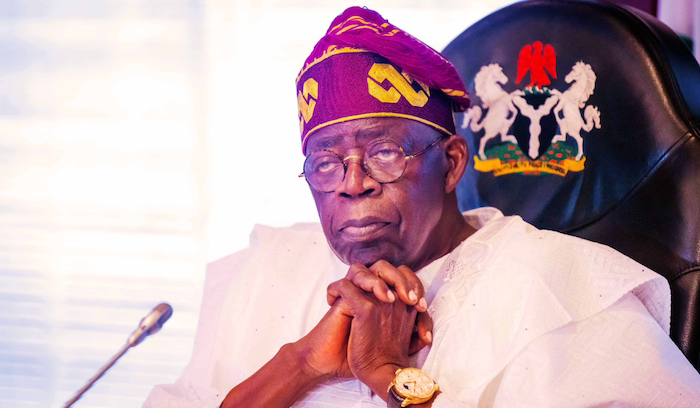
- The Federal Government borrowed ₦12.62 trillion in 2024—about 61% above its budget target—after a sharp revenue shortfall widened the fiscal deficit, according to the Budget Office of the Federation.

The Federal Government exceeded its 2024 borrowing target by ₦4.79 trillion, raising a total of ₦12.62 trillion in new loans after a larger-than-expected budget deficit created additional financing needs.
This was disclosed in the Budget Office of the Federation’s Fourth Quarter and Consolidated Budget Implementation Report for 2024, which showed that the government borrowed 61.2 percent more than the ₦7.83 trillion approved in the 2024 budget.
According to the report, the increased borrowing became necessary after government revenue fell significantly below expectations, widening the fiscal deficit to ₦13.51 trillion, compared to the budgeted deficit of ₦9.18 trillion.
The report revealed that the Federal Government generated ₦20.98 trillion in revenue during the year, falling ₦4.90 trillion short of the projected ₦25.88 trillion.
Government spending, however, remained largely within budget.
Total expenditure stood at ₦34.49 trillion, only ₦561.29 billion below the approved estimate of ₦35.06 trillion, indicating that the larger deficit was driven mainly by lower-than-expected revenue rather than excessive spending.
“The revenue and expenditure outturn of the Federal Government resulted in a fiscal deficit of ₦13.51 trillion in the 2024 fiscal year. This was ₦4.34 trillion above the projected budget deficit estimate for the year,” the report stated.
The report also noted that the 2024 fiscal deficit exceeded the ₦10.55 trillion recorded in 2023, highlighting increasing pressure on Nigeria’s public finances.
Foreign Borrowing and Budget Support Rise
An analysis of the government’s financing profile showed that while domestic borrowing remained on target at ₦6.06 trillion, foreign borrowing rose sharply.
Foreign loans increased from the budgeted ₦1.77 trillion to ₦3.37 trillion, exceeding the target by ₦1.60 trillion.
The report further disclosed that the Federal Government received an additional ₦3.19 trillion in budget support despite making no provision for it in the 2024 budget.
The source of the budget support, which was classified as new borrowing, was not disclosed.
Combined with domestic and foreign borrowing, total new loans reached ₦12.62 trillion, exceeding the approved borrowing plan by ₦4.79 trillion.
According to the report, new borrowings financed approximately 36 percent of the Federal Government’s 2024 budget, underscoring Nigeria’s continued reliance on debt to fund public expenditure.
Oil Revenue Misses Target Despite Strong Non-Oil Performance
The report attributed much of the revenue shortfall to weaker oil earnings.
Gross oil revenue stood at ₦15.07 trillion, falling ₦4.93 trillion below the budget estimate of ₦19.99 trillion.
The Budget Office attributed the shortfall to lower international crude oil prices and reduced production.
Average crude oil prices during the fourth quarter stood at $74.65 per barrel, below the budget benchmark of $77.96, while average daily production was 1.54 million barrels per day, compared to the projected 1.78 million barrels per day.
However, non-oil revenue outperformed expectations.
Gross non-oil revenue reached ₦16.09 trillion, exceeding the annual target of ₦10.81 trillion by ₦5.29 trillion, driven by stronger collections from Company Income Tax (CIT), Value Added Tax (VAT), the Electronic Money Transfer Levy (EMTL), and Customs revenue.
Debt Servicing Costs Surge
The report also showed that debt servicing placed increasing pressure on government finances.
Total debt expenditure rose to ₦12.36 trillion, exceeding the budgeted ₦8.27 trillion by 52.71 percent.
Meanwhile, capital expenditure remained below expectations.
Although ₦5.81 trillion was released for capital projects, Ministries, Departments and Agencies (MDAs) had utilized only ₦3.27 trillion of the funds as of June 30, 2025.
Nigeria’s Debt Burden Continues to Rise
According to the Budget Office, Nigeria’s total public debt climbed to ₦144.67 trillion by the end of December 2024.
The country’s debt-to-GDP ratio also increased to 61.22 percent, exceeding both Nigeria’s self-imposed threshold of 40 percent and the international benchmark of 56 percent for comparable economies.
Despite the rising debt profile, the Budget Office expressed optimism that ongoing reforms—including improved tax administration, stronger non-oil revenue mobilization, fiscal incentive reviews, plugging revenue leakages, and improved remittances from government-owned enterprises—would reduce dependence on borrowing over time.
Economists Raise Concerns
Economic experts expressed concern over the government’s rising debt profile.
Chief Executive Officer of CSA Advisory, Aliyu Ilias, warned that continued borrowing could increase inflation and worsen the cost of living if the funds are not effectively managed.
He argued that while borrowing can support economic growth, Nigeria’s rising debt servicing obligations pose significant fiscal risks.
Similarly, Muda Yusuf, Chief Executive Officer of the Centre for the Promotion of Private Enterprise (CPPE), called for stronger fiscal discipline and sustainable debt management.
Former Central Bank Governor Muhammadu Sanusi II also questioned the continued borrowing by the Federal Government despite the removal of the petrol subsidy, warning against fiscal indiscipline.
However, the Presidency defended the borrowing strategy, insisting that the loans are being used to finance critical infrastructure projects.
The Minister of Finance and Coordinating Minister of the Economy, Taiwo Oyedele, also maintained that the focus should not be on the volume of debt alone but on how the borrowed funds are utilized and the returns they generate for the economy.






Bus Driver Returns Over N400,000 Forgotten by Passenger in Abia
An Abia commercial bus driver, Onyekachi Ikpendu, has been praised after returning over N400,000 and personal belongings accidentally left behind...


FG Begins N18bn Payment to 2,700 Ex-Nigeria Airways Workers After 20 Years
The Federal Government has commenced the payment of N18bn in outstanding severance benefits to 2,700 former Nigeria Airways workers...


Nigerians to Get Free Data Daily for Online Learning
The Nigerian Communications Commission has launched a zero-rated data initiative that will provide eligible users with up to 100MB of...


BREAKING: Peter Obi Breaks Silence on Stepping Down for Atiku
Peter Obi says any alliance with Atiku Abubakar must be negotiated by their political parties, while outlining his positions on...

BREAKING: National Assembly Suspends South Africa Trips, Orders Legislative Boycott
The National Assembly has suspended official visits to South Africa and participation in its legislative events over reported xenophobic attacks...

How Justice Omotosho Turned Criminal Law Upside Down to Convict Nnamdi Kanu
According to Chidera, Section 36(12) of the Nigerian Constitution requires a criminal offence to be defined and its punishment prescribed...

IPOB: The Boycott Is Not a Threat — List Kanu’s Appeal or Lose Biafraland’s Vote
The Indigenous People of Biafra (IPOB) has threatened a total boycott of upcoming elections across Biafraland and other areas if...

Kanu Fires Lawyer for ‘Gross Incompetence’ — IPOB Warns Media: Stop Calling Him Our Counsel
The Indigenous People of Biafra (IPOB) has said lawyer Ifeanyi Ejiofor is no longer a member of its legal team,...

How Nigerian Media Buried the Constitutional Time Bomb in Kanu’s Conviction
Legal practitioner Christopher Chidera, Esq., has launched a sharp criticism against major Nigerian media outlet....
IPOB: List Kanu’s Appeal in 14 Days or We Boycott 2027 General Elections Across Biafraland
The Indigenous People of Biafra (IPOB) has given the Federal Government of Nigeria a 14-day ultimatum to list and hear...