
Politics
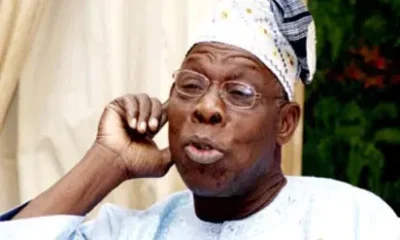
Nigeria’s Borrowing: Obasanjo Challenges Tinubu, Warns Debt Could Hurt Generations
Nigeria’s borrowing policy has drawn criticism from former President Olusegun Obasanjo, who challenged President Bola Tinubu’s defence of loans and warned of consequences for future generations.

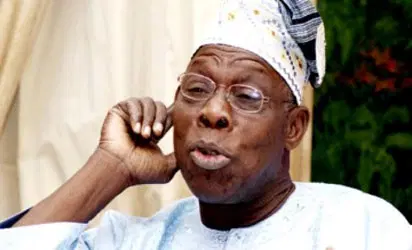
- Nigeria’s borrowing policy has drawn criticism from former President Olusegun Obasanjo, who challenged President Bola Tinubu’s defence of loans and warned of consequences for future generations.

Former President Olusegun Obasanjo has criticised President Bola Tinubu’s position on government borrowing, warning that excessive debt could impose a lasting burden on generations of Nigerians.
Obasanjo spoke on Friday, October 30, at the third Ajibosin Annual Symposium, held at the Olusegun Obasanjo Presidential Library in Abeokuta, Ogun State. The event examined how artificial intelligence could help address grassroots challenges and support national development.
The former president challenged Tinubu’s earlier comparison of borrowing with leprosy, arguing that the consequences of public debt could extend far beyond those responsible for taking the loans.
“Debt is worse than leprosy. Because leprosy destroys only one person. Debt destroys generations,” Obasanjo said.
His remarks followed Tinubu’s request for legislative approval of a supplementary external borrowing programme worth approximately $20.52 billion and €1.04 billion. The request was presented to the Senate on Tuesday, October 27, through a letter read by Senate President Godswill Akpabio.
The proposed financing covers projects and programmes in sectors including power, transportation, healthcare, education, agriculture and water supply. It also includes security, employment initiatives and financial management reforms. The figures concern a borrowing request, rather than confirmation that the funds have already been disbursed.
Tinubu had defended further borrowing on Thursday, October 29, arguing that sustained infrastructure investment was necessary to support Nigeria’s ambition of becoming a $1 trillion economy by 2030.
In a statement outlining his administration’s infrastructure and growth strategy, the president said the value created through borrowed funds should be central to assessing the policy.
He identified roads, electricity infrastructure and port improvements among the investments intended to support businesses, connect economic centres and create employment. These included the Lagos-Calabar Coastal Highway, Sokoto-Badagry Superhighway and upgrades to major commercial ports in Lagos.
The president maintained that such projects, alongside spending on healthcare, education and vocational training, would improve productivity and expand opportunities for future generations. Those benefits remain the administration’s stated expectations for the investments.
Obasanjo’s criticism also extended to Nigeria’s reliance on international financial institutions. He questioned whether recommendations from the World Bank and International Monetary Fund adequately reflected the country’s circumstances.
The former president argued that Nigeria needed economic decisions grounded in its domestic realities, rather than assuming that externally promoted policies would resolve its development challenges.




Nnamdi Kanu’s Conviction Under Fresh Legal Scrutiny as Lawyer Accuses Justice Omotosho of Introducing Uncharged Offences
A Nigerian lawyer, Christopher Chidera, Esq., has launched a fresh legal challenge to the November 20, 2025 conviction of Indigenous...

Nnamdi Kanu’s Conviction: Lawyer Alleges Justice Omotosho Introduced Uncharged Offences in Judgment
A Nigerian lawyer, Onyedikachi Ifedi, Esq., has raised fresh legal concerns over the conviction of the detained leader of the...


‘I Carried Placard But It Was a Prayer Walk’ — Adeboye Denies Anti-Jonathan Protest Claim (Video)
Adeboye has rejected claims that he carried a placard against Goodluck Jonathan, saying the photograph came from a 2020 prayer...

Nigeria’s Borrowing: Obasanjo Challenges Tinubu, Warns Debt Could Hurt Generations
Nigeria’s borrowing policy has drawn criticism from former President Olusegun Obasanjo, who challenged President Bola Tinubu’s defence of loans and...

BREAKING: INEC Speaks On 2027 Elections Postponement, Issues Stern Warning to Officials
INEC says the 2027 elections will hold as scheduled, with Chairman Joash Amupitan reaffirming the timetable and warning electoral officials...


Rita Edochie Reaffirms Support for Nnamdi Kanu, Demands IPOB De-proscription
According to Rita Edochie, she remains committed to the struggle until Kanu is released, insisting that she would not abandon...
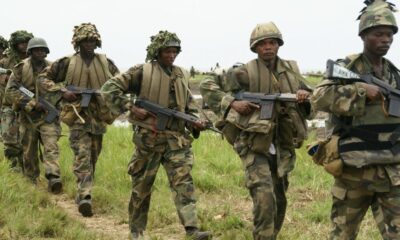

Nigerian Military Reports Rescue of 349 Kidnap Victims, Arrest of 333 Suspects
The Nigerian military says troops rescued 349 kidnapped people and arrested 333 suspects during nationwide operations covered in its October...

2027 Elections: INEC Upholds 66 Petitions, Rejects 64 in Candidate-List Review
INEC has upheld 66 petitions and rejected 64 after reviewing complaints over its 2027 governorship and state assembly candidate lists,...


Flamingos Beat Mexico 2–1 to Seal U-17 Women’s World Cup Quarter-Final Spot
The Flamingos beat Mexico 2–1 as Oluebube Umejiaku and Mary Dunstan scored to send Nigeria into the quarter-finals of the...


NELFUND Plans Parents’ Portal to Check School Fees as Digital Wallet Pilot Begins
NELFUND plans a parents’ verification portal to confirm school-fee payments while piloting a restricted digital wallet that lets students authorise...