
News
Fulani Group Challenges US Claims on Nigeria’s Security Crisis
A Fulani socio-cultural group has urged international observers to avoid portraying the Fulani ethnic group as the sole source of insecurity in Nigeria.

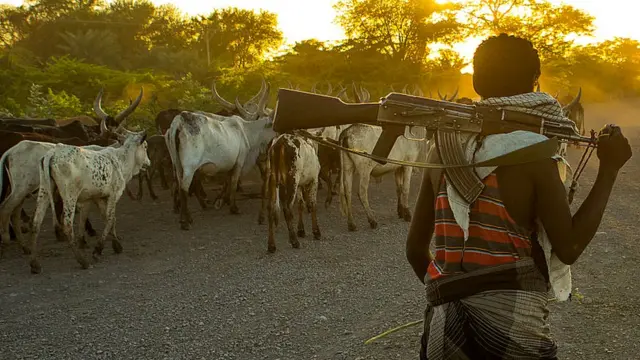
- A Fulani socio-cultural group has urged international observers to avoid portraying the Fulani ethnic group as the sole source of insecurity in Nigeria.

The Concerned Fulani People of Nigeria has called on international actors, particularly the United States, to avoid portraying the Fulani ethnic group as the primary source of insecurity in Nigeria.
The group made the appeal in a statement signed by its representative, Ibrahim Barkindo Chubado, while reacting to recent reports linking Fulani communities to violence and insecurity across parts of the country.
According to the group, broad generalisations and ethnic profiling could worsen tensions and undermine efforts aimed at addressing Nigeria’s complex security challenges.
The organisation questioned what it described as inconsistencies in international assessments of insecurity in Nigeria, particularly reports highlighting alleged Fulani militancy.
It noted that previous analyses had cautioned against ethnic profiling and warned that assigning blame to an entire ethnic group could inflame communal tensions.
The group argued that insecurity in Nigeria involves multiple actors and cannot be attributed solely to one ethnic or religious community.
It also recalled that during previous administrations, public debates around insecurity often focused heavily on Fulani identity, resulting in hostility toward innocent Fulani communities in several parts of the country.
According to the statement, such narratives contributed to attacks on settlements, destruction of property and loss of livestock belonging to Fulani families.
The group further maintained that conflicts involving herders and farmers have often been oversimplified, despite experts identifying factors such as land disputes, environmental pressures, grazing routes and local political issues as major drivers of the crisis.
It cited recurring tensions in states such as Benue, Plateau and Taraba, stressing that many Fulani families have lived in those communities for generations.
The organisation also referenced previous criminal incidents where initial accusations against Fulani communities were later disputed by security investigations.
Among the examples cited was the 2022 attack on St. Francis Catholic Church in Owo, Ondo State, which the group said was initially linked to Fulani herders before subsequent investigations pointed elsewhere.
The group expressed concern over reports attributed to the United States Commission on International Religious Freedom (USCIRF), which allegedly claimed that approximately 30,000 armed Fulani militants were responsible for insecurity in Nigeria.
DON’T MISS: Nigerians Face More Hardship as Kerosene Price Nears N4,000 Per Litre
It described such claims as unfair stereotyping and warned that they could worsen ethnic relations.
According to the group, challenges such as terrorism, banditry, separatist violence, kidnapping and communal clashes involve different actors across various regions of the country.
The organisation called for balanced reporting, evidence-based analysis and greater caution in discussions surrounding insecurity.
It also urged Nigerian authorities and international partners to promote justice, fairness and national unity while addressing the country’s security challenges.
“Nigeria’s future cannot be built on ethnic scapegoating, mutual suspicion or divisive narratives,” the statement added.






Bus Driver Returns Over N400,000 Forgotten by Passenger in Abia
An Abia commercial bus driver, Onyekachi Ikpendu, has been praised after returning over N400,000 and personal belongings accidentally left behind...


FG Begins N18bn Payment to 2,700 Ex-Nigeria Airways Workers After 20 Years
The Federal Government has commenced the payment of N18bn in outstanding severance benefits to 2,700 former Nigeria Airways workers...


Nigerians to Get Free Data Daily for Online Learning
The Nigerian Communications Commission has launched a zero-rated data initiative that will provide eligible users with up to 100MB of...


BREAKING: Peter Obi Breaks Silence on Stepping Down for Atiku
Peter Obi says any alliance with Atiku Abubakar must be negotiated by their political parties, while outlining his positions on...


BREAKING: National Assembly Suspends South Africa Trips, Orders Legislative Boycott
The National Assembly has suspended official visits to South Africa and participation in its legislative events over reported xenophobic attacks...
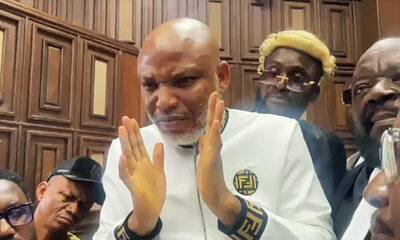

How Justice Omotosho Turned Criminal Law Upside Down to Convict Nnamdi Kanu
According to Chidera, Section 36(12) of the Nigerian Constitution requires a criminal offence to be defined and its punishment prescribed...
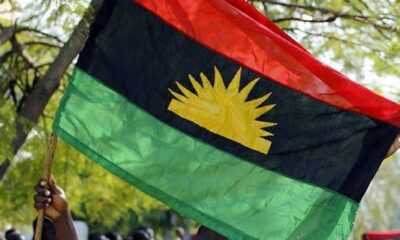

IPOB: The Boycott Is Not a Threat — List Kanu’s Appeal or Lose Biafraland’s Vote
The Indigenous People of Biafra (IPOB) has threatened a total boycott of upcoming elections across Biafraland and other areas if...
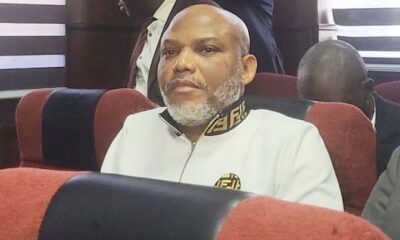

Kanu Fires Lawyer for ‘Gross Incompetence’ — IPOB Warns Media: Stop Calling Him Our Counsel
The Indigenous People of Biafra (IPOB) has said lawyer Ifeanyi Ejiofor is no longer a member of its legal team,...

How Nigerian Media Buried the Constitutional Time Bomb in Kanu’s Conviction
Legal practitioner Christopher Chidera, Esq., has launched a sharp criticism against major Nigerian media outlet....
IPOB: List Kanu’s Appeal in 14 Days or We Boycott 2027 General Elections Across Biafraland
The Indigenous People of Biafra (IPOB) has given the Federal Government of Nigeria a 14-day ultimatum to list and hear...