
Business
BREAKING: Tinubu, World Bank in Talks Over Second-Largest $1.25bn Loan as Nigeria’s Debt Nears N161tn
The Federal Government is seeking a fresh $1.25 billion World Bank loan to support economic reforms and job creation, a move that could push Nigeria’s total public debt above N160 trillion if approved.

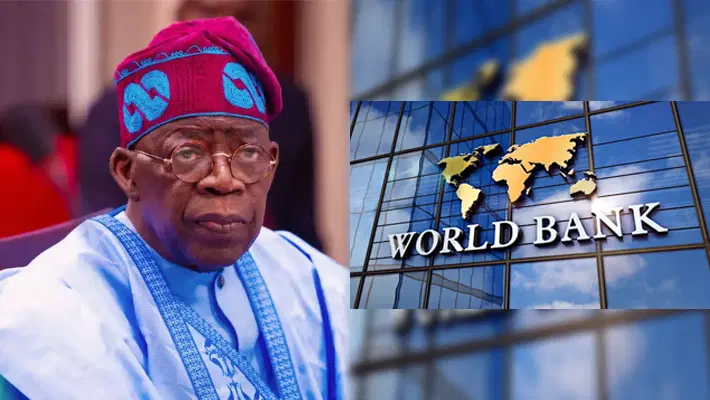
- The Federal Government is seeking a fresh $1.25 billion World Bank loan to support economic reforms and job creation, a move that could push Nigeria’s total public debt above N160 trillion if approved.

The Federal Government has stepped up discussions with World Bank over a fresh $1.25 billion loan aimed at supporting economic reforms, job creation, and investment competitiveness in Nigeria.
The proposed facility, titled Nigeria Actions for Investment and Jobs Acceleration, has reached an advanced stage in the lender’s approval process and is expected to be presented for final approval on June 26, 2026.
If approved, the loan would become the second-largest single World Bank facility secured under President Bola Tinubu, behind only the $1.5 billion Reforms for Economic Stabilisation to Enable Transformation Development Policy Financing approved in June 2024.
At the current exchange rate of N1,361.4 to the dollar, the proposed loan translates to approximately N1.70 trillion, highlighting the scale of external borrowing being pursued by the government amid ongoing economic reforms.
Analysts say full approval and disbursement of the facility would raise Nigeria’s external debt from N74.43 trillion ($51.86 billion) as of December 31, 2025, to at least N76.13 trillion ($53.11 billion).
The country’s total public debt would also increase from N159.28 trillion to about N160.98 trillion, while total debt in dollar terms could rise from $110.97 billion to roughly $112.22 billion.
Details of the proposed loan were contained in a programme information document released by the World Bank, which showed that the project has moved beyond the concept and appraisal phases and is now at the decision meeting stage.
This stage means the lender’s management is reviewing the final appraisal package to determine whether the project should proceed to its Board of Executive Directors for formal approval.
According to the World Bank, the loan is intended “to support the government’s efforts to expand access to finance, digital, and electricity services, and strengthen competitiveness through tax, trade, and agriculture reforms.”
The Federal Ministry of Finance is listed as the implementing agency for the project, while the borrower is the Federal Republic of Nigeria.
The proposed borrowing comes amid increasing scrutiny over Nigeria’s growing dependence on multilateral financing under Tinubu’s administration.
Findings show that the World Bank has approved approximately $9.35 billion in loans and credits for Nigeria between June 2023 and May 2026, covering sectors such as power, education, healthcare, agriculture, social protection, renewable energy, and economic reform support.
If the new $1.25 billion facility is approved, total World Bank approvals under Tinubu would rise to about $10.6 billion.
Earlier, the Accountant-General of the Federation, Shamseldeen Ogunjimi, warned that Nigeria may reject future World Bank facilities if delays in approval and disbursement continue.
He stated that prolonged approval timelines could undermine the government’s willingness to proceed with such borrowing arrangements.
“If approvals take more than six months, the Nigerian Government may no longer honour such arrangements,” he said.
Economists have expressed mixed reactions to the fresh loan proposal.
DON’T MISS: BREAKING: Zenith Bank Founder Jim Ovia Retires, Details
Some argue that concessional loans from institutions like the World Bank can support long-term development if deployed effectively, while others warn that Nigeria’s rising debt profile may increase fiscal pressure if not matched with stronger domestic revenue generation.
The Nigerian Economic Summit Group also warned in its latest Debt Burden Monitor report that Nigeria’s debt outlook remains fragile despite signs of short-term improvement.
The group stated that while some debt indicators suggest temporary stabilisation, structural fiscal weaknesses remain, leaving the country in what it described as a “high-risk fiscal environment.”





‘Show Me the Law’ Is Not a Joke — It Is Section 36, Section 122, and the Supreme Court, Spoken from the Dock
Ifedi argues that Kanu’s conviction relied on a repealed terrorism law, raising fundamental constitutional questions about its validity.

BREAKING: Atiku Appoints El-Rufai, Hayatu-Deen in ADC Presidential Campaign Council
Atiku Abubakar has announced the appointment of Nasir el-Rufai and Mohammed Hayatu-Deen to key positions in his African Democratic Congress,...

NECO Releases 2026 SSCE Results, Records Drop in Examination Malpractice
NECO has released the 2026 SSCE results, with 1,496 candidates recorded for examination malpractice, representing a 64.74% decrease from 2025.


PHOTOS: Anthony Joshua Endures ‘Torture’ Training Ahead of Fury Fight
Anthony Joshua has stepped up his preparations for a potential Tyson Fury showdown with an unusual stretching machine that has...


Umahi Orders Tinubu’s Pictures on First Niger Bridge
Works Minister David Umahi has ordered that President Bola Tinubu’s pictures be displayed on the First Niger Bridge after its...

INEC to Deploy Intelligence Against Vote Buying Ahead of 2027 Elections
INEC Chairman Joash Amupitan says the commission will activate intelligence operations and pursue a joint task force to tackle vote...

Diverting Tithes, Offerings, Others to Private Businesses is a Criminal Offence – EFCC Warns Churches
The Economic and Financial Crimes Commission, EFCC, has warned religious leaders against diverting tithes, offerings, zakat and other funds entrusted...


Enugu Air Launches First International Flight to Cameroon
Enugu Air, Enugu Airport, Douala, Cameroon, Nigeria-Cameroon, International Flight, Peter Mbah, Enugu State, Akanu Ibiam International Airport,


Canadian Government Warns Citizens Against Buying Alcohol in Nigeria
The Canadian government has warned its citizens travelling to Nigeria to be cautious about where they buy alcohol following reports...

Kanu Was Discharged. The Courts Refused to Let the Law Stand.
A lawyer, Christopher Chidera, has challenged the legal foundation of Nnamdi Kanu’s conviction, questioning how quashed charges and a repealed...