
Business
CBN Unveils Tough Regulations as Banks Reposition For Growth
The Central Bank of Nigeria has tightened oversight of banks after lenders raised N4.65 trillion in a major recapitalisation exercise aimed at strengthening governance, financial stability, and economic growth…

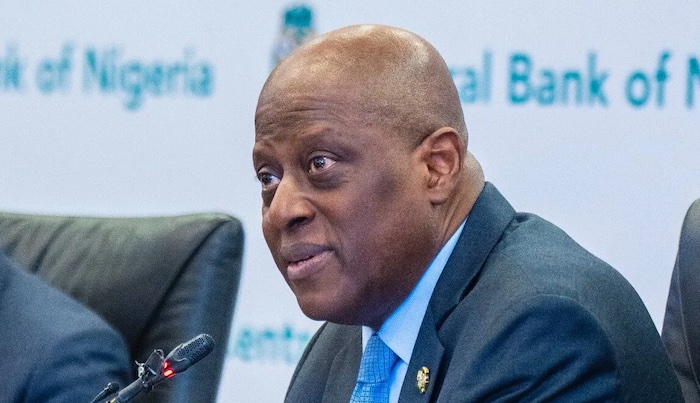
- The Central Bank of Nigeria has tightened oversight of banks after lenders raised N4.65 trillion in a major recapitalisation exercise aimed at strengthening governance, financial stability, and economic growth.

The Central Bank of Nigeria has signaled a tougher regulatory stance on lenders following the completion of a sweeping recapitalisation exercise that enabled commercial banks to raise about N4.65 trillion within two years.
The move is part of the apex bank’s broader strategy to strengthen corporate governance, restore investor confidence, and safeguard the stability of Nigeria’s financial system.
With the recapitalisation phase largely completed, attention is now shifting toward stronger governance structures and the productive deployment of the newly raised capital to support economic growth and job creation.
Industry stakeholders say the recapitalisation exercise remains a strategic policy initiative aimed at building resilience in the banking sector and positioning financial institutions to support Nigeria’s long-term economic ambitions.
The International Monetary Fund (IMF), during its recent Spring Meetings in Washington, acknowledged the importance of Nigeria’s banking recapitalisation programme, describing it as a timely policy decision amid persistent global economic uncertainties and oil market volatility.
According to the IMF, stronger capital buffers would help Nigerian banks absorb shocks during periods of financial stress while supporting inflation control and medium-term economic growth objectives.
The Fund further noted that the strengthened banking system has improved confidence in Nigeria’s financial sector and positioned banks to better support the country’s economic expansion.
Speaking during the presentation of the Global Financial Stability Report, IMF Financial Counsellor and Director of the Monetary and Capital Markets Department, Tobias Adrian, said recapitalisation becomes especially valuable during periods of economic stress.
“It is in times of stress where the value of bank capital really comes to the fore. What we are aiming for is a banking sector that is capitalised against adverse shocks,” Adrian said.
The recapitalisation reform, driven by CBN Governor Olayemi Cardoso, has significantly reshaped the banking landscape, aligning the sector with Nigeria’s ambition of building a $1 trillion economy.
Under the new framework, international banks are required to maintain a minimum capital base of N500 billion, national banks N200 billion, while regional banks must maintain at least N50 billion.
The stronger capital position has improved banks’ Capital Adequacy Ratios and enhanced their ability to absorb financial shocks, manage risks, and finance larger transactions across critical sectors of the economy.
Analysts say the recapitalisation exercise has also helped restore trust among depositors and investors, strengthening confidence in the stability and security of Nigeria’s banking system.
With stronger balance sheets, banks are now expected to expand lending to key sectors such as infrastructure, manufacturing, agriculture, and small and medium enterprises (SMEs), all of which are considered essential to Nigeria’s economic diversification agenda.
Speaking at the Chartered Institute of Directors Nigeria induction ceremony in Lagos, Cardoso, represented by the Director of Banking Supervision, Olubukola Akinwunmi, said the apex bank’s focus has shifted from raising capital to enforcing discipline across bank boards and management teams.
He described recapitalisation as a “strategic imperative” rather than a routine regulatory exercise, stressing that stronger capital must be matched by improved governance standards.
“The role of directors becomes even more critical in this new phase. Stewardship must now be exercised with sharper focus on consolidation, confidence and stability,” he said.
The CBN has also introduced stricter governance measures, including tighter oversight on related-party lending, board independence, transparency, and succession planning for top bank executives.
Among the new rules is a requirement for systemically important banks to obtain regulatory approval for incoming chief executives at least six months before leadership transitions.
DON’T MISS: BREAKING: Tinubu, World Bank in Talks Over Second-Largest $1.25bn Loan as Nigeria’s Debt Nears N161tn
The apex bank said the reforms are designed to prevent governance failures, strengthen accountability, and ensure that recapitalisation translates into genuine financial system stability rather than merely larger balance sheets.
Experts say the next major challenge for Nigerian banks will be effectively deploying their strengthened capital to support the real economy through increased lending, innovation, and long-term investments.
Despite lingering challenges such as high interest rates, policy uncertainty, and infrastructure deficits, analysts believe the recapitalised banking system provides a stronger foundation for sustainable growth and economic transformation.






IPOB: Nnamdi Kanu Must Be Released Unconditionally, Appeal Must Be Listed — Chris Nwaọgụ
IPOB has renewed its demand for the immediate and unconditional release of Nnamdi Kanu, while calling for his pending appeal...


‘Show Me the Law’ Is Not a Joke — It Is Section 36, Section 122, and the Supreme Court, Spoken from the Dock
Ifedi argues that Kanu’s conviction relied on a repealed terrorism law, raising fundamental constitutional questions about its validity.

BREAKING: Atiku Appoints El-Rufai, Hayatu-Deen in ADC Presidential Campaign Council
Atiku Abubakar has announced the appointment of Nasir el-Rufai and Mohammed Hayatu-Deen to key positions in his African Democratic Congress,...

NECO Releases 2026 SSCE Results, Records Drop in Examination Malpractice
NECO has released the 2026 SSCE results, with 1,496 candidates recorded for examination malpractice, representing a 64.74% decrease from 2025.


PHOTOS: Anthony Joshua Endures ‘Torture’ Training Ahead of Fury Fight
Anthony Joshua has stepped up his preparations for a potential Tyson Fury showdown with an unusual stretching machine that has...


Umahi Orders Tinubu’s Pictures on First Niger Bridge
Works Minister David Umahi has ordered that President Bola Tinubu’s pictures be displayed on the First Niger Bridge after its...


INEC to Deploy Intelligence Against Vote Buying Ahead of 2027 Elections
INEC Chairman Joash Amupitan says the commission will activate intelligence operations and pursue a joint task force to tackle vote...

Diverting Tithes, Offerings, Others to Private Businesses is a Criminal Offence – EFCC Warns Churches
The Economic and Financial Crimes Commission, EFCC, has warned religious leaders against diverting tithes, offerings, zakat and other funds entrusted...


Enugu Air Launches First International Flight to Cameroon
Enugu Air, Enugu Airport, Douala, Cameroon, Nigeria-Cameroon, International Flight, Peter Mbah, Enugu State, Akanu Ibiam International Airport,


Canadian Government Warns Citizens Against Buying Alcohol in Nigeria
The Canadian government has warned its citizens travelling to Nigeria to be cautious about where they buy alcohol following reports...