
Politics
PFIPC Probe: Adeyemi Sets Conditions for Facing House Investigators
The House of Representatives committee probing the controversial Presidential Foreign Investment Promotion Council has yet to decide where its alleged self-appointed Director-General, Adeniyi Adeyemi, will be questioned.

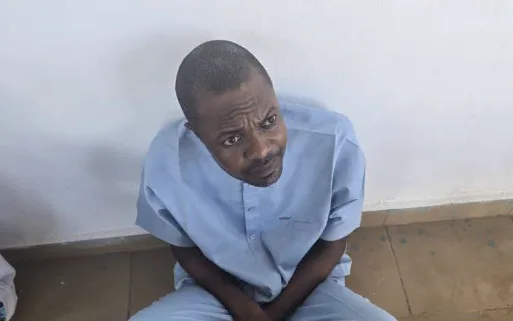
- The House of Representatives committee probing the controversial Presidential Foreign Investment Promotion Council has yet to decide where its alleged self-appointed Director-General, Adeniyi Adeyemi, will be questioned.

PFIPC, Adeniyi Adeyemi, House of Representatives, Yusuf Gagdi, CUPP, ICPC, Nigerian Government, Presidency, National Assembly, Nigeria Politics, Foreign Investment Promotion Council, Femi Gbajabiamila
The House of Representatives Ad Hoc Committee investigating the controversy surrounding the Presidential Foreign Investment Promotion Council (PFIPC) has yet to decide where it will question the council’s self-appointed Director-General, Adeniyi Adeyemi.
The development comes as Adeyemi insisted that his lawyers and journalists must be present before he submits to questioning by the committee.
The committee, chaired by the lawmaker representing Kanke/Kanam/Pankshin Federal Constituency of Plateau State, Yusuf Gagdi, is investigating how the PFIPC allegedly secured official office accommodation within the Federal Secretariat Complex in Abuja and received more than N1.32bn in the 2026 Appropriation Act despite claims that it had no legal existence.
The controversy has attracted public attention, with questions raised over how an organisation allegedly lacking legal recognition was able to operate within government structures and gain access to public funds.
Adeyemi, who remains in police custody over the controversy, is expected to appear before the committee this week following testimony from several senior government officials.
However, as of Sunday, the venue for his much-anticipated appearance had not been determined.
A source familiar with the committee’s proceedings, who spoke anonymously because he was not authorised to discuss the matter publicly, confirmed that no decision had been reached.
Asked whether a venue had been selected, the source simply said, “No decision yet.”
The development followed the committee’s hearings with senior government officials, including the Head of the Civil Service of the Federation, Didi Walson-Jack; Director-General of the Budget Office of the Federation, Tanimu Yakubu; Director of Banking Services at the Central Bank of Nigeria, Hamisu Abdullahi; and representatives of the Inspector-General of Police.
Their testimonies reportedly raised questions about how Adeyemi allegedly presented himself as the head of the PFIPC and gained recognition and access within government circles.
Adeyemi, through his lawyers, had indicated his willingness to appear before the committee and respond to the allegations against him, but insisted that the proceedings should be conducted publicly and in the presence of his legal representatives and members of the media.
Meanwhile, the Coalition of United Political Parties (CUPP) has rejected the findings of the Independent Corrupt Practices and Other Related Offences Commission on the PFIPC controversy, describing the investigation as inadequate.
CUPP spokesperson, Agu Bryan, argued that the ICPC’s reported decision to clear the Presidency while indicting Adeyemi failed to answer fundamental questions about how an allegedly non-existent government agency was able to operate at such a high level.
Bryan described the ICPC investigation as inadequate and called for a broader and more transparent inquiry into the matter.
According to him, it would be difficult for Adeyemi to have operated an organisation of such magnitude without assistance or enabling actions from individuals within government institutions.
“As Nigerians, we know that someone could not have operated an alleged high-profile agency of such magnitude without enablers, either within the Presidency or across the government agencies involved,” Bryan said.
He called for closer scrutiny of the roles allegedly played by the Office of the Secretary to the Government of the Federation, the Central Bank of Nigeria and the Office of the Head of the Civil Service of the Federation.
Bryan particularly cited testimony from Walson-Jack that her office failed to conduct due diligence on some documents associated with the controversial council.
The CUPP spokesperson also questioned how the PFIPC allegedly found its way into the national budget if, as reported by the ICPC, it had no legal foundation.
He said the National Assembly and relevant government ministries should explain how funds were appropriated to an organisation whose legal status had allegedly not been established.
Questions were also raised over the alleged recruitment of hundreds of workers and the level of access Adeyemi reportedly enjoyed within government circles.
Bryan said the investigation should go beyond determining whether Adeyemi allegedly forged documents and establish how he gained access to government processes and institutions in the first place.
The controversy intensified after investigators reportedly established that a signature attributed to the Chief of Staff to the President, Femi Gbajabiamila, was forged.
CUPP said the development should prompt investigators to examine other official documents and correspondence allegedly used by Adeyemi.
The coalition also questioned how the PFIPC allegedly secured enough official recognition to participate in government activities and appear in the national budget.
Adeyemi Demands Lawyers, Media
Adeyemi, through his lawyer, Ademola Oyedokun, had rejected the committee’s decision to question him at an undisclosed location while he remains in police custody.
The committee attempted to question him on Thursday, but Adeyemi reportedly declined to respond to questions, prompting lawmakers to reschedule the interrogation.
A family source said Adeyemi subsequently informed the committee that he would only submit to questioning if journalists and his legal representatives were allowed to attend.
According to the source, the committee initially indicated that the media would be allowed to attend but later changed its position.
Adeyemi’s family had earlier raised concerns over an attempt by members of the House committee to question him in police custody without his lawyers present.
His brother, Peter, said Adeyemi was willing to respond to the allegations but wanted to be given the same opportunity to publicly address the claims made against him.
The police spokesperson, Ani Ineidu, said visitors would be allowed to see Adeyemi if they met the necessary requirements and obtained the appropriate authorisation.
In a statement issued on Wednesday, Oyedokun said his client welcomed the House investigation but opposed what he described as a closed-door interrogation.
He argued that since other individuals had publicly made allegations against Adeyemi, the accused should also be allowed to respond publicly.
The committee had earlier announced that it would question Adeyemi at an undisclosed location while he remained in police custody.
Gagdi explained that the arrangement was intended to avoid interfering with ongoing investigations by the Nigeria Police Force, the Economic and Financial Crimes Commission and the ICPC.
He said the National Assembly would not act in a way that undermined the judiciary or violated the principle of separation of powers, noting that lawmakers could not override an existing court order directing Adeyemi’s detention.
The House committee is investigating allegations surrounding the creation and operation of the PFIPC, including claims of impersonation, forgery, financial impropriety and unlawful use of government facilities and official insignia.
Adeyemi’s eventual appearance before the committee could prove crucial as lawmakers seek to determine how the PFIPC allegedly gained government recognition, secured access to official facilities, appeared in the national budget and whether other individuals or institutions were involved in its activities.





BREAKING: Atiku Appoints El-Rufai, Hayatu-Deen in ADC Presidential Campaign Council
Atiku Abubakar has announced the appointment of Nasir el-Rufai and Mohammed Hayatu-Deen to key positions in his African Democratic Congress,...

NECO Releases 2026 SSCE Results, Records Drop in Examination Malpractice
NECO has released the 2026 SSCE results, with 1,496 candidates recorded for examination malpractice, representing a 64.74% decrease from 2025.


PHOTOS: Anthony Joshua Endures ‘Torture’ Training Ahead of Fury Fight
Anthony Joshua has stepped up his preparations for a potential Tyson Fury showdown with an unusual stretching machine that has...


Umahi Orders Tinubu’s Pictures on First Niger Bridge
Works Minister David Umahi has ordered that President Bola Tinubu’s pictures be displayed on the First Niger Bridge after its...

INEC to Deploy Intelligence Against Vote Buying Ahead of 2027 Elections
INEC Chairman Joash Amupitan says the commission will activate intelligence operations and pursue a joint task force to tackle vote...

Diverting Tithes, Offerings, Others to Private Businesses is a Criminal Offence – EFCC Warns Churches
The Economic and Financial Crimes Commission, EFCC, has warned religious leaders against diverting tithes, offerings, zakat and other funds entrusted...


Enugu Air Launches First International Flight to Cameroon
Enugu Air, Enugu Airport, Douala, Cameroon, Nigeria-Cameroon, International Flight, Peter Mbah, Enugu State, Akanu Ibiam International Airport,


Canadian Government Warns Citizens Against Buying Alcohol in Nigeria
The Canadian government has warned its citizens travelling to Nigeria to be cautious about where they buy alcohol following reports...


Kanu Was Discharged. The Courts Refused to Let the Law Stand.
A lawyer, Christopher Chidera, has challenged the legal foundation of Nnamdi Kanu’s conviction, questioning how quashed charges and a repealed...

2027: OK Movement Rejects NDC Takeover, Vows to Keep Its Structures
The Obi-Kwankwaso Movement has rejected calls for support groups to operate under the Nigeria Democratic Congress, insisting that it will...