
News
State Police Bill 2026: What Tinubu’s Executive Proposal Means for Nigerians
State Police Bill 2026 explained: what Tinubu’s executive proposal means, why lawmakers are backing it, and how it may affect security in Nigeria.

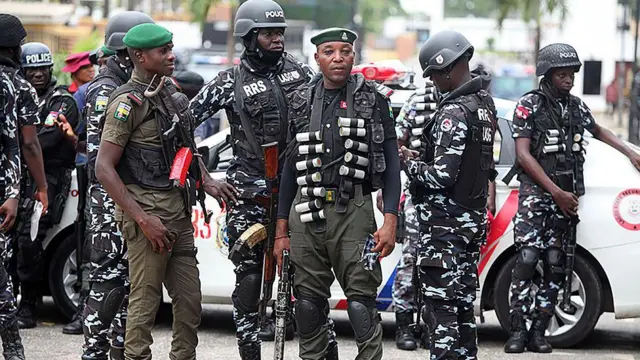
- State Police Bill 2026 explained: what Tinubu’s executive proposal means, why lawmakers are backing it, and how it may affect security in Nigeria.

Nigeria’s long-running debate over state police has entered a major new phase as lawmakers continue work on President Bola Tinubu’s executive proposal to create a constitutional framework for state-controlled police services.
The proposal is one of the biggest security reforms currently before the National Assembly, especially as many states continue to battle kidnapping, banditry, cult violence, communal clashes and other local security threats.
If passed, the bill could allow states to establish their own police services alongside the existing Nigeria Police Force.
What Is the State Police Bill About?
The State Police Bill seeks to amend the 1999 Constitution to make room for state police services across Nigeria.
At the moment, policing is largely controlled by the Federal Government through the Nigeria Police Force. State governors are often described as “chief security officers” of their states, but they do not fully control the police commands in their states.
The proposed reform is expected to give states more direct power to respond to security issues within their territories.
Why Tinubu’s Executive Proposal Matters
President Tinubu’s executive bill has become the main document lawmakers are now working with.
The House of Representatives had earlier worked on its own state police bill, but later withdrew that version to consider the executive proposal from the Presidency. Lawmakers said the move would prevent parallel processes and allow a more coordinated approach.
The Senate had also moved strongly on the matter, making the bill one of the most closely watched constitutional amendment efforts in the country.
Why Nigeria Is Considering State Police
Supporters of state police believe Nigeria’s security challenges have become too local and too complex for only a central police structure to handle.
They argue that state police can help with:
- Faster response to local crimes
- Better intelligence gathering
- Improved community policing
- Stronger protection in rural areas
- More direct accountability to state governments
- Reduced pressure on the federal police structure
For states affected by kidnapping, farmer-herder clashes, banditry and cult-related violence, the reform is seen as a possible turning point.
Major Concerns About State Police
Despite the support, many Nigerians are still worried about how state police will work in practice.
The biggest concerns include:
- Possible abuse by governors
- Use of state police against political opponents
- Poor funding by some states
- Recruitment based on politics or ethnicity
- Conflict between state police and federal police
- Lack of strong oversight
This is why lawmakers are expected to pay close attention to safeguards, command structure, funding, discipline and human rights protections.
What Happens Next?
The bill must still go through the required constitutional amendment process.
For it to become law, it will need strong support from the National Assembly and approval from state Houses of Assembly. Since it involves the Constitution, it is not a normal bill that can be completed in one simple step.
Key things to watch include:
- Final wording of the bill
- Powers given to state police commands
- Role of governors
- Funding structure
- Recruitment rules
- Relationship with the Nigeria Police Force
- Approval by state assemblies
What It Means for Nigerians
If properly designed, state police could improve security response in communities where federal police presence is weak.
However, the success of the reform will depend on strong checks and balances. Without clear rules, state police could become another political tool instead of a real security solution.
For now, the bill remains one of the most important reforms to watch in 2026.
FAQs
What is state police in Nigeria?
State police means a police service controlled at state level to handle local security matters within a state.
Has state police been approved in Nigeria?
The bill has made progress, but it still needs to complete the full constitutional amendment process.
Why does Nigeria need state police?
Supporters say it will improve local security response, intelligence gathering and community policing.
Can governors control state police?
The final bill will determine the level of control governors will have and what safeguards will be included.
Will state police replace the Nigeria Police Force?
No. The proposal is expected to create state police alongside the existing federal police structure.





BREAKING: FG Plans Low-Key 66th Independence Celebration for Nigerians
President Bola Tinubu will address Nigerians in a nationwide broadcast on October 1 as the Federal Government prepares a low-key...

BREAKING: Youths Seeks Release of #EndSARS Report
Ogun youths have urged Governor Dapo Abiodun to make public the report of the state’s Judicial Panel of Investigation on...


Meet the 3 New Super Eagles Stars Set for Their First Nigeria Call-Up
George Ilenikhena, Isaac James and Moses Usor have earned their first Super Eagles invitations as Nigeria prepare for crucial 2026...

BREAKING: Tinubu Gives Fresh Order Over Deaths of 37 Miners
President Bola Tinubu has ordered a full and transparent investigation into the deaths of 37 miners in NSCDC custody in...


Burna Boy Set to Make History Again as He Headlines NFL’s First-Ever Paris Game
Nigerian Afrobeats superstar Burna Boy will return to Paris’ Stade de France in October to headline the halftime show for...

Dangote Refinery Reveals Why Falling Crude Prices May Not Hurt Its Profits
Dangote Refinery has assured prospective investors that a possible decline in crude oil prices after the US-Iran conflict will not...

Survivor Reveals IBB as Owner of Niger Gold Mine Where 37 Miners Died
A survivor of the Niger State mining detention tragedy has alleged that the gold-mining site where 37 suspected illegal miners...


VIDEO: ‘Wear Only APC Cap or Face Consequences’, Edo LG Chairman Threatens Drivers
The chairman of Esan West Local Government Area of Edo State, Blessing Ebhodaghe, has directed commercial drivers in the council...


IPOB: 2027 Election Is No Substitute for a Referendum — Let the Peoples Decide
IPOB has called for a referendum to allow Nigerians and the country’s constituent peoples to decide the political arrangement under...

Sanwo-Olu, Fashola, Ambode, Others Named in Lagos APC 2027 Campaign Council (Full List)
The Lagos State chapter of the APC has unveiled its campaign council ahead of the 2027 general elections, naming Governor...