
News
79% of Nigerians Still Poor or Vulnerable Despite Tinubu’s Reforms — World Bank
Nearly four out of every five Nigerians remain poor or vulnerable to poverty despite recent economic reforms by President Bola Tinubu’s administration…

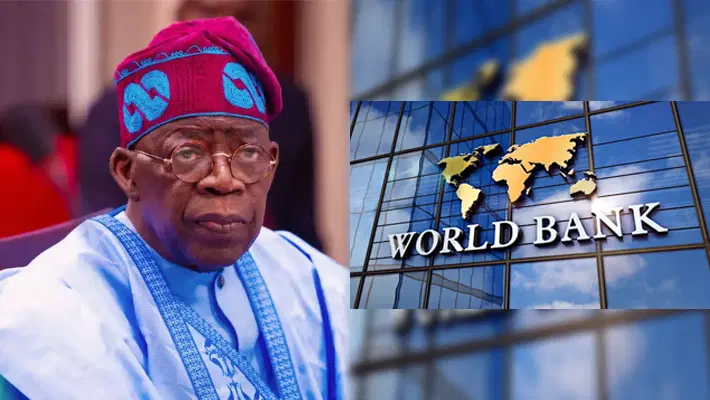
- Nearly four out of every five Nigerians remain poor or vulnerable to poverty despite recent economic reforms by President Bola Tinubu’s administration, according to a new World Bank report.

Nearly 79 per cent of Nigerians remain poor or vulnerable to falling into poverty despite sweeping economic reforms introduced by President Bola Tinubu’s administration, according to a new World Bank report.
The findings are contained in the World Bank’s newly approved Country Partnership Framework (CPF) for Nigeria (2026–2032) and its accompanying Streamlined Country Diagnostic, which outline the country’s development challenges and the Bank’s strategy for supporting economic growth and poverty reduction over the next seven years.
139 million Nigerians living in poverty
According to the report, 61 per cent of Nigerians live below the national poverty line, while 33 per cent are classified as ultra-poor, meaning they are unable to meet minimum food requirements.
Overall, the Bank estimates that 79 per cent of the population is either poor or at risk of slipping back into poverty, affecting roughly 139 million Nigerians.
The report also highlights several worrying indicators:
- More than 86 million Nigerians lack access to electricity.
- Between three and four million young people enter the labour market every year, with limited employment opportunities.
- One in four Nigerian youths is neither employed, in school nor receiving vocational training.
- Only 14 per cent of employed Nigerians have regular wage-paying jobs, with most workers trapped in low-income informal employment.
Reforms have stabilised the economy, but hardship remains
The World Bank acknowledged that reforms introduced by the Federal Government—including the removal of petrol subsidies, exchange rate liberalisation, tighter monetary policy and tax reforms—have helped stabilise Nigeria’s economy.
According to the report:
- Economic growth increased from 3.5 per cent in the first half of 2024 to 3.9 per cent during the same period in 2025.
- Foreign reserves rose above $42 billion.
- Fiscal deficits narrowed.
- Investor confidence improved.
However, the Bank warned that high inflation continues to erode household incomes, preventing many Nigerians from benefiting from the country’s improving macroeconomic indicators.
“High inflation, though declining, continues to erode real incomes, particularly for the poor,” the report stated.
World Bank: Jobs are the only lasting solution
The World Bank stressed that economic reforms alone will not significantly reduce poverty unless they create millions of productive jobs.
Drawing lessons from countries such as China, India and Indonesia, the Bank said employment remains the most effective path out of poverty and urged Nigeria to prioritise labour-intensive sectors such as agriculture and micro, small and medium-sized enterprises (MSMEs).
The report projects that about 60 million young Nigerians will enter the labour force over the next decade, making large-scale job creation the country’s most urgent development priority.
Social protection remains weak
The report also expressed concern over Nigeria’s limited social protection system.
According to the World Bank:
- Public spending on social protection accounts for just 0.14 per cent of GDP.
- Only 8.5 per cent of poor Nigerians are covered by any form of social safety net.
- More than 60 million Nigerians remain ultra-poor.
To address the problem, the Bank plans to support Nigeria in expanding cash transfer programmes, strengthening the national social register, improving digital identity systems and increasing direct support for the country’s poorest households.
The new framework aims to expand social protection coverage to about 41 million beneficiaries.
Education and healthcare remain major concerns
Beyond income poverty, the World Bank warned that weak human capital continues to threaten Nigeria’s long-term development.
It noted that 84 per cent of children aged between five and 14 cannot read age-appropriate texts, despite attending school, while widespread childhood malnutrition continues to fuel intergenerational poverty.
The Bank called for greater investment in education, healthcare, nutrition, sanitation and early childhood development to improve productivity and reduce poverty over the long term.
Fresh World Bank support
The report comes shortly after the World Bank approved a $1.25 billion loan for Nigeria under its Nigeria Actions for Investment and Jobs Acceleration Programme.
The Bank said its new Country Partnership Framework for 2026–2032 will focus on helping Nigeria convert recent macroeconomic gains into improved living standards by unlocking private-sector investment and creating more and better jobs across the country.
According to the World Bank, preserving the current reform momentum while accelerating private investment, improving governance and expanding employment opportunities will determine whether millions of Nigerians can escape poverty in the years ahead.





IPOB Embraces Hausa Nation and All Northern Ethnic Nationalities in Historic Solidarity Declaration for Universal Freedom
IPOB has declared solidarity with Hausa people and other ethnic nationalities in Northern Nigeria, calling for a peaceful...

Nnamdi Kanu’s Legal Team Raises Fresh Questions Over Omotosho’s Judgment in Part 3 Commentary
Onyedikachi Ifedi, Esq., has questioned the legal basis of Nnamdi Kanu’s conviction, alleging irregularities involving Count 7....


IPOB Denies Plans to Resume Monday Sit-at-Home, Rejects Alleged Police Intelligence Report
IPOB has dismissed a purported police intelligence report alleging plans to resume Monday sit-at-home enforcement in the South-East...

‘No Negotiations, Only Referendum’ — Kanu’s Message to American Veterans of Igbo Descent
IPOB leader Nnamdi Kanu has reaffirmed his demand for a referendum on Biafra's self-determination, insisting he will reject any political...


IPOB Condemns NYSC Abductions in Imo, Accuses Uzodinma of Political Conspiracy
IPOB has condemned the reported abduction and rescue of NYSC members in Imo State, denying involvement and accusing Governor Hope...
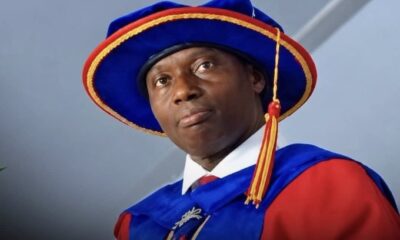

Ambrose Alli University Lecturer Dies in Hotel Room After Sexual Encounter With 21-Year-Old Woman
A senior lecturer at Ambrose Alli University, Ekpoma, Dr Matthew Uwuigbe, has died in a hotel room in Edo State...

Omotosho’s First Jurisdictional Failure — The Court Lacked Authority to Try Kanu
The Mazi Nnamdi Kanu Global Legal Consortium has alleged that the Federal High Court lacked jurisdiction to try Kanu on...

‘No Government Without a Country’: IPOB Rejects Self-Appointed Biafra Government Officers
Mazi Chris Nwaọgụ has reiterated IPOB’s demand for Nnamdi Kanu’s freedom and Biafra’s restoration, while calling for Kanu’s appeal to...
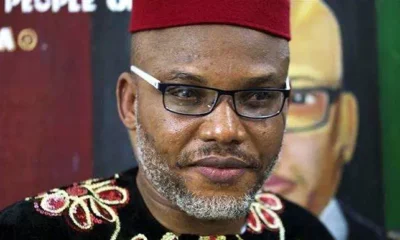

Sokoto Declaration: Emma Powerful Dismantles False Claims, Reaffirms Onyendu Mazi Nnamdi Okwu Kanu’s Referendum Position
Kanu’s camp has rejected claims that he did not approve or co-sign the Sokoto Declaration, while stressing that he does...
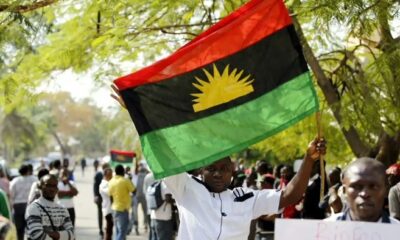

Kanu’s Unlawful Conviction, the Law That Was Already Dead, and the Shame That Is Waiting for Nigeria’s Judiciary
Christopher Chidera, Esq., has challenged the legal basis of Nnamdi Kanu’s conviction, arguing that the trial court relied on a...