
Politics
‘Ransom Now Included in Nigerians’ Budgets’ – Atiku Abubakar Reveals
Former Vice President Atiku Abubakar has criticised the Tinubu administration over worsening insecurity and economic hardship, claiming ransom payments…

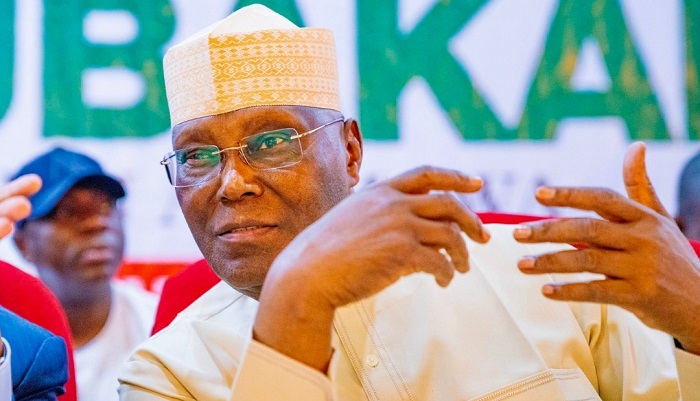
- Former Vice President Atiku Abubakar has criticised the Tinubu administration over worsening insecurity and economic hardship, claiming ransom payments have become a routine expense for many Nigerian families.

Former Vice President Atiku Abubakar has accused the administration of President Bola Tinubu of failing to address Nigeria’s worsening insecurity and economic challenges, claiming that ransom payments have become a regular part of household expenses for many Nigerians.
Atiku made the remarks in a statement issued by his Senior Special Assistant on Public Communication, Phrank Shaibu, while reacting to recent comments from the Presidency regarding Nigeria’s debt profile.
The former vice president criticised attempts to compare Nigeria’s borrowing levels with those of other African countries, arguing that such comparisons ignore the daily struggles faced by ordinary citizens.
According to him, millions of Nigerians are grappling with hunger, rising inflation, business closures and growing insecurity despite increasing levels of government borrowing.
“It is both astonishing and insulting that at a time when millions of Nigerians can barely afford one meal a day, when parents are withdrawing children from school because of crushing hardship, when businesses are collapsing under unbearable electricity tariffs and inflation, and when entire communities are being overrun by terrorists, bandits, and kidnappers, the Presidency is celebrating debt figures as though indebtedness itself were an economic achievement,” he said.
Atiku painted a grim picture of the country’s security situation, alleging that many Nigerians now live in fear of kidnappings and violent attacks.
“In many parts of Nigeria today, travelling by road has become a gamble with death. Families go to bed praying not to receive midnight calls announcing the abduction of loved ones,” he stated.
The former vice president argued that the growing insecurity has significantly affected agricultural activities, forcing many farmers to abandon their farmlands due to attacks by armed groups.
According to him, the resulting decline in food production has contributed to soaring food prices, hunger and widespread hardship across the country.
“Across the country, farmers can no longer safely access their farmlands because vast territories have effectively fallen under the control of armed gangs and terrorists,” he said.
Atiku maintained that borrowing itself is not a problem when funds are invested in productive sectors capable of generating economic growth, creating jobs and improving living standards.
However, he argued that Nigerians have seen little evidence of such benefits despite the country’s growing debt profile.
“No nation becomes prosperous by borrowing to finance consumption, sustain wasteful government lifestyles, and paper over policy failures,” he said.
The former vice president also accused the government of focusing on public relations rather than confronting the realities facing citizens.
He recalled that the administration of former President Olusegun Obasanjo, in which he served as vice president, implemented reforms that helped reduce Nigeria’s debt burden and improve economic confidence.
“It is therefore tragic that a government that inherited a struggling but manageable economy has plunged the nation into deeper debt, deeper poverty, deeper insecurity, and deeper despair within such a short period,” Atiku stated.
He further dismissed official debt comparisons as irrelevant to the average Nigerian, insisting that citizens are more concerned about the cost of living, safety and economic opportunities.
“Nigerians do not care about statistical gymnastics from government spokespersons. They care about whether food is affordable, whether their children are safe, whether businesses can survive, whether farmers can return to their lands, and whether the future still holds any promise,” he said.
Atiku concluded by urging the government to focus on addressing the country’s pressing economic and security challenges with urgency, competence and sincerity.





‘I’m Deeply Sorry, Daddy’ — Desmond Elliot Kneels Before Gbajabiamila
Desmond Elliot has apologised to Femi Gbajabiamila after their fallout over the APC primary in Surulere, with the Lagos lawmaker...

Dangote Refinery IPO: Nigerians Can Become Part-Owners With Just N5,250
Aliko Dangote has urged Nigerians and Africans to invest in the Dangote Refinery IPO, describing the N1.6bn offer as an...

BREAKING: Peter Obi Faces Fresh Certificate Scrutiny as Court Asked to Order WAEC, UNN, NYSC to Release Records
Labour Party chieftain Abayomi Arabambi has asked an Abuja Federal High Court to compel WAEC, UNN and NYSC to release...


IPOB: One Family, One Command — Unity Team Inaugurated to End the Era of Manufactured Factions
IPOB has renewed its call for Nnamdi Kanu’s release, warning that it will proceed with a total election boycott across...

Pharaoh Still Won’t Let the People Go — Abuja and London Will Pay
The Concerned Igbo Ministers have linked renewed separatist sentiments in the UK to Nnamdi Kanu’s continued detention, warning of wider...


Bus Driver Returns Over N400,000 Forgotten by Passenger in Abia
An Abia commercial bus driver, Onyekachi Ikpendu, has been praised after returning over N400,000 and personal belongings accidentally left behind...


FG Begins N18bn Payment to 2,700 Ex-Nigeria Airways Workers After 20 Years
The Federal Government has commenced the payment of N18bn in outstanding severance benefits to 2,700 former Nigeria Airways workers...


Nigerians to Get Free Data Daily for Online Learning
The Nigerian Communications Commission has launched a zero-rated data initiative that will provide eligible users with up to 100MB of...


BREAKING: Peter Obi Breaks Silence on Stepping Down for Atiku
Peter Obi says any alliance with Atiku Abubakar must be negotiated by their political parties, while outlining his positions on...

BREAKING: National Assembly Suspends South Africa Trips, Orders Legislative Boycott
The National Assembly has suspended official visits to South Africa and participation in its legislative events over reported xenophobic attacks...