
News
Hardship Deepens as Nigerians Borrow Nearly ₦2tn in Personal Loans to Survive
Personal loans obtained by Nigerians surged to ₦1.96 trillion in January 2026, accounting for more than half of the country’s total consumer credit…

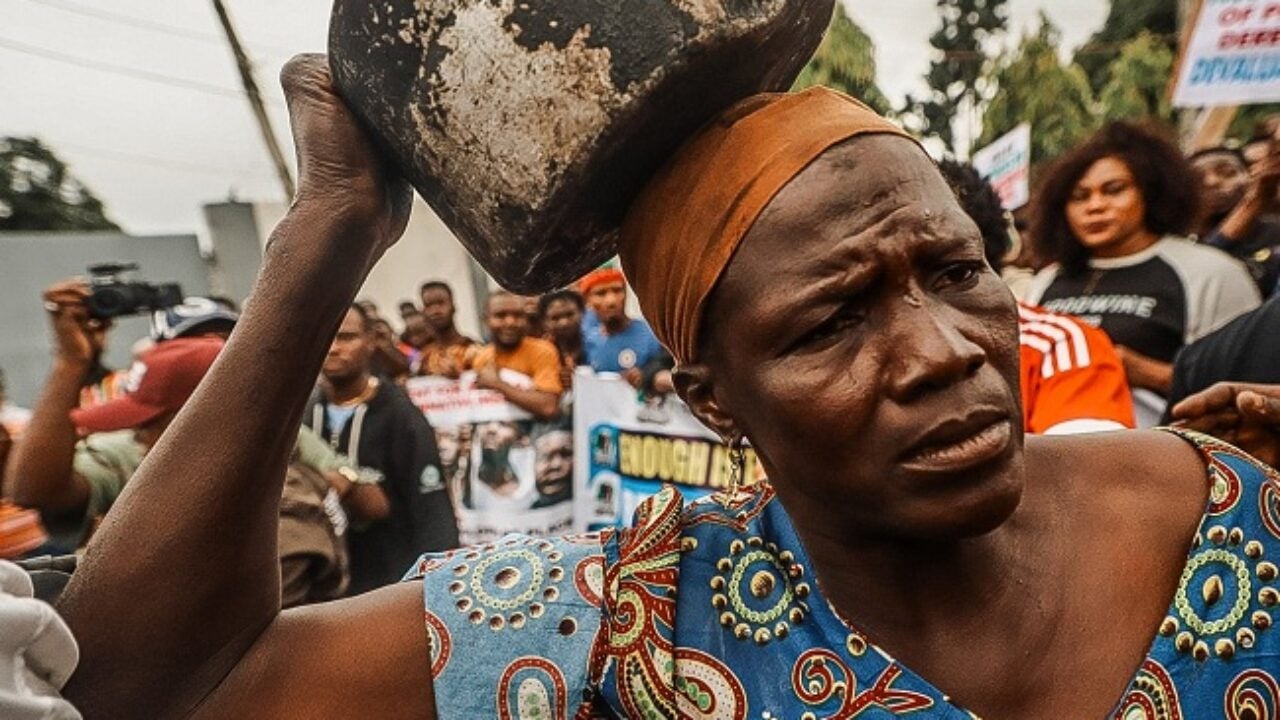
- Personal loans obtained by Nigerians surged to ₦1.96 trillion in January 2026, accounting for more than half of the country’s total consumer credit, amid rising inflation, economic pressure and growing demand for household financing.

Personal loans granted by Nigerian banks rose to ₦1.96 trillion in January 2026, highlighting the increasing reliance of households on borrowed funds as economic hardship continues to weigh on consumers.
According to the latest Economic Report released by the Central Bank of Nigeria (CBN), personal loans accounted for more than half of the country’s total consumer credit during the month under review.
The report showed that total consumer credit outstanding increased by 0.79 per cent to ₦3.81 trillion in January, up from ₦3.78 trillion recorded in December 2025.
The growth was driven entirely by personal lending, which climbed by 5.95 per cent from ₦1.85 trillion to ₦1.96 trillion.
The apex bank stated:
“Consumer credit outstanding increased by 0.79 per cent to ₦3.81tn, from ₦3.78tn in the preceding month. The increase in consumer credit was due solely to the rise in personal loans by 5.95 per cent to ₦1.96tn from ₦1.85tn, which constituted 51.44 per cent of total consumer credit.”
Meanwhile, retail loans declined by 4.15 per cent to ₦1.85 trillion, representing the remaining 48.56 per cent of total consumer credit.
The report also indicated that lending across the broader economy recorded only marginal growth, rising by 0.17 per cent to ₦57.41 trillion.
According to the CBN, the increase was largely driven by higher credit to the services and agriculture sectors.
Credit to agriculture rose to ₦3.81 trillion, while the services sector received ₦32.86 trillion. The industrial sector accounted for ₦21.21 trillion in lending.
Within the services sector, finance, insurance and capital market activities attracted the largest share of credit at ₦9.16 trillion, while trade and commerce received ₦5.54 trillion.
Despite the growth in lending, inflationary pressures remain a major concern.
The Monetary Policy Committee recently retained the benchmark interest rate at 26.5 per cent, citing inflation risks and the need to maintain exchange rate stability.
DON’T MISS: BREAKING: Gunmen Kidnap Former Defence Spokesman, Wife
Nigeria’s headline inflation increased to 15.69 per cent in April 2026 from 15.38 per cent in March, while food inflation climbed to 16.06 per cent.
The President of the Association of Small Business Owners of Nigeria, Dr. Femi Egbesola, criticised the decision to retain interest rates, arguing that lower rates would make borrowing more affordable for businesses and households.
He warned that high borrowing costs could further worsen the challenges facing small businesses already struggling with inflation, rising energy costs and declining purchasing power.
The latest figures come as many Nigerians continue to grapple with increasing living expenses, forcing more households to rely on personal loans to meet daily financial obligations.






Bus Driver Returns Over N400,000 Forgotten by Passenger in Abia
An Abia commercial bus driver, Onyekachi Ikpendu, has been praised after returning over N400,000 and personal belongings accidentally left behind...


FG Begins N18bn Payment to 2,700 Ex-Nigeria Airways Workers After 20 Years
The Federal Government has commenced the payment of N18bn in outstanding severance benefits to 2,700 former Nigeria Airways workers...


Nigerians to Get Free Data Daily for Online Learning
The Nigerian Communications Commission has launched a zero-rated data initiative that will provide eligible users with up to 100MB of...


BREAKING: Peter Obi Breaks Silence on Stepping Down for Atiku
Peter Obi says any alliance with Atiku Abubakar must be negotiated by their political parties, while outlining his positions on...

BREAKING: National Assembly Suspends South Africa Trips, Orders Legislative Boycott
The National Assembly has suspended official visits to South Africa and participation in its legislative events over reported xenophobic attacks...

How Justice Omotosho Turned Criminal Law Upside Down to Convict Nnamdi Kanu
According to Chidera, Section 36(12) of the Nigerian Constitution requires a criminal offence to be defined and its punishment prescribed...


IPOB: The Boycott Is Not a Threat — List Kanu’s Appeal or Lose Biafraland’s Vote
The Indigenous People of Biafra (IPOB) has threatened a total boycott of upcoming elections across Biafraland and other areas if...

Kanu Fires Lawyer for ‘Gross Incompetence’ — IPOB Warns Media: Stop Calling Him Our Counsel
The Indigenous People of Biafra (IPOB) has said lawyer Ifeanyi Ejiofor is no longer a member of its legal team,...

How Nigerian Media Buried the Constitutional Time Bomb in Kanu’s Conviction
Legal practitioner Christopher Chidera, Esq., has launched a sharp criticism against major Nigerian media outlet....
IPOB: List Kanu’s Appeal in 14 Days or We Boycott 2027 General Elections Across Biafraland
The Indigenous People of Biafra (IPOB) has given the Federal Government of Nigeria a 14-day ultimatum to list and hear...