
Business
Nigeria’s FX Turnover Drops 51% as Dollar Trading Slows to $1.81bn
Nigeria’s FX turnover fell by 51.29% in the week ended November 6, while the naira recorded only a marginal movement against the dollar.


- Nigeria’s FX turnover fell by 51.29% in the week ended November 6, while the naira recorded only a marginal movement against the dollar.

Nigeria’s foreign-exchange market recorded a sharp decline in trading activity in the week ended November 6, with transactions falling to $1.81 billion from $3.71 billion the previous week.
The figures, attributed to FMDQ market data, represent a 51.29 per cent reduction in weekly turnover, equivalent to approximately $1.90 billion.
Average daily transactions between authorised dealers and their customers also declined, falling from $742.51 million to $361.67 million.
Most of the reduction came from the spot market, where currencies are exchanged for immediate or near-immediate delivery.
Spot transactions dropped to approximately $1.79 billion from $3.64 billion, accounting for about 97.3 per cent of the overall decline.
Trading in forward contracts, which provide for currency delivery at an agreed future date, also slowed. Weekly forward turnover fell by 69.93 per cent to $22.20 million from $73.83 million.
Despite the substantial reduction in transaction values, the naira’s movement was comparatively small.
Separate reporting put the currency at approximately ₦1,349 to the dollar on Friday, November 6, and around ₦1,350 on Monday, November 9. These are reported rates for those trading days, rather than a live quotation for November 10.
Foreign-exchange turnover measures the value of transactions completed within a specified period. It differs from the exchange rate, which indicates how much naira is required to purchase a dollar.
Consequently, the 51.29 per cent decline does not mean that the naira lost half its value. It also does not establish that Nigeria’s foreign reserves fell by the same amount.
The figures show a substantial weekly slowdown in trading. On their own, however, they do not establish its cause or demonstrate that the decline will continue.
For businesses and individuals monitoring the market, the immediate distinction is between reduced transaction activity and the comparatively limited movement in the reported exchange rate.






Manchester United Set to Sack Michael Carrick After Eight-Match Winless Run
Michael Carrick faces the sack as Manchester United review their poor start, with the club in the relegation zone after...


Nigeria’s FX Turnover Drops 51% as Dollar Trading Slows to $1.81bn
Nigeria’s FX turnover fell by 51.29% in the week ended November 6, while the naira recorded only a marginal movement...


Obasanjo Reveals Why He Rejected US Asylum Despite Warning of Arrest Under Abacha
Obasanjo reveals why he rejected US asylum despite warnings that Abacha’s government would arrest him, recounting his return to Nigeria...


Tinubu’s 2027 Manifesto: 78,000 Security Recruits, More Jobs and Lower Living Costs Promised
Tinubu’s 2027 manifesto proposes 78,000 additional security personnel, six per cent annual economic growth and expanded investment in housing, education...

2027: INEC Probes 54 Persons Across 10 States Over Voter Registration Irregularities
INEC has identified 54 persons across 10 states for investigation over voter registration irregularities, warning of possible prosecution as it...


BRITAIN TO BLAME: London’s Role in the Abduction and Extraordinary Rendition of Nnamdi Kanu
The Indigenous People of Biafra (IPOB) has blamed the British government for its alleged complicity in the abduction of its...


‘My Position Stands’ — Atiku Vows to Restore Petrol Subsidy, Explains Plan for Cheaper Fuel
Atiku has renewed his promise to restore petrol subsidy if elected president in 2027, saying his proposed support for local...
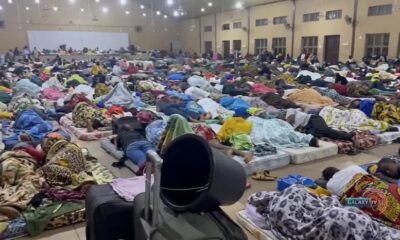

Ogun NYSC Camp Overcrowding Sparks Outrage as More Than 4,300 Graduates Arrive
Ogun NYSC camp overcrowding has sparked concern after a viral video showed cramped sleeping conditions, prompting the state government to...


Osun Strike Grounds Public Schools and Government Offices
The Osun strike has disrupted public schools, healthcare services and government offices as workers demand the release of withheld local...


FG Moves to License Scrap Dealers to Curb Cable, Manhole Cover Theft
The FG’s proposed scrap metal rules would require licences, source verification and transaction records to curb the trade in stolen...