
Politics
Anambra Government Releases Peter Obi’s Debt Records, Puts Outstanding Loans at N127.4bn
The Anambra Government says eight external loans contracted during Peter Obi’s tenure as governor had an outstanding balance of N127.4 billion as of June 2026.

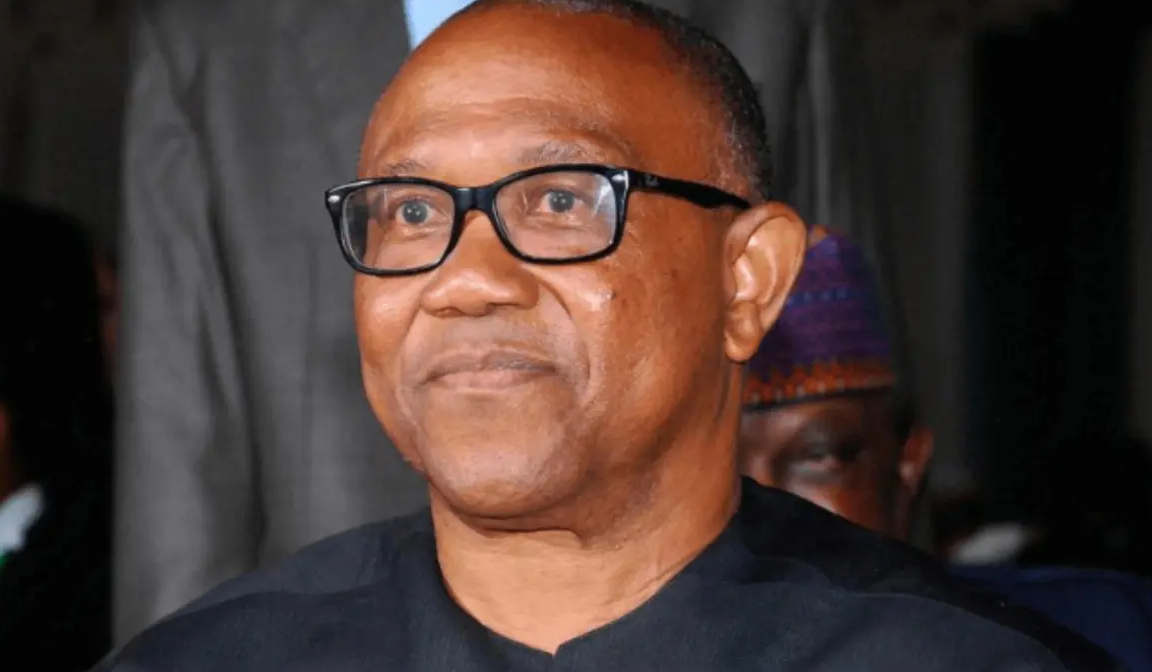
- The Anambra Government says eight external loans contracted during Peter Obi’s tenure as governor had an outstanding balance of N127.4 billion as of June 2026.

The Anambra State Government has released details of loans and other financial obligations it says were incurred or left outstanding during the administration of former Governor Peter Obi, putting the balance of eight external loans at N127.4 billion as of June 30, 2026.
The disclosure was contained in a statement signed by the Commissioner for Information and Value Reformation, Dr Law Mefor, titled “Gov Peter Obi and Record of Public Debt in Anambra: Facts Beyond Propaganda and Lies.”
The statement was issued in response to recent comments by Obi, who had disputed claims concerning debts allegedly linked to his administration and described some of the allegations as “phantom debts” and an “ecological loan fallacy.”
According to the state government, Obi’s administration contracted eight external loans totalling about $123.77 million during his tenure, with an outstanding balance of approximately $92.35 million, equivalent to N127.4 billion at the official exchange rate as of June 30, 2026.
The government said the figures were based on the latest debt information from the Debt Management Office (DMO) on Anambra State’s debt position.
The loans, according to the state, were obtained for projects including malaria control, erosion management, education, healthcare and agricultural development.
The government maintained that the existence of the loans did not, by itself, mean borrowing was improper, noting that governments routinely borrow to finance development projects.
“Hardly any government in the world has zero debt stock,” the statement said, adding that borrowing could be justified where it was used for bankable projects and human capital development.
The state government said it currently spends hundreds of millions of naira monthly servicing the loans attributed to the former administration.
It also alleged that Obi left behind other financial obligations, including unpaid salaries, pensions and gratuities.
Among the liabilities cited were salary arrears involving workers of the defunct Anambra State Water Corporation and outstanding obligations involving retired teachers and other state and local government employees.
The government said it had already cleared about N22 billion in inherited gratuity arrears involving retired state and local government employees and teachers, while maintaining that some legacy obligations remained outstanding.
The statement further challenged Obi’s claims that all inherited salary, pension and gratuity arrears had been cleared before he left office in March 2014.
The government also criticised the state of public infrastructure and social services at the end of Obi’s tenure, citing concerns around public schools, healthcare facilities, water schemes, insecurity and poverty.
It claimed that only about 27 per cent of Anambra residents were patronising public health institutions because of concerns over their quality and functionality.
However, the state government acknowledged that the loans attributed to Obi’s administration were linked to projects in areas such as healthcare, erosion control, malaria prevention and agriculture.
The latest development comes amid a wider political dispute over Obi’s record as governor and his claims regarding Anambra’s finances before he left office in March 2014.
Obi has disputed the state government’s account, including claims that he left unpaid debts, and has maintained that he cleared inherited obligations during his tenure. Reports on his response also indicate that he cited an ecological fund he said was available to his successor when he left office.
The figures released by the Anambra government therefore form part of an ongoing dispute between the former governor and the current state administration over the state’s historical debt position, rather than representing a court determination of liability.





14 Days to Keep Him in Custody, Endless Silence to Hear Him: How Nigeria’s Court of Appeal Built a Cage — Then Locked the Courtroom Door
A lawyer, Onyedikachi Ifedi, has challenged the legal basis of Nnamdi Kanu’s conviction, alleging reliance on a repealed law and...


Atiku Reveals What He Discussed With Aisha Buhari During Abuja Meeting
Former First Lady Aisha Buhari has visited former Vice-President and African Democratic Congress (ADC) presidential candidate Atiku Abubakar in Abuja.

Anambra Government Releases Peter Obi’s Debt Records, Puts Outstanding Loans at N127.4bn
The Anambra Government says eight external loans contracted during Peter Obi’s tenure as governor had an outstanding balance of N127.4...


Iran War Supply Shock Pushes Nigeria’s Cooking Gas Demand Down 23%
Nigeria’s cooking gas (LPG) demand fell by nearly 23 per cent to a seven-month low in June as import constraints...


BREAKING: Court Orders Atiku to Serve Tinubu Through APC in 2027 Eligibility Suit
The Federal High Court in Abuja has granted Atiku Abubakar permission to serve President Bola Tinubu with court documents through...


BREAKING: Veteran Nollywood Actor Olu Jacobs Dies at 84
Veteran Nollywood actor Olu Jacobs has died at 84. His son, Olusoji Jacobs, announced the death on Instagram as the...

‘I’m Deeply Sorry, Daddy’ — Desmond Elliot Kneels Before Gbajabiamila
Desmond Elliot has apologised to Femi Gbajabiamila after their fallout over the APC primary in Surulere, with the Lagos lawmaker...
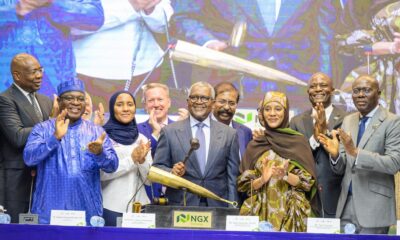

Dangote Refinery IPO: Nigerians Can Become Part-Owners With Just N5,250
Aliko Dangote has urged Nigerians and Africans to invest in the Dangote Refinery IPO, describing the N1.6bn offer as an...
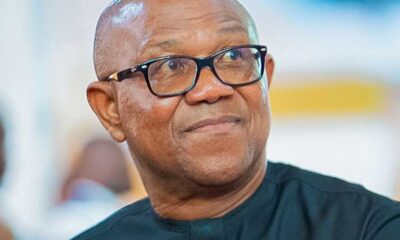

BREAKING: Peter Obi Faces Fresh Certificate Scrutiny as Court Asked to Order WAEC, UNN, NYSC to Release Records
Labour Party chieftain Abayomi Arabambi has asked an Abuja Federal High Court to compel WAEC, UNN and NYSC to release...


IPOB: One Family, One Command — Unity Team Inaugurated to End the Era of Manufactured Factions
IPOB has renewed its call for Nnamdi Kanu’s release, warning that it will proceed with a total election boycott across...