
News
BREAKING: Calls for Power Minister’s Resignation Intensify as Nigerians Remain in Darkness
Persistent blackouts have triggered calls for Power Minister Joseph Tegbe’s resignation, as civil society groups demand accountability and the minister outlines plans to restore affected generating units.

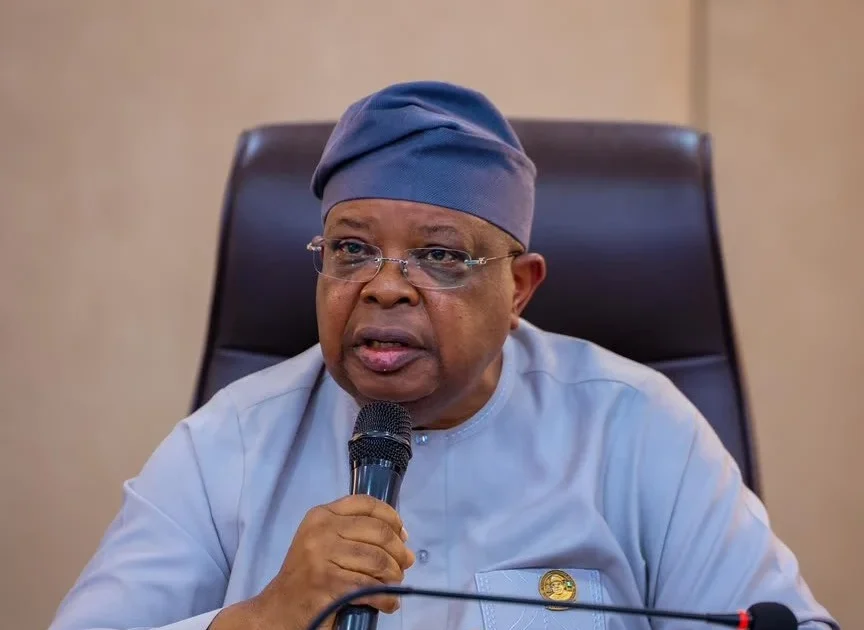
- Persistent blackouts have triggered calls for Power Minister Joseph Tegbe’s resignation, as civil society groups demand accountability and the minister outlines plans to restore affected generating units.

Persistent blackouts have drawn fresh criticism of Minister of Power Joseph Tegbe, with civil society organisations demanding accountability over electricity supply and some calling for his resignation.
The criticism follows the minister’s explanation of the disruptions and his assurance that affected generating units would return to service in phases.
The National President of the Committee for the Defence of Human Rights, Yinka Folarin, rejected the explanation as inadequate and urged Tegbe to step aside. He also criticised the financial burden on consumers paying electricity bills despite unreliable supply.
Human Rights Writers Association of Nigeria coordinator Emmanuel Onwubiko questioned the minister’s handling of the crisis and called for scrutiny of the power ministry.
However, Civil Society Legislative Advocacy Centre Executive Director Auwal Rafsanjani said the sector’s problems extended beyond one official. He identified infrastructure weaknesses, gas shortages, poor planning and regulatory shortcomings, while insisting that systemic problems should not shield public officials from accountability.
Rafsanjani called for an independent assessment of the minister’s performance, an audit of power-sector expenditure and stronger standards for operators.
Tegbe, meanwhile, attributed the recent electricity shortfall to maintenance work and constraints affecting gas supplies to power stations.
In his explanation, reported on November 7, the minister said work was underway to bring affected generating units back into operation gradually. He expected the first units to return within 48 to 72 hours.
That timetable concerned the initial generating units returning to service, rather than a guarantee that every affected community would receive uninterrupted electricity within the same period.
The minister’s account places the immediate response on restoring generation capacity and addressing fuel-supply constraints. The criticism from civil society groups centres on whether those measures will produce measurable improvements for consumers.





BREAKING: Calls for Power Minister’s Resignation Intensify as Nigerians Remain in Darkness
Persistent blackouts have triggered calls for Power Minister Joseph Tegbe’s resignation, as civil society groups demand accountability and the minister...


World Champions! Nigeria’s Flamingos Make History as First African Team to Win FIFA U-17 Women’s World Cup (Video)
Nigeria’s Flamingos defeated Japan 2–1 to win their first FIFA U-17 Women’s World Cup, becoming the first African team to...

2027: ‘Your Future Depends on this Election, Collect Your PVCs, Tinubu Tells Nigerian Youths
Tinubu urges youths to collect PVCs ahead of the 2027 elections, saying their future depends on the outcome and their...


Obi Challenges Tinubu to Account for ₦15.8tn Subsidy Savings, $100bn Borrowing
Obi challenges Tinubu to account for ₦15.8tn in reported subsidy savings and over $100bn in borrowing, questioning their impact on...


How Many Nigerians Have You Lifted Out of Poverty? Peter Obi Challenges Tinubu
Peter Obi challenges Tinubu to explain his record on poverty, education, healthcare and electricity, demanding an account of subsidy savings...


FG Cancels NTI Admissions for 2026, Warns Applicants Against Payments
The FG cancels NTI admissions into NCE and degree programmes for 2026 over regulatory breaches, warning applicants against accepting offers...

‘If You Keep Girlfriends but Your Wife Cannot Keep a Boyfriend, You Are a Hypocrite’ — Omakwu challenges men over infidelity
Omakwu challenges men over infidelity, criticising husbands who expect forgiveness for cheating but refuse to extend the same understanding to...

‘No One Can Reverse It’ — Tinubu Reaffirms EFCC Recoveries Will Fund NELFUND
President Bola Tinubu has reaffirmed his commitment to funding NELFUND with money recovered by the EFCC, saying the arrangement will...

BREAKING: US Sanctions Nigerian Firm Over Alleged Role in Iran Missile Deal
The US sanctions Nigerian firm Vanguard Tactical Supply Limited over allegations that it helped Iran seek Chinese-made air-defence missiles using...


Tinubu’s Rivers Rally: Wike Predicts 70,000 Supporters as Fubara Mobilises
Tinubu’s Rivers rally is scheduled for Port Harcourt today, with Nyesom Wike predicting a large turnout and Governor Siminalayi Fubara...