
News
EFCC Chairman Exposes How Government Officials Rig Contracts to Enrich Themselves
EFCC Chairman Ola Olukoyede has identified contract fraud as the biggest corruption scheme in Nigeria’s public sector, warning government officials that public office is “not an invitation to loot the treasury”.

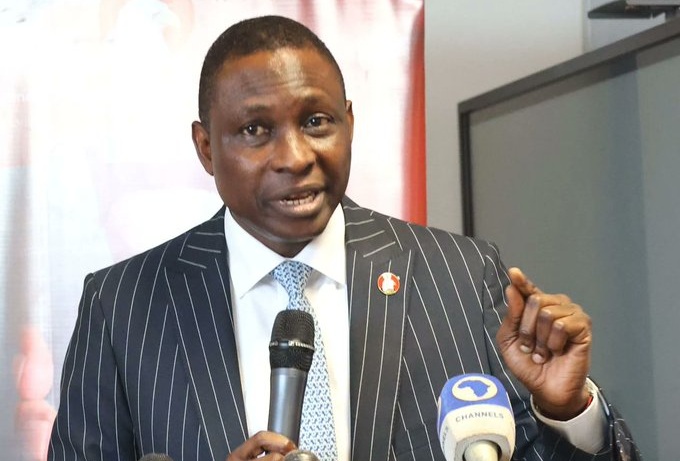
- EFCC Chairman Ola Olukoyede has identified contract fraud as the biggest corruption scheme in Nigeria’s public sector, warning government officials that public office is “not an invitation to loot the treasury”.

The Executive Chairman of the Economic and Financial Crimes Commission (EFCC), Ola Olukoyede, has identified contract fraud as the most widespread form of corruption in Nigeria’s public sector, warning public officials against using government appointments for personal enrichment.
Olukoyede gave the warning on Thursday while addressing newly appointed Chief Executive Officers, Chairmen and Governing Board members of the South-South Development Commission (SSDC) during a two-day induction programme organised by the Bureau of Public Service Reforms in Abuja.
Speaking on “The Role of the Economic and Financial Crimes Commission in Improving Accountability in the Public Service,” the EFCC chairman said public office is a responsibility to protect national resources and serve citizens, not an opportunity to loot public funds.
According to him, contract fraud remains the most common form of corruption in government institutions, with procurement processes often manipulated to favour individuals or selected companies.
“From my experience in regulatory compliance, by far the most common form of corruption within the public service space is contract fraud, where those who lead government establishments set out to enrich themselves by rigging the procurement process,” Olukoyede said.
He noted that corruption costs Nigeria billions of naira annually, as funds meant for infrastructure and essential public services are diverted for private use.
Olukoyede listed other common forms of corruption in the public sector, including outright theft of public funds, diversion of government resources, bribery and kickbacks, procurement fraud, payroll fraud, pension fraud, and duty tour allowance fraud.
He explained that contract fraud often involves practices such as contract splitting to bypass approval limits, bid manipulation, awarding contracts to unqualified companies, and making payments for abandoned or poorly executed projects.
The EFCC boss reminded participants that the commission was established in 2003 to investigate and prosecute economic and financial crimes, recover stolen assets and promote accountability through public enlightenment.
While acknowledging challenges facing the anti-corruption fight—including limited manpower, inadequate funding, delays in prosecuting high-profile cases and allegations of selective investigations—Olukoyede urged the newly appointed officials to avoid corrupt practices.
“Public service is not an invitation to loot the treasury,” he warned, urging them to resist pressure from those who may see their appointments as an opportunity to benefit from public resources.
He also advised the officials to familiarise themselves with the Financial Regulations, Public Service Rules and the Public Procurement Act, stressing the importance of complying with established laws.
Olukoyede further warned them against seeking contracts from agencies they oversee, operating foreign bank accounts, engaging in businesses incompatible with public office, or carrying out financial transactions outside recognised financial institutions.
He concluded by urging public officers to maintain accurate financial records and carefully scrutinise every document before signing.
“Before you sign that document, study it. Your signature is your name and integrity. Guard it,” he said.





BREAKING: Veteran Nollywood Actor Olu Jacobs Dies at 84
Veteran Nollywood actor Olu Jacobs has died at 84. His son, Olusoji Jacobs, announced the death on Instagram as the...

‘I’m Deeply Sorry, Daddy’ — Desmond Elliot Kneels Before Gbajabiamila
Desmond Elliot has apologised to Femi Gbajabiamila after their fallout over the APC primary in Surulere, with the Lagos lawmaker...

Dangote Refinery IPO: Nigerians Can Become Part-Owners With Just N5,250
Aliko Dangote has urged Nigerians and Africans to invest in the Dangote Refinery IPO, describing the N1.6bn offer as an...

BREAKING: Peter Obi Faces Fresh Certificate Scrutiny as Court Asked to Order WAEC, UNN, NYSC to Release Records
Labour Party chieftain Abayomi Arabambi has asked an Abuja Federal High Court to compel WAEC, UNN and NYSC to release...


IPOB: One Family, One Command — Unity Team Inaugurated to End the Era of Manufactured Factions
IPOB has renewed its call for Nnamdi Kanu’s release, warning that it will proceed with a total election boycott across...

Pharaoh Still Won’t Let the People Go — Abuja and London Will Pay
The Concerned Igbo Ministers have linked renewed separatist sentiments in the UK to Nnamdi Kanu’s continued detention, warning of wider...


Bus Driver Returns Over N400,000 Forgotten by Passenger in Abia
An Abia commercial bus driver, Onyekachi Ikpendu, has been praised after returning over N400,000 and personal belongings accidentally left behind...


FG Begins N18bn Payment to 2,700 Ex-Nigeria Airways Workers After 20 Years
The Federal Government has commenced the payment of N18bn in outstanding severance benefits to 2,700 former Nigeria Airways workers...


Nigerians to Get Free Data Daily for Online Learning
The Nigerian Communications Commission has launched a zero-rated data initiative that will provide eligible users with up to 100MB of...


BREAKING: Peter Obi Breaks Silence on Stepping Down for Atiku
Peter Obi says any alliance with Atiku Abubakar must be negotiated by their political parties, while outlining his positions on...