
News
Fulani Militants Responsible for Most Religious-Related Killings in Nigeria — U.S. Report
A new report by the U.S. Commission for International Religious Freedom has linked Fulani militant groups to the highest number of deaths among religious communities in Nigeria.

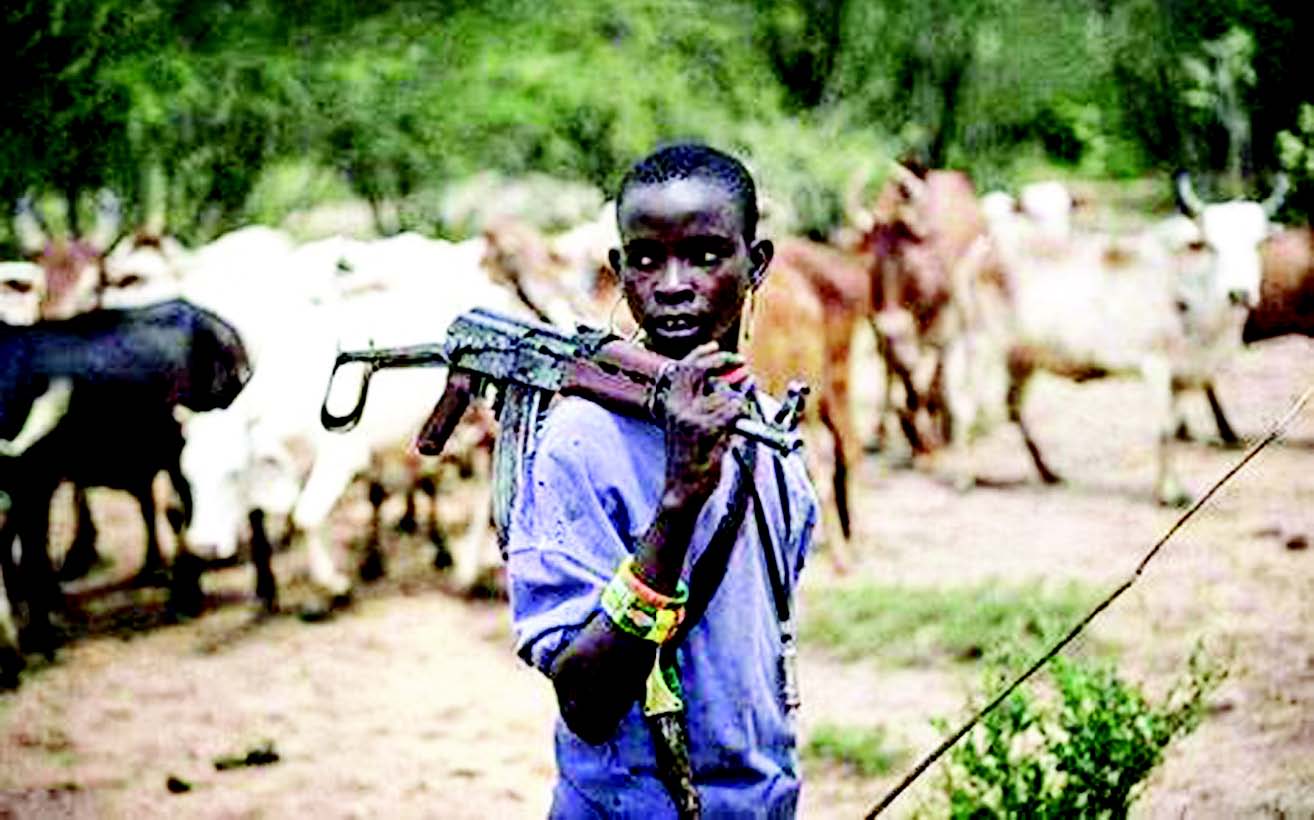
- A new report by the U.S. Commission for International Religious Freedom has linked Fulani militant groups to the highest number of deaths among religious communities in Nigeria.

Fulani militant groups were responsible for the highest number of deaths among religious communities in Nigeria over the past year, according to a new report released by the United States Commission for International Religious Freedom (USCIRF).
The report examined the role of Fulani militant groups in what it described as worsening religious freedom conditions across Nigeria, particularly in the country’s Middle Belt and northwestern regions.
According to USCIRF, conflicting narratives surrounding the violence and alleged government censorship have made it difficult to accurately assess the identities and motivations of various armed groups operating across the country.
“Conflicting media narratives and reported government censorship have hindered accurate analysis of the identities and motivations of the alarming number of armed nonstate actors that violate religious freedom in Nigeria,” the commission stated.
The Fulani, a predominantly Muslim ethnic group originating from northern Nigeria, make up approximately six per cent of the country’s estimated population of over 242 million people. USCIRF estimates that around 30,000 individuals operate within various Fulani militant groups, with memberships ranging from small cells to larger formations spread across several states.
The commission noted that while analysts often attribute Fulani-led violence to factors such as economic disputes, environmental pressures, competition over land, or religious tensions, multiple overlapping motivations are likely involved.
“Regardless of these complex motivating factors, the escalation of Fulani-led land invasions and other violent assaults has yielded the same outcomes: severely disrupting the lives, livelihoods, and ability to worship of many Christian and Muslim farmers while triggering their mass displacement and depriving them of their lands,” the report stated.
USCIRF cited numerous incidents in which Fulani militants allegedly targeted both Christian communities and non-Fulani Muslim communities. These attacks reportedly involved the destruction of homes and places of worship, killings, kidnappings, and acts of sexual violence used as tools of intimidation and extortion.
The report estimated that Fulani-related attacks have displaced at least 1.3 million people across Nigeria’s Middle Belt region, forcing many families into overcrowded and unsafe displacement camps.
The commission also criticized the response of government authorities, describing it as inadequate in many cases.
According to USCIRF, victims and community leaders have repeatedly complained about delayed security responses during attacks, while some advocacy groups have accused security agencies of showing bias in their handling of incidents involving affected communities.
The report further stated that Fulani militants continue to carry out large-scale incursions into farming communities, attacks on religious sites, and kidnappings of both Christian and Muslim leaders despite increased international attention on the situation.
DON’T MISS: FG Cancels $717.7m World Bank Power Loan Amid Nationwide Blackouts
USCIRF noted that these incidents have persisted even after Nigeria was designated a Country of Particular Concern (CPC) by the United States government in October 2025 over religious freedom concerns.
According to the commission, central Nigeria remains trapped in a prolonged security crisis that continues to affect millions of residents.
“As a result, central Nigeria remains entrenched in an intense, daily, and seemingly perpetual crisis of insecurity — a crisis that is likely to persist until the federal and several state governments create broader underlying conditions that are more conducive to the safe practice of religious freedom,” the report concluded.
The latest findings have renewed discussions about security, religious freedom, and the need for stronger measures to protect vulnerable communities across Nigeria.






How Suspects Tortured UNIJOS Graduate to Death Over Missing iPhone 12
The prime suspect in the mob killing of UNIJOS graduate Ibrahim Mbaya has confessed to striking the victim three times...

Lagos to Introduce Special Number Plates for Persons With Disabilities
The Lagos State Government has begun plans to introduce specialised vehicle number plates for persons with disabilities, aiming to improve...


US Senate Confirms Trump’s Intelligence Chief Amid Election Fraud Claims
The US Senate has confirmed Jay Clayton as President Donald Trump's Director of National Intelligence, placing him in charge of...


VIDEO: President Tinubu Receives Oyinkansola Badejo-Okusanya, NBA President-Elect at State House
President Bola Tinubu has received Nigerian Bar Association President-elect Oyinkansola Badejo-Okusanya and members of her delegation at the State House...


Sabotage Unmasked: From Malami Stay Disaster to Current Division — Why Ejiofor Must Be Kept Far From IPOB
The Indigenous People of Biafra (IPOB) has reaffirmed that Barrister Ifeanyi Ejiofor remains dismissed as its legal representative, insisting that...


Tems Leads Children of Blood and Bone Soundtrack: What Her New Role Means
Tems has been named executive music producer and curator of the Children of Blood and Bone soundtrack, marking another major...


Ghana’s Tallest Man Awuche Dies at 33, Cause of Death Emerges
Sulemana Abdul Samed, popularly known as Awuche and recognized as Ghana's tallest man, has died at the age of 33...


FG Job Recruitment Scams: How to Spot Fake Government Job Portals Before You Apply
Fake government job portals are targeting Nigerian job seekers. Here is how to identify real FG recruitment websites and avoid...


Nigeria vs Malawi: Five Reasons Super Falcons Lost Their WAFCON 2026 Opener
Nigeria’s Super Falcons suffered a shocking 3-2 defeat to Malawi in their WAFCON 2026 opener. Here are five key reasons...


BBNaija Day 3 Update: Neche and Ricky Spark Early Ship Rumours in Biggie’s House
BBNaija Season 11 Day 3 update as Neche and Ricky spark early ship rumours, with fans watching their chemistry, conversations...