
Business
FG Begins Review of VAT Rules, Sets Up Committee to Draft New Tax Order
The Federal Government has inaugurated an inter-ministerial committee to develop a new Value Added Tax (VAT) Modification Order aimed at implementing Nigeria’s Tax Reform Acts.

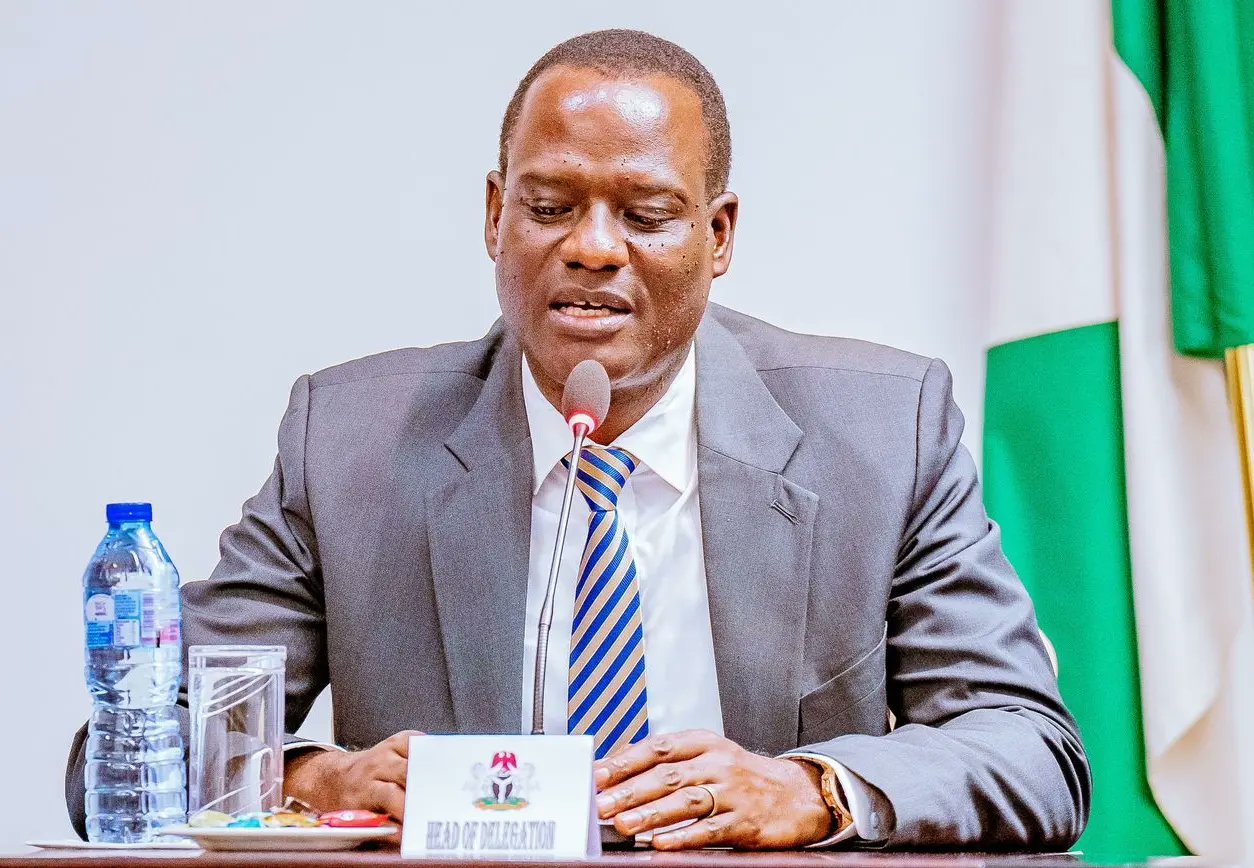
- The Federal Government has inaugurated an inter-ministerial committee to develop a new Value Added Tax (VAT) Modification Order aimed at implementing Nigeria’s Tax Reform Acts.
- The committee has six weeks to produce a modern VAT framework that supports economic growth, investment, and ease of doing business.

The Federal Government has inaugurated an inter-ministerial committee to develop a new Value Added Tax (VAT) Modification Order to support the implementation of Nigeria’s Tax Reform Acts.
The Minister of Finance and Coordinating Minister of the Economy, Taiwo Oyedele, announced the inauguration in a statement posted on his X handle on Friday.
According to the minister, the committee was inaugurated at the Federal Ministry of Finance headquarters in Abuja and has been tasked with drafting a modern VAT framework that aligns with the Tax Reform Acts, which came into effect on January 1, 2026.
Oyedele described the Tax Reform Acts as the most comprehensive overhaul of Nigeria’s tax system in decades.
“The Tax Reform Acts represent the most comprehensive reform of Nigeria’s tax system in decades. They simplify our tax laws, improve certainty, enhance competitiveness, protect vulnerable Nigerians, and position our economy for sustainable growth,” he said.
The minister explained that the committee’s responsibility is not to recreate the previous VAT Modification Order, which has already been superseded by the new legislation.
Instead, he said the committee is expected to develop “a modern, coherent, and forward-looking VAT Modification Order that complements the new law and supports Nigeria’s economic transformation.”
Committee’s Responsibilities
According to the statement, the committee has been mandated to:
- Review Nigeria’s existing VAT administration framework and identify areas requiring clarification.
- Engage public and private sector stakeholders to validate classifications and ensure alignment with economic and social objectives.
- Develop comprehensive lists of VAT-exempt and zero-rated supplies while considering revenue implications and international obligations.
- Draft a clear and implementable VAT Modification Order.
- Recommend legislative amendments where necessary.
Oyedele stated that the committee’s work would be guided by five key principles:
- Fidelity to the law.
- Growth-oriented policy design.
- Clarity and certainty.
- Broad stakeholder engagement.
- International benchmarking.
He stressed that the new VAT framework should encourage industrialisation, investment, exports, innovation, food security, and energy transition without weakening the integrity of Nigeria’s VAT system.
“This Order should promote industrialisation, investment, exports, innovation, food security, and energy transition, without undermining the integrity of the VAT system,” he added.
Six-Week Deadline
The committee has been given six weeks to complete its assignment and submit:
- A draft VAT Modification Order 2026.
- Schedules of VAT-exempt and zero-rated supplies with corresponding Harmonised System (HS) codes.
- Implementation notes.
- A stakeholder consultation report.
Committee Membership
The committee comprises representatives from several government agencies and private sector organisations, including:
- Federal Ministry of Finance.
- Nigeria Revenue Service.
- Nigeria Customs Service.
- Federal Ministry of Industry, Trade and Investment.
- Joint Revenue Board.
- Manufacturers Association of Nigeria (MAN).
- Tax Advisory Committee.
- Tax Justice and Governance Platform.
According to Oyedele, the composition of the committee brings together extensive knowledge, expertise, and experience from both the public and private sectors to ensure the successful implementation of the new VAT framework.
The minister noted that the Tax Reform Acts, which became effective on January 1, 2026, were introduced to simplify Nigeria’s tax system, improve the ease of doing business, boost investor confidence, and support sustainable economic growth.





BREAKING: Nollywood Actor Francis Duru is Dead, Family Release Statement, Shares Cause of Death
Francis Duru’s family has confirmed his death following a brief illness, as colleagues and fans mourn the veteran Nollywood actor.


One Law for Abba Kyari, No Law for Nnamdi Kanu: Omotosho’s Fourth Jurisdictional Collapse
In Mazi Nnamdi Kanu’s Case, where Kenya was the territorial state, Kenyan sovereignty, comity, and statutory double criminality were utterly...


Ebola in Nigeria: How to Protect Yourself, Symptoms to Watch and Where to Get Help
Following the confirmation of an Ebola case in Abuja, here is essential safety advice for Nigerians, healthcare workers and travellers,...


Ebola: WHO Advises Against Travel, Trade Restrictions After Nigeria Confirms Case
WHO has advised against travel and trade restrictions on Ebola-affected countries as Nigeria monitors 44 contacts following an imported case...


Ebola: Five Things to Know About Bundibugyo Virus as Nigeria Confirms First Case
Nigeria has confirmed an imported Bundibugyo Ebola case in Abuja. Here are five key facts about its symptoms, transmission, treatment...


Italy Rejects 2,220 Nigerians Seeking Asylum
Italy rejected 2,220 Nigerian asylum claims in first-instance decisions in 2025, while 1,175 Nigerians received protection and 4,120 cases remained...

Dangote Buys 25% Stake in Kenya Pipeline Network, Plans $50bn Expansion
Aliko Dangote says his Group has acquired a stake in Kenya’s petroleum pipeline network as it expands fuel distribution infrastructure...


28-Year-Old POS Operator Sentenced to Death by Hanging Over Role in Kidnap Gang
An Imo court has sentenced a 28-year-old POS operator to death over his involvement in the abduction and murder of...


UTME: JAMB Considers Life Skills, Critical Thinking Tests for Admission Seekers
JAMB is considering adding life skills and critical thinking to the UTME, while introducing procedures to help candidates resolve discrepancies...


AAC Writes Tinubu, Demands Aso Rock, Food and Logistics for 5,000 Supporters at Sowore’s Inauguration
The AAC has requested permission to inaugurate Sowore’s presidential campaign council at Aso Rock, asking the Presidency to provide refreshments...