
News
No Court Can Confer Jurisdiction — So Who Gave the Supreme Court the Power to Resurrect Dead Counts?
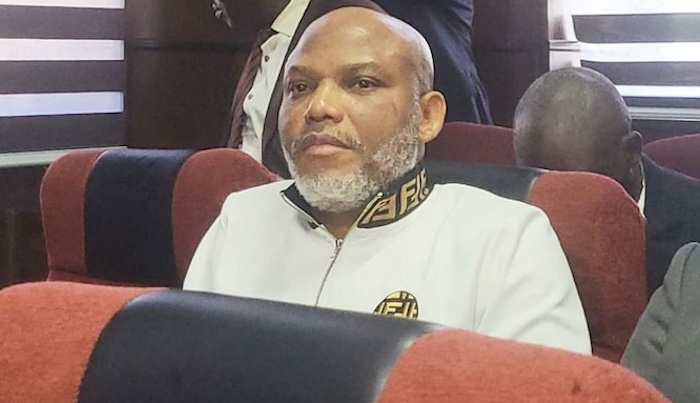
In a legal briefing issued by Onyedikachi Ifedi, Esq., the consortium questioned the legal basis upon which counts earlier quashed by the Court of Appeal allegedly became available again for plea and trial before the Federal High Court.

- In a legal briefing issued by Onyedikachi Ifedi, Esq., the consortium questioned the legal basis upon which counts earlier quashed by the Court of Appeal allegedly became available again for plea and trial before the Federal High Court.

ABUJA, Nigeria — The Mazi Nnamdi Kanu Global Legal Consortium has raised fresh legal questions over the Supreme Court’s December 2023 decision ordering the continuation of the trial of IPOB leader, Mazi Nnamdi Kanu.
In a legal briefing issued by Onyedikachi Ifedi, Esq., the consortium questioned the legal basis upon which counts earlier quashed by the Court of Appeal allegedly became available again for plea and trial before the Federal High Court.
The group also raised separate concerns over the statutory foundation of one of the charges against Kanu, originally listed as Count 15 and later renumbered as Count 7.
Two Major Legal Questions
According to the briefing, the issues revolve around two central questions:
First, what law made the counts quashed by the Court of Appeal legally cognisable again for trial?
Second, what law authorised the Supreme Court to substitute the statutory foundation of Count 15 with a different legislation?
The consortium argued that while the Supreme Court unquestionably had jurisdiction to hear the appeal, appellate jurisdiction did not automatically confer the power to revive a quashed criminal charge or alter the statutory basis of an accusation.
“If the law permits either act, show us the law,” the briefing repeatedly stated.
Court of Appeal Judgment and Supreme Court Decision
The legal consortium recalled that the Court of Appeal, on October 13, 2022, quashed the counts against Kanu and discharged him.
However, on December 15, 2023, the Supreme Court set aside the Court of Appeal’s decision and ordered that Kanu’s trial should continue.
The briefing acknowledged that the subsequent recusal of Justice Binta Nyako could explain why proceedings later had to begin before another judge and why a fresh plea was taken.
However, it argued that the change of judge did not resolve what it described as a more fundamental legal question concerning the status of the charges themselves.
According to the consortium, recusal is a procedural matter, while the existence of a legally valid criminal charge is a jurisdictional issue.
The group argued that the two issues should not be confused.
“The question is not whether recusal could require a fresh plea,” the briefing stated. “The question is what law made the quashed counts legally cognisable again so that they could be placed before a new judge for plea and trial?”
‘General Terrorism Jurisdiction Is Not Enough’
The consortium further argued that the Federal High Court’s general jurisdiction over terrorism-related offences does not automatically establish the existence of a valid charge against a particular defendant.
According to the briefing, a legally cognisable accusation must first exist before jurisdiction can attach and a trial can proceed.
The consortium described the legal sequence as:
LAW → CHARGE → JURISDICTION → TRIAL
It argued that the sequence could not instead be based merely on a court order.
The briefing referred to the principle attributed to Justice Lawal Garba, stating that a court cannot confer jurisdiction upon itself where the law has not conferred such jurisdiction.
The consortium also cited the Supreme Court case of Onu Okafor v The State (1976), arguing that the legal foundation of an original proceeding remains important when questions of retrial or continuation arise.
Questions Over Count 15
The second issue raised in the briefing concerns Count 15, which was later renumbered as Count 7 during proceedings at the Federal High Court.
According to the consortium, the count concerned allegations relating to the importation and concealment of a radio transmitter.
The charge was reportedly cited under Section 47(2)(a) of the Criminal Code Act, Cap C45, Laws of the Federation of Nigeria 2004.
However, the consortium said Justice Lawal Garba, in the Supreme Court’s remittal judgment, examined the citation and concluded that Cap C45 referred to the Customs and Excise Management Act, commonly known as CEMA, rather than the Criminal Code Act.
The judgment reportedly treated the reference to the Criminal Code Act as a “mere mistake” and held that the facts disclosed an offence under Section 47(2)(a) of CEMA Cap C45.
The consortium has now questioned the legal authority for that interpretation.
It argued that the Supreme Court is a neutral judicial body and not the prosecuting authority, asking what law authorised the court to supply what it described as a different statutory foundation for the charge.
The group maintained that changing the numbering of the count from Count 15 to Count 7 did not resolve the underlying legal question.
Dispute Over CEMA’s Legal Status
The briefing also raised concerns about the status of the Customs and Excise Management Act, Cap C45, following the enactment of the Nigeria Customs Service Act 2023.
The consortium argued that CEMA Cap C45 had been repealed on April 20, 2023, and questioned the Supreme Court’s description of the legislation as an “extant and existing law” in its December 15, 2023 judgment.
According to the group, a repealed law could only continue to have legal effect where another law or savings provision preserved its operation.
It therefore challenged legal authorities to identify the provision that allegedly preserved CEMA’s operation after its repeal.
The consortium insisted that this question was independent of the issue surrounding the substitution of the statutory basis of Count 15.
Consortium Insists Supreme Court Is Bound by Law
The legal briefing rejected arguments suggesting that the Supreme Court’s position as Nigeria’s highest court gives it unlimited powers.
According to the consortium, the court remains bound by the laws governing criminal jurisdiction and procedure.
“The Supreme Court is supreme within the judicial hierarchy,” the briefing stated, adding that it is “not supreme over the law.”
The consortium maintained that judicial finality does not eliminate the need for a legal foundation for judicial actions.
It argued that saying the Supreme Court ordered the continuation of the trial does not, by itself, answer the question of what legal authority supported the status of the charges following their earlier quashing.
‘Show Us the Law’
The Mazi Nnamdi Kanu Global Legal Consortium concluded its briefing by demanding answers to three key legal questions:
- What law made the counts quashed by the Court of Appeal legally cognisable again for plea and trial?
- What law authorised the substitution of the statutory foundation of Count 15?
- What law preserved CEMA Cap C45 as an operative law after its alleged repeal?
The consortium argued that if legal provisions exist to support those actions, they should be clearly identified.
“If those laws exist, identify them,” the briefing stated. “If they do not, a judicial order cannot manufacture them.”
The statement was issued by Onyedikachi Ifedi, Esq., on behalf of the Mazi Nnamdi Kanu Global Legal Consortium.





Nnamdi Kanu’s Legal Team Raises Fresh Questions Over Omotosho’s Judgment in Part 3 Commentary
Onyedikachi Ifedi, Esq., has questioned the legal basis of Nnamdi Kanu’s conviction, alleging irregularities involving Count 7....


IPOB Denies Plans to Resume Monday Sit-at-Home, Rejects Alleged Police Intelligence Report
IPOB has dismissed a purported police intelligence report alleging plans to resume Monday sit-at-home enforcement in the South-East...

‘No Negotiations, Only Referendum’ — Kanu’s Message to American Veterans of Igbo Descent
IPOB leader Nnamdi Kanu has reaffirmed his demand for a referendum on Biafra's self-determination, insisting he will reject any political...


IPOB Condemns NYSC Abductions in Imo, Accuses Uzodinma of Political Conspiracy
IPOB has condemned the reported abduction and rescue of NYSC members in Imo State, denying involvement and accusing Governor Hope...

Ambrose Alli University Lecturer Dies in Hotel Room After Sexual Encounter With 21-Year-Old Woman
A senior lecturer at Ambrose Alli University, Ekpoma, Dr Matthew Uwuigbe, has died in a hotel room in Edo State...


Omotosho’s First Jurisdictional Failure — The Court Lacked Authority to Try Kanu
The Mazi Nnamdi Kanu Global Legal Consortium has alleged that the Federal High Court lacked jurisdiction to try Kanu on...


‘No Government Without a Country’: IPOB Rejects Self-Appointed Biafra Government Officers
Mazi Chris Nwaọgụ has reiterated IPOB’s demand for Nnamdi Kanu’s freedom and Biafra’s restoration, while calling for Kanu’s appeal to...


Sokoto Declaration: Emma Powerful Dismantles False Claims, Reaffirms Onyendu Mazi Nnamdi Okwu Kanu’s Referendum Position
Kanu’s camp has rejected claims that he did not approve or co-sign the Sokoto Declaration, while stressing that he does...


Kanu’s Unlawful Conviction, the Law That Was Already Dead, and the Shame That Is Waiting for Nigeria’s Judiciary
Christopher Chidera, Esq., has challenged the legal basis of Nnamdi Kanu’s conviction, arguing that the trial court relied on a...


Elochukwu Ohagi Describes Nnamdi Kanu as ‘Anointed Builder’ in Biafran Cenotaph Tribute
Elochukwu Ohagi has described Nnamdi Kanu as an “anointed builder” and “divine instrument” in the struggle for Biafran restoration, highlighting...