
News
Airport Biosecurity: FG Approves Disease Detection Upgrade at Five Major Airports
The Federal Government has approved an airport biosecurity upgrade covering Lagos, Abuja, Kano, Port Harcourt and Enugu to strengthen early detection of infectious disease threats.

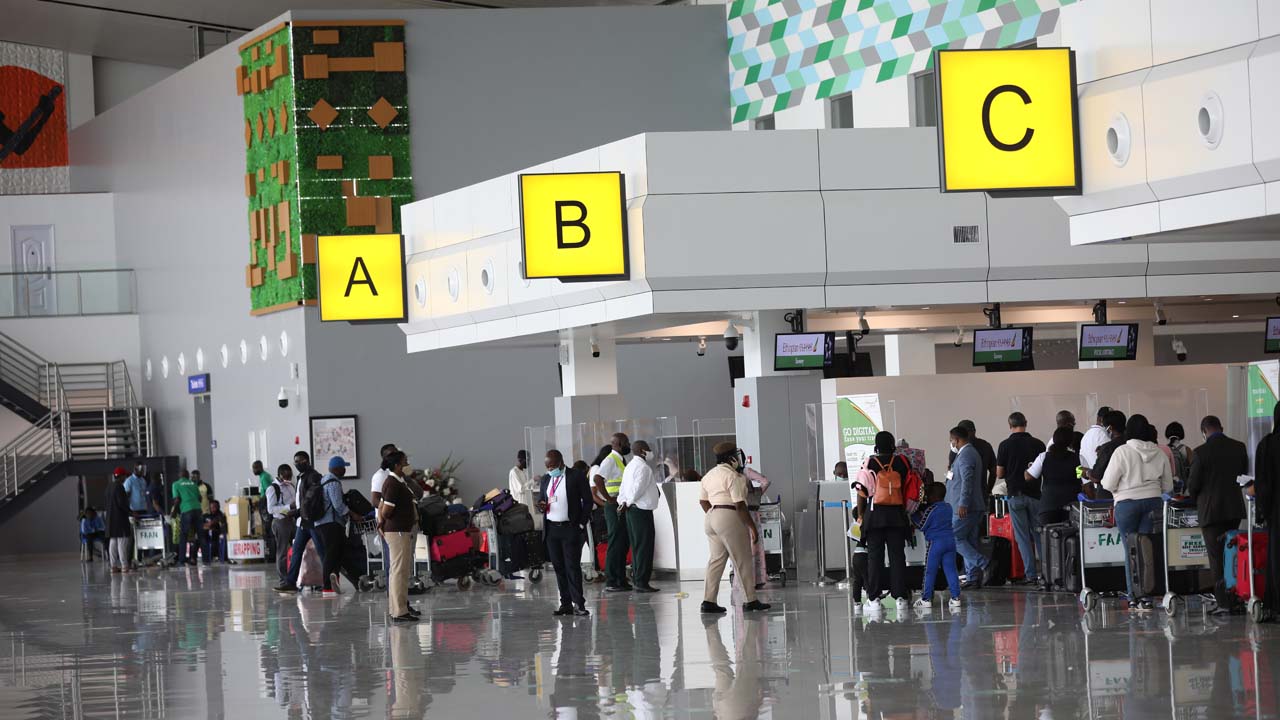
- The Federal Government has approved an airport biosecurity upgrade covering Lagos, Abuja, Kano, Port Harcourt and Enugu to strengthen early detection of infectious disease threats.

The Federal Government has approved a new airport biosecurity and disease surveillance system for five international airports, aiming to improve Nigeria’s ability to identify and respond to infectious disease threats at its borders.
The Coordinating Minister of Health and Social Welfare, Professor Muhammad Ali Pate, announced the decision after the Federal Executive Council meeting chaired by President Bola Tinubu in Abuja on Wednesday, October 28, 2026.
The project will operate through a 20-year public-private partnership with BioHealth Consortium. Pate said the initiative had been in preparation for two years.
Five international airports selected
The initial deployment will cover:
- Murtala Muhammed International Airport, Lagos.
- Nnamdi Azikiwe International Airport, Abuja.
- Mallam Aminu Kano International Airport, Kano.
- Port Harcourt International Airport.
- Akanu Ibiam International Airport, Enugu.
According to Pate, the airports were selected based on passenger traffic, exposure to biological threats and geographical spread.
The minister said the government wanted a coordinated system capable of detecting emerging threats and supporting quicker responses at major entry points.
Aircraft wastewater and cargo among monitoring targets
The proposed system will incorporate aircraft wastewater surveillance, air and surface sampling, and specialised equipment for monitoring cargo and baggage.
Pate explained that the programme would cover a broad range of dangerous pathogens, rather than focus exclusively on Ebola.
He said experience from the COVID-19 pandemic had exposed weaknesses in the management of health threats crossing national borders, reinforcing the need for better early-warning and response systems.
The minister also linked the investment to economic security, noting that disease outbreaks can disrupt travel, business and other activities.
Laboratories and national monitoring centre planned
The project includes laboratories for rapid diagnosis at points of entry and a National Surveillance Operations Centre.
The centre is intended to bring together surveillance information, support real-time monitoring and help relevant agencies coordinate responses to suspected threats.
Participating institutions will include the Nigeria Centre for Disease Control and Prevention, Port Health Services, Nigeria Customs Service, Nigeria Immigration Service and the National Agency for Food and Drug Administration and Control.
Private partner to build and operate facilities
Under the concession arrangement, the private partner will finance, design, build, operate and maintain the infrastructure throughout the 20-year period.
The Federal Government will provide policy direction and regulatory oversight. Ownership of the facilities will revert to the government when the concession expires, under terms reviewed by the Infrastructure Concession Regulatory Commission.
The approval establishes the framework for the project; it does not mean the surveillance facilities are already operational at the five airports.






Flamingos Beat Mexico 2–1 to Seal U-17 Women’s World Cup Quarter-Final Spot
The Flamingos beat Mexico 2–1 as Oluebube Umejiaku and Mary Dunstan scored to send Nigeria into the quarter-finals of the...


NELFUND Plans Parents’ Portal to Check School Fees as Digital Wallet Pilot Begins
NELFUND plans a parents’ verification portal to confirm school-fee payments while piloting a restricted digital wallet that lets students authorise...


VIDEO: Tinubu Travels to Saudi Arabia for Umrah, Presidency Announces Return Window
Tinubu travels to Saudi Arabia to perform Umrah and pray for Nigeria’s peace and progress, with the Presidency saying he...


Taraba Attack: Senate Demands Security Camps as Binnari Residents Face Displacement
The Taraba attack has prompted the Senate to demand additional security camps across three states’ border communities, alongside urgent relief...


Tinubu’s Saudi Trip: President Departs as Atiku’s Aide Demands Clear Return Date
Tinubu’s Saudi trip has drawn a fresh call for transparency, with Atiku Abubakar’s aide demanding a definite return date as...


LAUTECH Strike: ASUU Orders Suspension of Lectures, Exams Over Unpaid Entitlements
The LAUTECH strike has begun after a 14-day ultimatum expired, with ASUU directing members to suspend lectures and examinations over...


Google Wallet Launches in Nigeria: Supported Banks and How Tap-to-Pay Works
Google Wallet has launched in Nigeria, allowing eligible customers of FirstBank, GTBank, UBA and Zenith Bank to make payments using...

Airport Biosecurity: FG Approves Disease Detection Upgrade at Five Major Airports
The Federal Government has approved an airport biosecurity upgrade covering Lagos, Abuja, Kano, Port Harcourt and Enugu to strengthen early...

Ebola Outbreak: Africa CDC Urges United Response as Congo Cases Pass 10,000
The Ebola outbreak has pushed confirmed cases in DR Congo above 10,000, as Africa CDC calls for stronger cross-border coordination...


Liverpool vs Chelsea: Reds Survive Penalty Drama as Fofana Miss Sends Blues Out
Liverpool vs Chelsea ended in a dramatic 6–5 penalty shootout victory for the Reds after a 1–1 draw, securing Liverpool’s...