
News
BREAKING: Delta Signs 13th-Month Salary Into Law for Eligible Public Servants
Delta Governor Sheriff Oborevwori has signed the 13th-month salary into law for eligible public servants, giving legal backing to the welfare benefit alongside four other reforms.

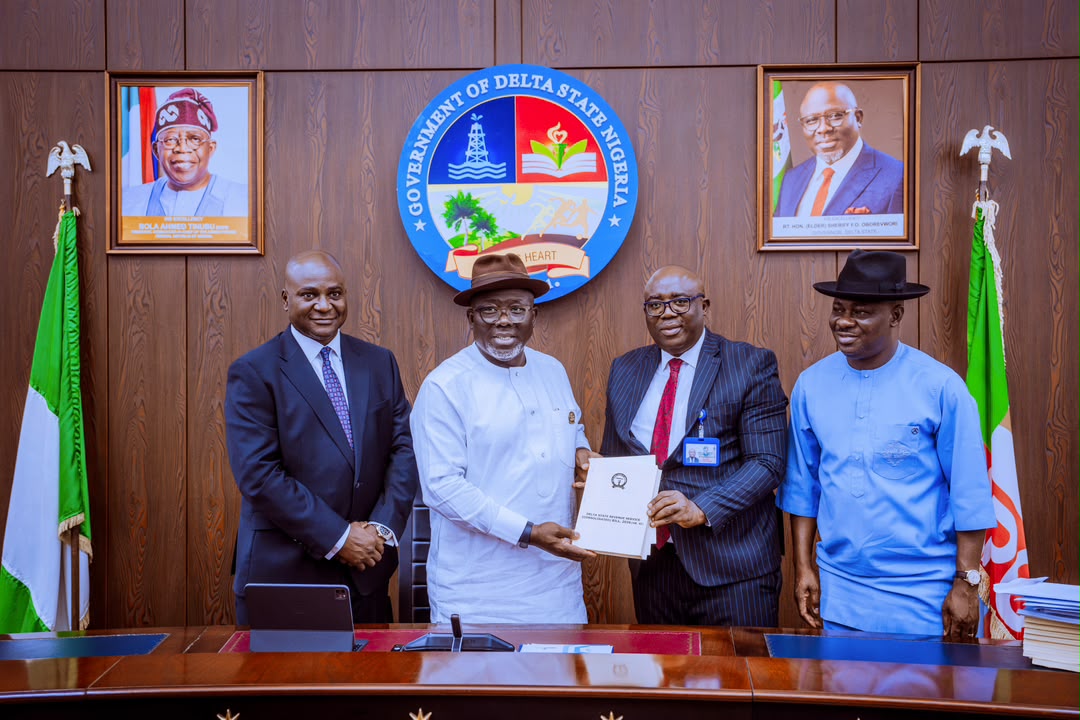
- Delta Governor Sheriff Oborevwori has signed the 13th-month salary into law for eligible public servants, giving legal backing to the welfare benefit alongside four other reforms.

Delta State Governor, Sheriff Oborevwori, has signed the Thirteenth Month Salary Law, 2026, providing a legal foundation for the benefit available to eligible public servants in the state.
The governor assented to the legislation on Wednesday, October 28, at the Executive Council Chambers, Government House, Asaba. Four other bills covering judicial administration, property protection and revenue collection were also signed.
Oborevwori said the salary initiative was intended to recognise workers’ contributions, strengthen morale and encourage productivity across the public service.
What the law means for workers
The legislation gives the 13th-month salary a place in the state’s legal framework.
Presenting the bills, Speaker of the Delta State House of Assembly, Emomotimi Guwor, said the salary law provides the benefit for eligible public servants.
However, the announcement did not set out a comprehensive eligibility schedule, calculation formula or detailed payment arrangements. Those provisions will determine how the benefit applies to individual workers and categories of employees.
Head of Service welcomes welfare measure
The outgoing Delta State Head of Service, Dr Mininim Oseji, welcomed the legislation, describing it as a positive development for workers and their families.
Oseji said the policy could support business activity, linking improved workers’ welfare to spending within the local economy.
Her remarks reflected the administration’s expectation that the benefit would extend beyond individual employees to their households and the businesses they patronise.
Governor also approves more judicial positions
The signing ceremony included amendments expanding the number of judges authorised for two courts.
The High Court amendment increases the number from 46 to 50, while the Customary Court of Appeal amendment raises its number from nine to 12.
Oborevwori said the changes were intended to improve justice delivery. The amendments expand judicial capacity in law; the signing itself does not mean the additional positions have already been filled.
Property protection and tax administration also affected
The governor also signed the Public and Private Properties Protection Amendment Law, which he said would strengthen safeguards against unlawful occupation and destruction of property.
Another measure, the Delta State Revenue Service (Consolidated) Law, 2026, seeks to coordinate tax administration, curb multiple taxation and encourage investment.
Oborevwori urged the responsible agencies to implement the laws effectively, saying development includes policies that improve people’s lives as well as physical infrastructure.
Guwor said the five measures were designed to improve governance, strengthen justice delivery and protect investments across the state.






Ebola Outbreak: Africa CDC Urges United Response as Congo Cases Pass 10,000
The Ebola outbreak has pushed confirmed cases in DR Congo above 10,000, as Africa CDC calls for stronger cross-border coordination...


Liverpool vs Chelsea: Reds Survive Penalty Drama as Fofana Miss Sends Blues Out
Liverpool vs Chelsea ended in a dramatic 6–5 penalty shootout victory for the Reds after a 1–1 draw, securing Liverpool’s...

BREAKING: Delta Signs 13th-Month Salary Into Law for Eligible Public Servants
Delta Governor Sheriff Oborevwori has signed the 13th-month salary into law for eligible public servants, giving legal backing to the...

BREAKING: ₦70,000 Transport Allowance: TUC Rejects Six-Month Relief, Makes Fresh Demands
The Trade Union Congress has rejected the Federal Government’s ₦70,000 transport allowance, demanding a permanent salary increase to address workers’...


Money and Household Responsibilities: How Couples Can Share the Load Without Constant Arguments
Money and household responsibilities can create tension when expectations remain unspoken. Here is how couples can discuss bills, divide chores...


Lagos Fashion Week 2026: African Craft Takes Centre Stage as Runway Shows Begin
Lagos Fashion Week 2026 enters its main runway programme on October 29, with designers spotlighting African craftsmanship, contemporary style and...


NECLive 2026: Femi Adebayo, Genoveva Umeh Join Push to Turn Nigerian Fans Into Global Power
NECLive 2026 brings Femi Adebayo, Genoveva Umeh, Kayode Kasum and music executives to Lagos to explore how Nigeria’s entertainment audience...


BUA Food Expansion to Double Capacity Across Key Operations by 2027 — Rabiu
BUA food expansion projects are expected to double capacity across key manufacturing operations by 2027, according to Abdul Samad Rabiu,...


Nigerian Stock Market Gains ₦1.75tn as NGX Index Rises 1.07%
The Nigerian stock market gained ₦1.75 trillion on October 27 as heavyweight shares lifted the NGX index by 1.07%, before...


Tinubu Orders Intensified Probe Into Killing of Cleric, Associate
President Bola Tinubu has directed security agencies to track down those responsible for killing Sheikh Yahaya Ibrahim Masussuka and Adamu...