
Politics
Obasanjo Reveals Why He Rejected US Asylum Despite Warning of Arrest Under Abacha
Obasanjo reveals why he rejected US asylum despite warnings that Abacha’s government would arrest him, recounting his return to Nigeria and eventual imprisonment.


- Obasanjo reveals why he rejected US asylum despite warnings that Abacha’s government would arrest him, recounting his return to Nigeria and eventual imprisonment.

Former President Olusegun Obasanjo has disclosed that he turned down an offer of political asylum from the United States despite being warned that he would be arrested if he returned to Nigeria under the late military ruler, General Sani Abacha.
Obasanjo said he rejected the offer because he believed he had committed no offence and saw no reason to remain outside the country.
Speaking in an interview published on Tuesday, the former president recounted how his return led to the seizure of his passport, his arrest and eventual imprisonment.
He also spoke about his decision to take up farming after retiring from the Nigerian Army at 42.
Retirement at 42 led Obasanjo into farming
Obasanjo said leaving the military at that age forced him to consider a new direction after reaching the highest positions available to him.
“When I was leaving government as military head of state, I was leaving too early. I didn’t join the army to retire at the age of 42.
“Now I had to retire at the age of 42. At the age of 42, I had become a four-star general. There’s nothing else I can do in the army. I’ve become the military head of state. That’s the highest political office I could rise.”
He subsequently chose agriculture and said the business was doing well before his arrest disrupted it.
“So what can I do? I decided I would go into farming. It really was going well, and it went well until I was arrested.”
US ambassador warned him against returning
According to Obasanjo, the American ambassador in Nigeria contacted him while he was travelling and informed him that the United States was offering him political asylum.
He said the offer followed information that Abacha’s government intended to arrest him upon his return.
“Abacha had decided that I must be liquidated; otherwise he would not be able to have his way. I didn’t know that. I was travelling and coming back, and the American ambassador in Nigeria called me and said his country had offered me political asylum because they knew that I would be arrested if I returned home.
“This was difficult for me. I don’t— I haven’t done anything. What do they want to arrest me for? Um, I don’t want political asylum.”
Security operatives surrounded his farm
Obasanjo said officials seized his passport when he arrived in Nigeria, after which he travelled to his farm.
At the entrance, a member of his security team warned him that government security operatives had surrounded the premises.
“And when I arrived, they seized my passport; I made for my farm. At the gate of my farm was my security. He waved me down. He said that security had surrounded the farm. And within 15 minutes, this man came in mufti, not in uniform, a policeman, and he said, ‘Well, you have been invited by the AIG to come and help him.’ I said, ‘You are a fool.’
“‘If the AIG wants me to help him, he will not be inviting me. He will come here,” Obasanjo said.
He recalled travelling to the police station in his own vehicle, where an Assistant Inspector-General of Police informed him of the arrest order.
“So it was my own car that I used to take myself to the police station. We saw the AIG, and the AIG said, ‘I have been instructed to arrest you.’”
Jimmy Carter intervened
Obasanjo also recounted an intervention by former US President Jimmy Carter, who appealed to Abacha on his behalf.
He said Carter’s visit led to his placement under house arrest after an initial period of detention at an undisclosed location.
“I didn’t know that it was a decision of Abacha that some of us must not be kept free; otherwise, he would feel unsafe. I was put in a place.
“Then President Jimmy Carter came. He pleaded, and then they put me under house arrest. Then they came one day; I was playing squash at about 1 am.
“They came and said they were taking me away. And they took me away, and from there, I went to prison,” Obasanjo stated.






Manchester United Set to Sack Michael Carrick After Eight-Match Winless Run
Michael Carrick faces the sack as Manchester United review their poor start, with the club in the relegation zone after...
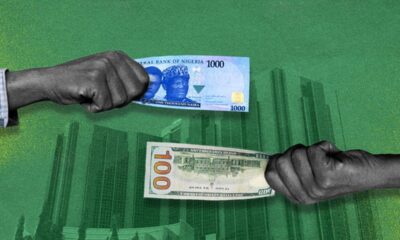

Nigeria’s FX Turnover Drops 51% as Dollar Trading Slows to $1.81bn
Nigeria’s FX turnover fell by 51.29% in the week ended November 6, while the naira recorded only a marginal movement...


Obasanjo Reveals Why He Rejected US Asylum Despite Warning of Arrest Under Abacha
Obasanjo reveals why he rejected US asylum despite warnings that Abacha’s government would arrest him, recounting his return to Nigeria...


Tinubu’s 2027 Manifesto: 78,000 Security Recruits, More Jobs and Lower Living Costs Promised
Tinubu’s 2027 manifesto proposes 78,000 additional security personnel, six per cent annual economic growth and expanded investment in housing, education...

2027: INEC Probes 54 Persons Across 10 States Over Voter Registration Irregularities
INEC has identified 54 persons across 10 states for investigation over voter registration irregularities, warning of possible prosecution as it...
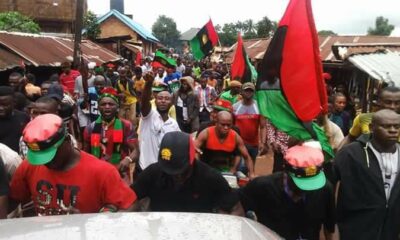

BRITAIN TO BLAME: London’s Role in the Abduction and Extraordinary Rendition of Nnamdi Kanu
The Indigenous People of Biafra (IPOB) has blamed the British government for its alleged complicity in the abduction of its...
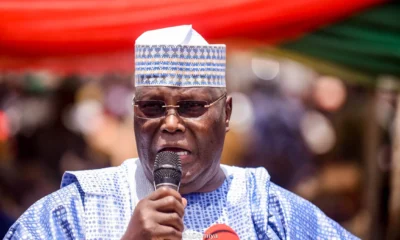

‘My Position Stands’ — Atiku Vows to Restore Petrol Subsidy, Explains Plan for Cheaper Fuel
Atiku has renewed his promise to restore petrol subsidy if elected president in 2027, saying his proposed support for local...

Ogun NYSC Camp Overcrowding Sparks Outrage as More Than 4,300 Graduates Arrive
Ogun NYSC camp overcrowding has sparked concern after a viral video showed cramped sleeping conditions, prompting the state government to...

Osun Strike Grounds Public Schools and Government Offices
The Osun strike has disrupted public schools, healthcare services and government offices as workers demand the release of withheld local...

FG Moves to License Scrap Dealers to Curb Cable, Manhole Cover Theft
The FG’s proposed scrap metal rules would require licences, source verification and transaction records to curb the trade in stolen...